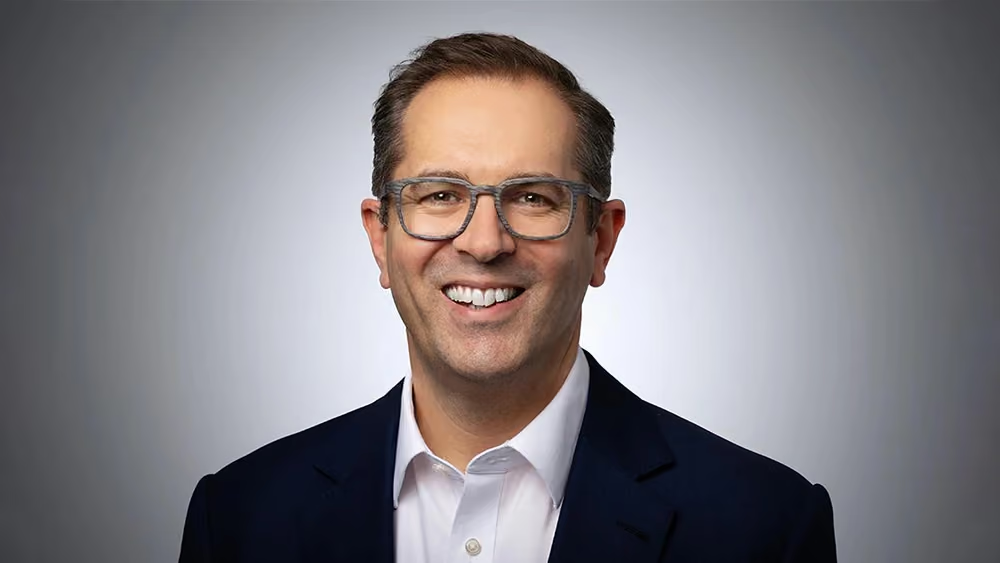
Charles Russell Speechlys’ expansion into the US this year marked a defining moment for a firm that has spent recent years expanding its international footprint around the movement of private capital.
The launch followed openings in Milan and Singapore and took more than two years to prepare, managing partner Simon Ridpath told The Non-Billable Podcast.
For a firm positioning itself as a leading adviser to private capital clients - from entrepreneurs and family offices to sovereign wealth - remaining outside the world’s largest private capital market had become increasingly difficult.
“You can’t truly service clients if you’re not in that market,” Ridpath says. “The United States was no longer tenable for us not to be able to advise and reach directly into that market domestically.”
Following the capital
CRS’ expansion strategy is based on following clients as wealth becomes more mobile.
Tax advice is often the firm’s way into a new market. In Milan, CRS was already receiving enquiries from clients attracted by Italy’s favourable tax regime. But once wealthy individuals relocate, Ridpath says, they typically establish businesses, invest, set up charities and redevelop property, creating demand for a much broader legal offering.
“The tax piece is the entry,” he says. “Then it’s being able to do the wraparound services to keep yourself relevant to them and make sure that you’re close to their thinking.”
Singapore followed a similar logic, as post-pandemic policy changes in Hong Kong and China drove more wealth there.
The US presented its own challenge. Ridpath spent two-and-a-half years speaking to clients and intermediaries figuring out why other firms had struggled in the market.
CRS resisted the temptation to buy its way into the market quickly. “There were people we could have gone in and opened a chequebook and said, ‘Come join us, we’ll pay you to come and be our launch platform,’” he says. “But it wouldn’t have worked because it would have been a transactional relationship."
Funding law firm growth
Such expansion comes as firms are also being asked to invest more heavily in areas like technology and people, raising questions about how partnerships should fund their ambitions in today’s market.
Ridpath says CRS has largely financed growth by agreeing as a partnership to reinvest a meaningful share of profits. Hiring established teams has also reduced the risk of new office launches.
He is open to looking at different sources of funding as investors take a greater interest in legal, but doubts that a large law firm will take private equity investment in the near future.
The traditional partnership model remains highly effective at rewarding top lawyers, he says. An externally owned firm could face the “worst of both worlds”: paying extremely high salaries to compete for talent while also having to deliver returns to outside investors.
Instead, Ridpath expects external investment to focus on specific use cases, combining law firms’ expertise and client relationships with investors’ capital and business acumen.
“I don’t see where it works either for an investor or for our firm, given our strategy and what we’re doing at the moment,” he says.
Listen to the full conversation with Simon Ridpath on The Non-Billable Podcast.
Join 10,000+ City law professionals who start their day with our newsletter.
The essential read for commercially aware lawyers.