Osborne Clarke partner cleared of 'without prejudice' misconduct by High Court
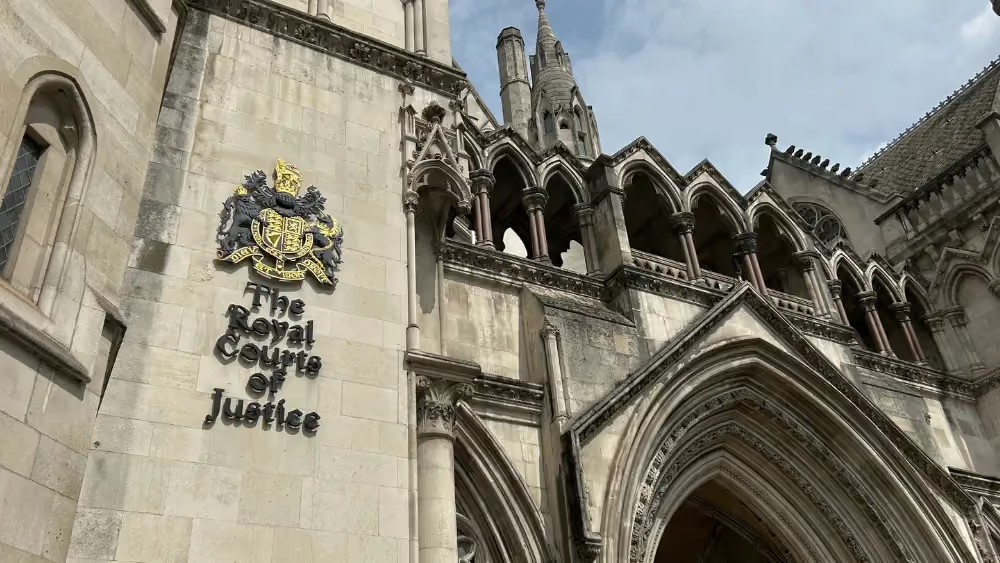
The High Court has overturned a SDT ruling against Osborne Clarke partner Ashley Hurst, setting aside findings of misconduct and a £50,000 fine and £260,000 costs order.
The court found the decision was legally flawed, unfair and inadequately reasoned, marking a setback for the SRA.
The High Court has overturned a Solicitors Disciplinary Tribunal ruling against Osborne Clarke partner Ashley Hurst, clearing the litigation partner of misconduct, along with a £50,000 fine and £260,000 costs order.
How it started
The case brought by the SRA stemmed from email correspondence Hurst sent in July 2022 while acting for then chancellor Nadhim Zahawi, seeking a retraction of allegations published on tax campaigner Dan Neidle’s website that Zahawi had lied about his tax affairs. After a hearing in December 2024, the SDT found Hurst guilty of misconduct over his actions.
Hurst appealed the decision, and in a High Court judgment handed down on 20 January, Justice Collins Rice allowed the appeal full. The court held that the SDT’s decision was wrong in law, poorly reasoned and procedurally unfair.
Reactions
Following the judgment, Neidle posted his response on LinkedIn describing the outcome as "very surprising and concerning", and posed the question: "How can it be that someone can instruct a lawyer to lie, for personal advantage, and there are no consequences?"
Hurst also posted his reaction to LinkedIn and said: "It's been a long and stressful road but I'm pleased to say that I won the appeal and have been exonerated."
What the SDT found
The 2022 email from Hurst to Neidle marked "Confidential & Without Prejudice" was later published by Neidle. The tribunal found that Hurst’s attempt to assert confidentiality and restrict publication amounted to professional misconduct and a lack of integrity.
The appeal
On appeal, the High Court found the SDT had misapplied the law and wrongly assumed Neidle had a clear right to publish the email, concluding that Hurst’s position was properly arguable and could not support findings of misconduct or lack of integrity.
Regulatory pressure
The ruling reflects growing judicial caution around SRA-backed enforcement in areas touching on alleged SLAPP (strategic lawsuits against public participation) behaviour and pre-action advocacy.
In allowing the appeal, the court stressed the need for careful legal analysis and restraint where findings go to integrity or bad faith, given the serious reputational consequences for individual solicitors. The judge was critical of the tribunal’s reasoning, warning that findings of bad faith require a much higher standard of justification.
The SDT’s original judgment revealed that Hurst had spent £908,000 in legal costs defending the case.
Join 10,000+ City law professionals who start their day with our newsletter.
The essential read for commercially aware lawyers.