Sidley’s London PE push was years in the making, says executive committee chair Brian Fahrney
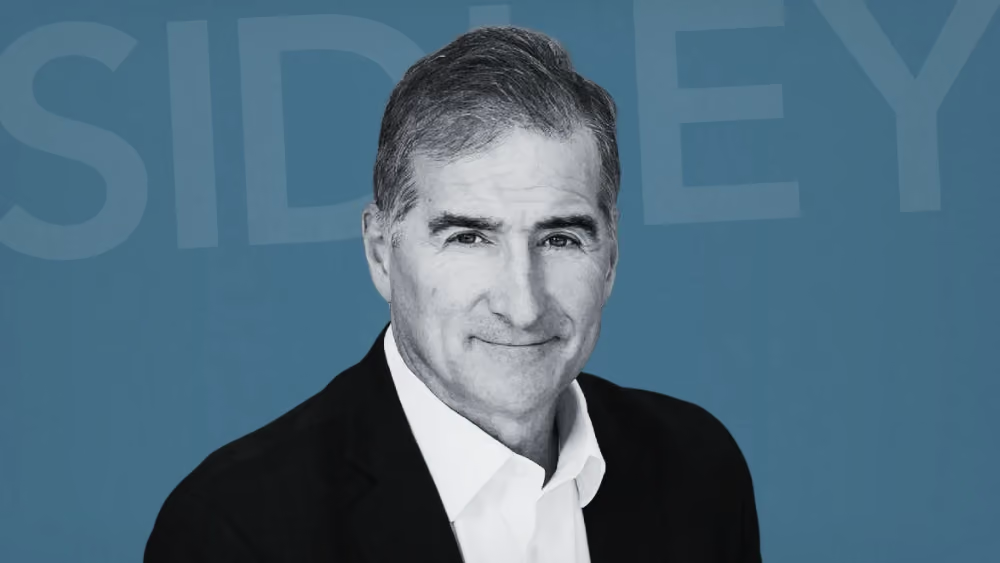
Sidley Austin's rapid rise in London has been no accident.
Speaking on The Non-Billable Podcast, executive committee chair Brian Fahrney says the US firm's transformation from a relatively niche finance practice into one of the City's fastest-growing private capital players has been the product of a deliberate and long-term investment strategy.
“Around eight or nine years ago, we realised that we really needed to be stronger in private equity,” Fahrney says. “We made a conscious effort to take the revenues that we've enjoyed over the years and reinvested them in private equity and a lot of the adjacencies - and it has worked out well.”
The strategy has transformed Sidley's London office. Once best known for structured finance, the office now has more than 250 lawyers, generates around $300 million in revenue and recorded more than 30% revenue growth in 2025.
That expansion has been driven by an aggressive lateral hiring strategy, particularly across private capital. The firm's recruitment of a large leveraged finance team from Latham & Watkins in late 2024, led by Jay Sadanandan and Sam Hamilton, marked the beginning of a broader hiring push spanning capital markets, funds and restructuring.
“We're very bullish on not only our existing office and the talented lawyers we have there in London, but on the market and what we can do there,” Fahrney says.
The NYLON strategy
The London expansion forms part of a broader transatlantic strategy centred on the so-called NYLON corridor between the US and London.
“The idea is that there's a real symbiotic relationship along that NYLON corridor - and we think that's a real thing,” he says. “When you strengthen and grow, particularly in private equity in New York, that gives you benefit in London and vice versa.”
Fahrney argues US clients increasingly expect a seamless offering across both markets rather than treating London as a standalone international office.
“They prefer to work with the firm that they're comfortable with in the US,” he says. “We need to have that offering. And it can't be a pretty good offering. It has to be a top-shelf offering.”
A smaller group at the top
Looking more broadly at the legal market, Fahrney believes that the industry's competitive landscape is becoming increasingly concentrated as clients demand firms with the scale to invest in talent, technology and global platforms.
“The legal industry is consolidating into a smaller and smaller group,” he says. “Clients are looking for firms that have the scale to deliver services in a coherent, cohesive way at the highest level of quality.”
Listen to the full conversation with Brian Fahrney on The Non-Billable Podcast.
Join 10,000+ City law professionals who start their day with our newsletter.
The essential read for commercially aware lawyers.