Womble Bond Dickinson wins court fight over £50m negligence claim
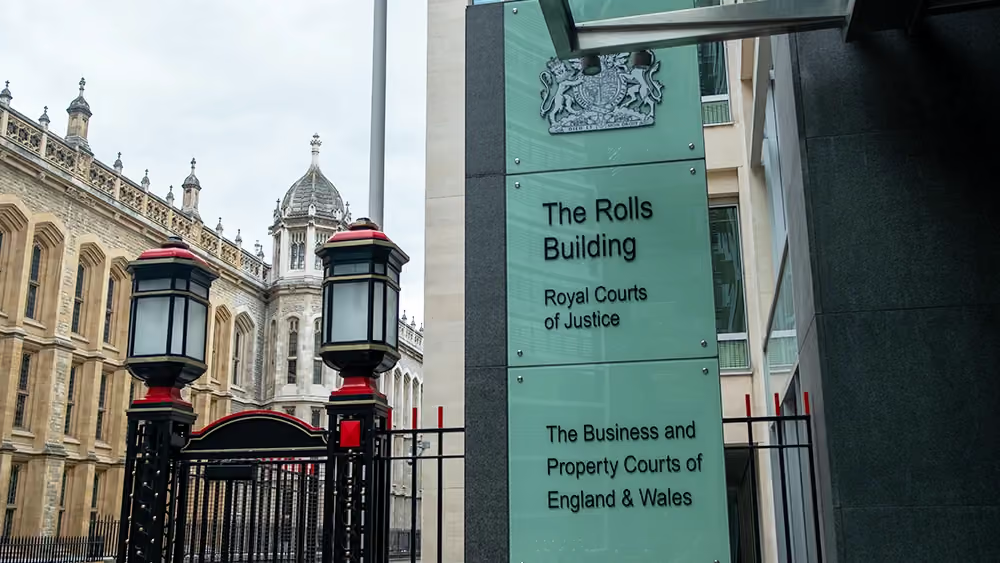
Womble Bond Dickinson has defeated a £50 million professional negligence claim tied to a proposed luxury London redevelopment project.
The High Court rejected claims that WBD’s negotiation strategy caused the collapse of the deal.
Womble Bond Dickinson has successfully defended a professional negligence claim worth around £50 million tied to a proposed luxury London redevelopment project.
In a High Court judgment handed down yesterday, Mr Justice Richards dismissed the claims brought by Norwegian businessman Kristian Siem, property developer Steven Wake and Wake's company Chapters Property London following a trial earlier this year.
The claimants alleged that WBD’s handling of negotiations around a share purchase agreement caused them to lose the opportunity to generate substantial profits from a high-end redevelopment project in Kensington after the deal collapsed and the development never went ahead.
No breach of duty
At the centre of the dispute was a proposed acquisition of shares in a property-owning company linked to a trust structure. WBD had advised Wake on the transaction and negotiated against Withers, which acted for the seller.
A key issue during negotiations was how to protect the buyer against warranty claims if sale proceeds were distributed out of the trust structure. The seller's solicitors proposed tracing provisions to address the risk, while WBD pushed for a £1 million retention mechanism on top.
The claimants later argued the firm negligently insisted on the retention clause - which the seller objected to - rather than pursuing an alternative non-distribution undertaking that would have kept the deal alive.
The court rejected that argument, finding no breach of duty. The judge accepted the evidence of WBD partner Tom Fitzpatrick and found that the alleged non-distribution undertaking had never actually been offered by the seller's lawyers during negotiations.
Court backs WBD’s approach
The court accepted that concerns about enforcing warranties against a Singapore trust structure were legitimate and found the retention provisions proposed by WBD were a reasonable way to mitigate risk.
The court also found the deal ultimately collapsed because of commercial concerns. The judge found that even if WBD had acted differently, Siem would likely have pulled out anyway, driven by concerns about the property market and his confidence in the project.
Newly merged Winston Taylor acted for the claimants, while RPC represented WBD.
Join 10,000+ City law professionals who start their day with our newsletter.
The essential read for commercially aware lawyers.