The law firm growing where Big Law retreats
Linklaters spin-out Kinstellar is building a 'major firm for minor markets', with outside investment a possible next step.


Contents
Starting a law firm is hard enough. Launching one at the height of the global financial crisis, two months after Lehman Brothers collapsed, is another level of difficulty altogether.
You could say Kinstellar has spent much of its nearly 18-year life playing the business of law on hard mode. Born from four Linklaters offices in November 2008 - its name an anagram of the Magic Circle firm - it has since weathered the European debt crisis, a global pandemic and the war in Ukraine, where it expanded just months before Russia’s full-scale invasion.
“We have been pretty good at bad timing,” jokes senior partner and co-founder Jason Mogg.
Yet the firm has kept growing. Its strategy is to build in markets “that are not core” and often overlooked by the biggest international firms. Kinstellar wants to be the firm those larger players turn to for local advice, or a new home for offices they no longer want.
And it has also spent almost two decades running a corporate model that could help fund its next phase of growth.
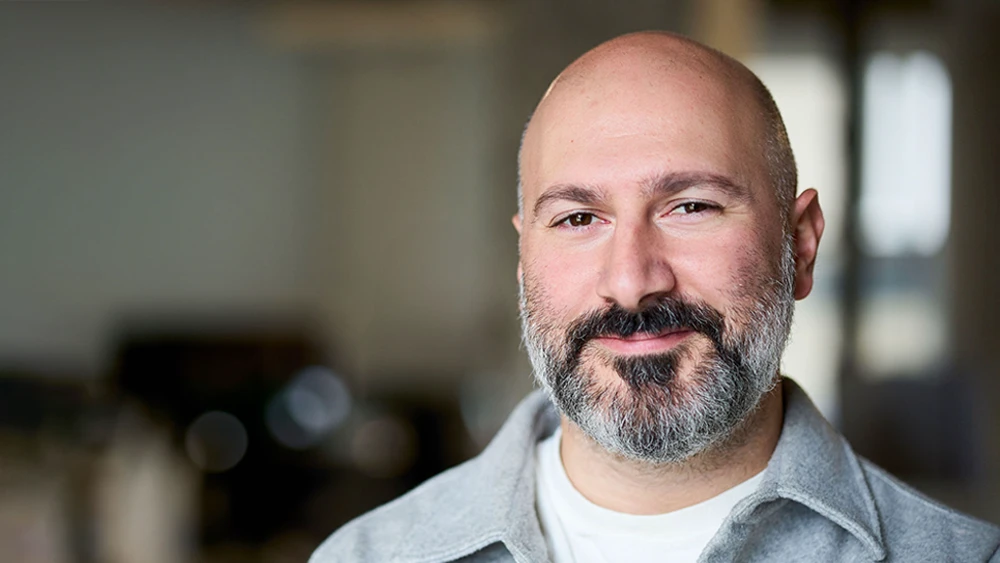
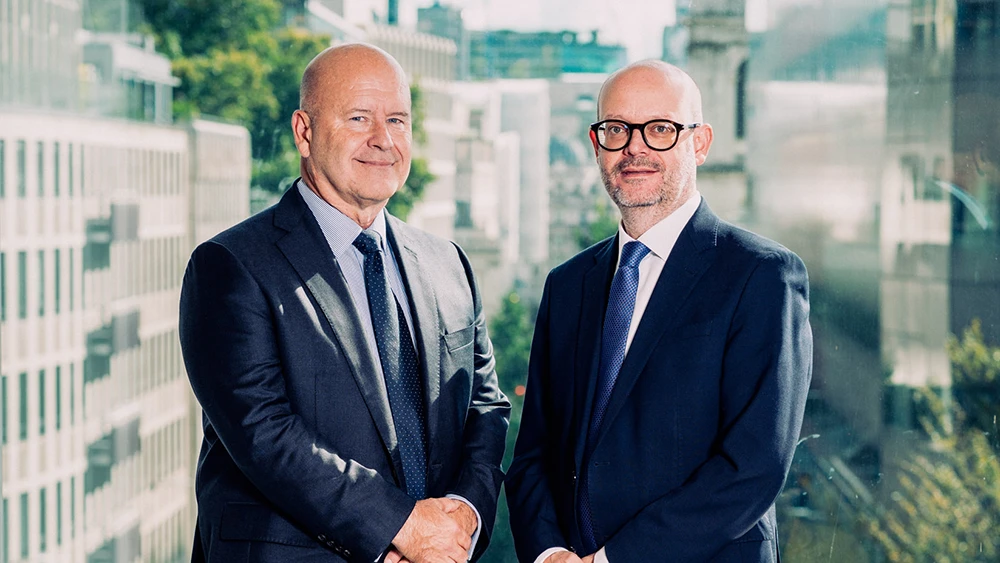
Speaking to Non-Billable, Mogg and managing partner Kristóf Ferenczi describe an ambition to build a major firm for minor markets, bringing Big Law quality to places the biggest firms don’t tend to prioritise.
Stay ahead of the City law market with our free email briefing - essential industry news and analysis, in your inbox three times a week.
From its founding offices in Bratislava, Bucharest, Budapest and Prague, the business has grown to 15 offices across 14 countries, extending into Southern Europe, Central Asia and Southeast Asia. It now has around 450 lawyers and has doubled revenue over the past five years.
For Mogg, a Canadian M&A lawyer who was previously Linklaters’ regional managing partner, the first priority after the spin-out was keeping the lights on - retaining clients and the lawyers who served them. But independence also opened doors. No longer tied to one global network, Kinstellar could build relationships with other international firms and pick up work from across the market.
A partner for the big firms
Ferenczi says roughly 30-40% of revenue comes through referral work from international law firms, with the rest coming from direct clients.
Those clients include large corporates, banks, energy companies and investors expanding beyond their home countries. So the business is about more than picking up the local work on deals run from London or New York.
Still, its relationships with international firms are a big part of the playbook. Ferenczi sees an opportunity as firms put more money and management time into their US and UK businesses - a theme that the current transatlantic merger wave appears to be accelerating.
Kinstellar wants to take over offices in non-core markets - outside of the G7 - that those firms no longer want to run, then keep working with them when their clients need local advice.
A case in point: in 2024, Kinstellar acquired German firm Noerr’s offices in Bratislava, Prague and Bucharest. Noerr cited limited growth in the region as its reason for leaving, while Kinstellar saw exactly the opposite opportunity.
Ferenczi says Kinstellar is regularly talking to international firms about their plans and the markets Kinstellar covers. Sometimes those conversations lead to opportunities, sometimes Kinstellar brings its own ideas to the table.
Law Firm | Trainee First Year | Trainee Second Year | Newly Qualified (NQ) |
|---|---|---|---|
| Addleshaw Goddard | £52,000 | £56,000 | £100,000 |
| Akin | £60,000 | £65,000 | £174,418 |
| A&O Shearman | £56,000 | £61,000 | £150,000 |
| Ashurst Perkins Coie | £57,000 | £62,000 | £140,000 |
| Baker McKenzie | £56,000 | £61,000 | £150,000 |
| Bird & Bird | £48,500 | £53,500 | £102,000 |
| Bristows | £48,000 | £52,000 | £95,000 |
| Bryan Cave Leighton Paisner | £53,000 | £58,000 | £125,000 |
| Burges Salmon | £49,500 | £51,500 | £76,000 |
| Charles Russell Speechlys | £52,000 | £55,000 | £93,000 |
| Cleary Gottlieb | £62,500 | £67,500 | £164,500 |
| Clifford Chance | £56,000 | £61,000 | £150,000 |
| Clyde & Co | £48,500 | £51,000 | £90,000 |
| CMS | £50,000 | £55,000 | £120,000 |
| Cooley | £55,000 | £60,000 | £157,000 |
| Davis Polk | £65,000 | £70,000 | £180,000 |
| Debevoise | £55,000 | £60,000 | £173,000 |
| Dechert | £55,000 | £61,000 | £165,000 |
| Dentons | £52,000 | £56,000 | £104,000 |
| DLA Piper | £55,000 | £60,000 | £140,000 |
| Eversheds Sutherland | £50,000 | £55,000 | £120,000 |
| Farrer & Co | £48,500 | £51,000 | £89,000 |
| Fieldfisher | £48,500 | £52,000 | £100,000 |
| Freshfields | £56,000 | £61,000 | £150,000 |
| Fried Frank | £55,000 | £60,000 | £175,000 |
| Gibson Dunn | £65,000 | £70,000 | £180,000 |
| Goodwin Procter | £55,000 | £60,000 | £175,000 |
| Gowling WLG | £48,500 | £53,500 | £108,000 |
| Herbert Smith Freehills Kramer | £56,000 | £61,000 | £145,000 |
| HFW | £52,000 | £56,000 | £103,500 |
| Hill Dickinson | £44,000 | £45,000 | £80,000 |
| Hogan Lovells | £56,000 | £61,000 | £145,000 |
| Irwin Mitchell | £43,500 | £45,500 | £78,000 |
| Jones Day | £60,000 | £68,000 | £170,000 |
| K&L Gates | £50,000 | £55,000 | £115,000 |
| Kennedys | £43,000 | £46,000 | £85,000 |
| King & Spalding | £62,000 | £67,000 | £175,000 |
| Kirkland & Ellis | £60,000 | £65,000 | £174,418 |
| Latham & Watkins | £60,000 | £65,000 | £174,418 |
| Linklaters | £56,000 | £61,000 | £150,000 |
| Macfarlanes | £60,000 | £65,000 | £150,000 |
| Mayer Brown | £55,000 | £60,000 | £150,000 |
| McDermott Will & Schulte | £65,000 | £70,000 | £174,418 |
| Milbank | £65,000 | £70,000 | £174,418 |
| Mills & Reeve | £46,800 | £47,000 | £84,000 |
| Mishcon de Reya | £52,500 | £57,500 | £110,000 |
| Morgan Lewis | £57,500 | £62,500 | £173,000 |
| Norton Rose Fulbright | £56,000 | £61,000 | £140,000 |
| Orrick | £60,000 | £65,000 | £170,000 |
| Osborne Clarke | £55,500 | £57,500 | £97,000 |
| Paul Hastings | £60,000 | £68,000 | £173,000 |
| Paul Weiss | £60,000 | £65,000 | £180,000 |
| Penningtons Manches Cooper | £48,000 | £50,000 | £83,000 |
| Pinsent Masons | £54,000 | £59,000 | £109,000 |
| Quinn Emanuel | n/a | n/a | £189,000 |
| Reed Smith | £55,000 | £60,000 | £135,000 |
| Ropes & Gray | £62,000 | £67,000 | £170,000 |
| RPC | £48,000 | £52,000 | £95,000 |
| Shoosmiths | £45,000 | £47,000 | £105,000 |
| Sidley Austin | £60,000 | £65,000 | £175,000 |
| Simmons & Simmons | £56,000 | £61,000 | £130,000 |
| Simpson Thacher | n/a | n/a | £178,000 |
| Skadden | £58,000 | £63,000 | £177,000 |
| Slaughter and May | £56,000 | £61,000 | £150,000 |
| Squire Patton Boggs | £50,000 | £55,000 | £110,000 |
| Stephenson Harwood | £50,000 | £55,000 | £105,000 |
| Sullivan & Cromwell | £65,000 | £70,000 | £177,000 |
| TLT | £44,000 | £47,500 | £85,000 |
| Travers Smith | £55,000 | £60,000 | £130,000 |
| Trowers & Hamlins | £50,000 | £54,000 | £90,000 |
| Vinson & Elkins | £60,000 | £65,000 | £173,077 |
| Watson Farley & Williams | £51,500 | £56,000 | £107,000 |
| Weightmans | £36,000 | £38,000 | £70,000 |
| Weil | £60,000 | £65,000 | £170,000 |
| White & Case | £62,000 | £67,000 | £175,000 |
| Willkie Farr & Gallagher | £60,000 | £65,000 | £180,000 |
| Winston Taylor | £56,000 | £61,000 | £125,000 |
| Withers | £47,000 | £52,000 | £95,000 |
| Womble Bond Dickinson | £43,000 | £45,000 | £83,000 |
Rank | Law Firm | Revenue | Profit per Equity Partner (PEP) |
|---|---|---|---|
| 1 | DLA Piper* | £3,130,000,000 | £2,500,000 |
| 2 | A&O Shearman | £2,900,000,000 | £2,000,000 |
| 3 | Clifford Chance | £2,400,000,000 | £2,100,000 |
| 4 | Hogan Lovells | £2,320,000,000 | £2,400,000 |
| 5 | Linklaters | £2,320,000,000 | £2,200,000 |
| 6 | Freshfields | £2,250,000,000 | Not disclosed |
| 7 | CMS** | £1,800,000,000 | Not disclosed |
| 8 | Norton Rose Fulbright* | £1,800,000,000 | Not disclosed |
| 9 | HSF Kramer | £1,360,000,000 | £1,400,000 |
| 10 | Ashurst | £1,030,000,000 | £1,390,000 |
| 11 | Clyde & Co | £854,000,000 | Not disclosed |
| 12 | Eversheds Sutherland | £769,000,000 | £1,400,000 |
| 13 | Pinsent Masons | £680,000,000 | £790,000 |
| 14 | Slaughter and May*** | £650,000,000 | Not disclosed |
| 15 | BCLP* | £640,000,000 | £790,000 |
| 16 | Simmons & Simmons | £615,000,000 | £1,120,000 |
| 17 | Bird & Bird** | £580,000,000 | £720,000 |
| 18 | Addleshaw Goddard | £550,000,000 | £1,000,000 |
| 19 | Taylor Wessing | £526,000,000 | £1,100,000 |
| 20 | Osborne Clarke** | £476,000,000 | £800,000 |
| 21 | DWF | £466,000,000 | Not disclosed |
| 22 | Womble Bond Dickinson | £450,000,000 | Not disclosed |
| 23 | Kennedys | £428,000,000 | Not disclosed |
| 24 | Fieldfisher | £385,000,000 | £1,000,000 |
| 25 | Macfarlanes | £371,000,000 | £3,100,000 |
What do City lawyers actually do each day?
For a closer look at the day-to-day of some of the most common types of lawyers working in corporate law firms, explore our lawyer job profiles:
An office can be profitable and still barely register inside a global giant, but for a firm focused on that market it can be a business worth growing. Mogg says money and management time can secure leading positions in markets he describes as often being “winner takes all”.
That means being picky about where to go next. Kinstellar isn’t ruling out the buoyant Polish market, for instance, but has yet to find the right way in.
“We have always taken the view that we don’t want to be in any market unless we’re at or near the top of it, or we have a route to get there in a reasonably short time,” Mogg says.
Built to keep capital
The corporate model was designed to pay for the firm’s approach to growth. From the start, Kinstellar kept back some of its profits to reinvest in the business, rather than paying everything out to partners each year.
“We didn’t invent a new structure,” Mogg says. “We just used this bog standard structure that is generally used in the business world.”
We just used this bog standard structure that is generally used in the business world.
Being a partner doesn’t automatically mean being an owner. Most people holding the partner title hold shares, though some don’t, while business services leaders can be shareholders too.
The challenge is getting people to buy into the idea that money invested today will be worth more to them later. The firm still has to pay competitively, Mogg says. Self-funding growth cannot come at the expense of attracting and keeping good people.
Ukraine shows what keeping money in the business can mean. After Russia’s full-scale invasion in 2022, revenue there fell significantly below budget, according to Mogg. Kinstellar continued supporting the office, covering losses that ran into 2023 before the business recovered. Mogg says the firm could draw on its equity to fund that support without dipping into partner pay.
The structure also gives Kinstellar a head start if it decides to take outside investment. Mogg says potential investors see the appeal of a firm that has spent years working this way as it would not have to go through the difficult transition from a traditional partnership first.
But there are limits to what Kinstellar can fund itself, particularly as it looks to expand and invest in AI and legal technology.
Mogg confirms that external investors have approached Kinstellar - including recently - but those have not resulted in external investment to date.
Ferenczi says the firm is considering various ways to fund its expansion.
“To seize the opportunities we see across markets, we may need more capital going forward and we're looking at ways in which that can be secured.”
| Firm | London office since | Known for in London |
|---|---|---|
| Akin | 1997 | Restructuring, funds |
| Baker McKenzie | 1961 | Finance, capital markets, TMT |
| Davis Polk | 1972 | Leveraged finance, corporate/M&A |
| Gibson Dunn | 1979 | Private equity, arbitration, energy, resources and infrastructure |
| Goodwin | 2008 | Private equity, funds, life sciences |
| Kirkland & Ellis | 1994 | Private equity, funds, restructuring |
| Latham & Watkins | 1990 | Finance, private equity, capital markets |
| McDermott Will & Schulte | 1998 | Finance, funds, healthcare |
| Milbank | 1979 | Finance, capital markets, energy, resources and infrastructure |
| Paul Hastings | 1997 | Leveraged finance, structured finance, infrastructure |
| Paul Weiss | 2001 | Private equity, leveraged finance |
| Quinn Emanuel | 2008 | Litigation |
| Sidley Austin | 1974 | Leveraged finance, capital markets, corporate/M&A |
| Simpson Thacher | 1978 | Leveraged finance, private equity, funds |
| Skadden | 1988 | Finance, corporate/M&A, arbitration |
| Sullivan & Cromwell | 1972 | Corporate/M&A, restructuring, capital markets |
| Weil | 1996 | Restructuring, private equity, leverage finance |
| White & Case | 1971 | Capital markets, arbitration, energy, resources and infrastructure |
| Law firm | Type | First-year salary |
|---|---|---|
| White & Case | US firm | £32,000 |
| Stephenson Harwood | International | £30,000 |
| A&O Shearman | Magic Circle | £28,000 |
| Charles Russell Speechlys | International | £28,000 |
| Freshfields | Magic Circle | £28,000 |
| Herbert Smith Freehills | Silver Circle | £28,000 |
| Hogan Lovells | International | £28,000 |
| Linklaters | Magic Circle | £28,000 |
| Mishcon de Reya | International | £28,000 |
| Norton Rose Fulbright | International | £28,000 |
Law Firm | Trainee First Year | Trainee Second Year | Newly Qualified (NQ) |
|---|---|---|---|
| A&O Shearman | £56,000 | £61,000 | £150,000 |
| Clifford Chance | £56,000 | £61,000 | £150,000 |
| Freshfields Bruckhaus Deringer | £56,000 | £61,000 | £150,000 |
| Linklaters | £56,000 | £61,000 | £150,000 |
| Slaughter and May | £56,000 | £61,000 | £150,000 |
Law Firm | Trainee First Year | Trainee Second Year | Newly Qualified (NQ) |
|---|---|---|---|
| A&O Shearman | £56,000 | £61,000 | £150,000 |
| Clifford Chance | £56,000 | £61,000 | £150,000 |
| Freshfields Bruckhaus Deringer | £56,000 | £61,000 | £150,000 |
| Linklaters | £56,000 | £61,000 | £150,000 |
| Slaughter and May | £56,000 | £61,000 | £150,000 |
Law Firm | Trainee First Year | Trainee Second Year | Newly Qualified (NQ) |
|---|---|---|---|
| Ashurst | £57,000 | £62,000 | £140,000 |
| Bryan Cave Leighton Paisner | £53,000 | £58,000 | £125,000 |
| Herbert Smith Freehills | £56,000 | £61,000 | £145,000 |
| Macfarlanes | £60,000 | £65,000 | £150,000 |
| Travers Smith | £55,000 | £60,000 | £130,000 |
| Firm | Merger year | Known for in London |
|---|---|---|
| BCLP | 2018 | Real estate, corporate/M&A, litigation |
| DLA Piper | 2005 | Corporate/M&A, real estate, energy, resources and infrastructure |
| Eversheds Sutherland | 2017 | Corporate/M&A, finance |
| Hogan Lovells | 2011 | Litigation, regulation, finance |
| Mayer Brown | 2002 | Finance, capital markets, real estate |
| Norton Rose Fulbright | 2013 | Energy, resources and infrastructure, insurance, finance |
| Reed Smith | 2007 | Shipping, finance, TMT |
| Squire Patton Boggs | 2011 | Corporate/M&A, pensions, TMT |
Law Firm | Trainee First Year | Trainee Second Year | Newly Qualified (NQ) |
|---|---|---|---|
| Ashurst | £57,000 | £62,000 | £140,000 |
| Bryan Cave Leighton Paisner | £53,000 | £58,000 | £125,000 |
| Herbert Smith Freehills Kramer | £56,000 | £61,000 | £145,000 |
| Macfarlanes | £60,000 | £65,000 | £150,000 |
| Travers Smith | £55,000 | £60,000 | £130,000 |
Know what's moving the market
Get the free email that keeps UK lawyers ahead on the stories that matter.
We send a short summary of the biggest legal industry and business stories you need to know about three times a week. Free to join. Unsubscribe at any time.