
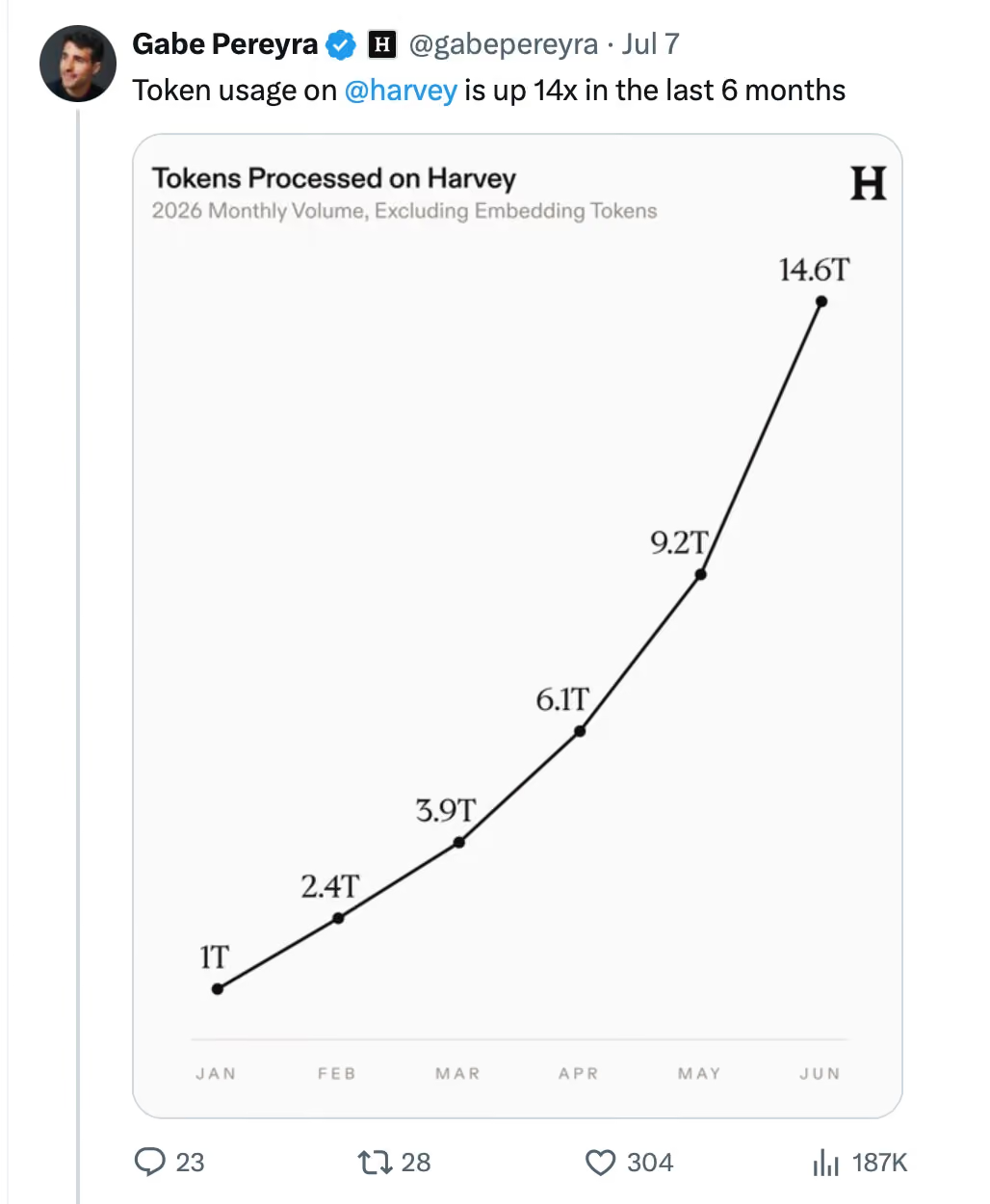
Harvey says token usage across its legal AI platform has increased 14x in the last six months, highlighting the rapid growth of enterprise AI workloads.
As token usage surges, legal AI companies are beginning to explore consumption-based pricing models for the agentic era.
As legal AI platforms move from chatbots to autonomous agents, the economics of the industry are also beginning to change as token consumption surges and legal AI companies abandon the software industry's traditional per-seat pricing model.
Enterprise customers are heading towards massive consumption bills, Harvey co-founder Gabe Pereyra recently warned, as vendors rethink how autonomous systems should be priced.
Tokens are the units AI models use to process and generate language, with every prompt and response consuming tokens.
Meanwhile, Legora recently rolled out consumption-based pricing for its Agent Pro product, and said that as platforms become more agentic, the variability of costs cannot be absorbed through traditional seat-based pricing.
Token burn
Pereyra posted to X this week and said that token usage across the company's platform has increased 14x over the past six months, reflecting the growing volume and complexity of work customers are asking the AI to perform.
A commenter asked if lawyers currently pass the API credit usage to clients, to which Pereyra replied, “I actually think this might become more common. Law firms already pass through costs for other legal tech so it’s not a completely crazy idea.”
Speaking on the Sorcery with Molly Shea podcast last month, Pereyra said a simple drafting query could cost $20 in tokens, whereas asking agents to review 100,000 contracts could easily cost $20,000.
He said: “Customers are going to start getting these consumption bills of $10 million, and they’re going to ask, 'What did my agent do that cost me $10 million?'”
He pointed to comments by Uber CTO Praveen Neppalli Naga, who recently said the company had burned through a year's allocation of coding tokens in just four months, as an example of how quickly AI consumption can accelerate inside large organisations.
Pereyra argued enterprises will need a way to understand, justify and govern AI spending.
Pricing models
Last month, Legora introduced consumption-based pricing for its Agent Pro product, saying autonomous agents are changing legal economics from "hours billed and seats licensed" to "outcomes delivered".
Alongside the move, the company also launched real-time spending dashboards and usage controls intended to give customers greater visibility over AI costs.
While most vendors initially adopted conventional SaaS seat-based pricing, the rise of agentic AI is prompting companies to experiment with commercial models that more closely align pricing with the amount of work performed.
Lessons from legal
Pereyra believes the legal profession has already solved a similar commercial problem.
For decades, the billable hour provided a way to price variable legal work at scale, and it created a transparent record of what was done and how clients were charged.
Legal tech vendors are now confronting a similar challenge, and Pereyra believes AI pricing is heading in a similar direction.
Rather than simply charging customers for tokens consumed, he expects enterprises to demand detailed visibility into every AI task, including which model completed the work, how requests were routed, how many tokens were consumed and what business outcome was achieved.
Instead of absorbing AI costs as overhead, firms may begin allocating them to individual matters, opening up a debate over whether clients will actually see the savings AI once promised.
Join 10,000+ City law professionals who start their day with our newsletter.
The essential read for commercially aware lawyers.