‘It’s turning into a nightmare’: Mariana claimant speaks out as rival law firms battle for control
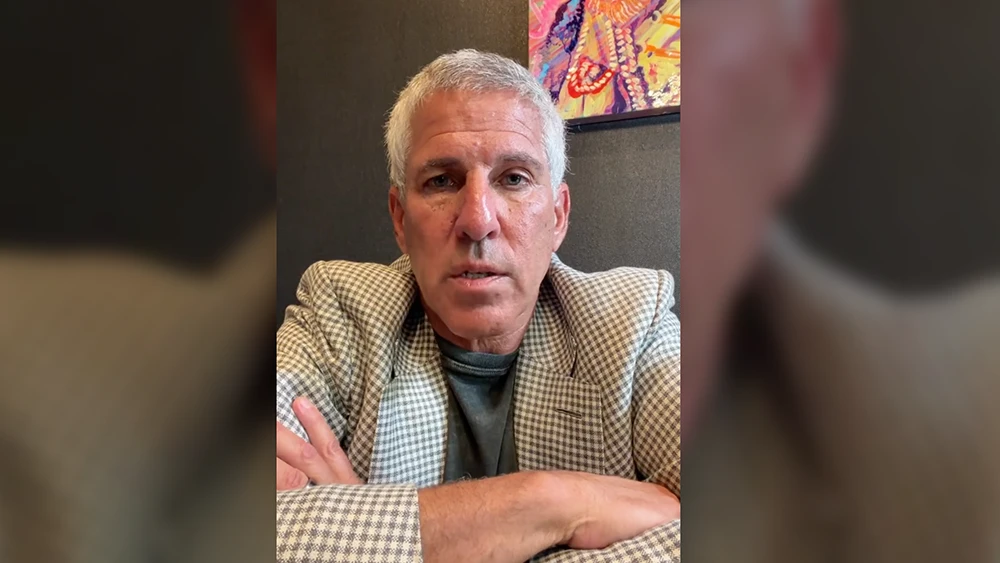
For Jonathan Knowles, the battle over control of the Mariana dam litigation has a glaring omission: the claimants themselves.
Knowles, a Yorkshireman who was living in Brazil when the Fundão dam collapsed in 2015, is one of a small number of British-based claimants in the sprawling group action. He, his partner Sheila and their son Enzo are all part of the claim.
Pogust Goodhead launched the collective claim in 2018, in what has become one of the largest group actions in English history. The case was brought in England because BHP Group Limited, one of the defendants, was incorporated and headquartered in the UK at the time of the dam collapse.
A 17-member client committee, whose identities are confidential, was established as part of the litigation to make decisions on behalf of most of the wider claimant group. On 28 August, the committee voted to replace Pogust Goodhead with Bailey Glasser International (BGI), a rival law firm whose lawyers include several former Pogust Goodhead lawyers.
That decision has triggered a High Court battle over who should represent the more than 400,000 claimants.
Knowles said communication with legal representatives had deteriorated, with calls and requests for information repeatedly going unanswered.
“They’ll say, ‘We’ll get back to you, sorry.’ They don’t. They never do,” he said.
PG responds
Pogust Goodhead acknowledged that its communications with clients had not always met its own standards, but said its current management had made changes over the past year.
“With more than 400,000 clients, we will not pretend that every interaction has always met the standard we expect,” a spokesperson told Non-Billable. “If a client has struggled to reach us, we take that seriously and want the opportunity to put it right.”
The firm said it had strengthened client support in Brazil, introduced new response standards and WhatsApp access, and developed a new local support model with its Brazilian co-counsel.
It also said that walk-in centres were provided under contract by Pogo and GHL, companies owned by former CEO Tom Goodhead. "Those companies unilaterally ceased providing those services in May 2026; that was not a decision taken by PG," the firm added.
“As we look ahead, we are committed to continuing to strengthen the support we provide and ensuring that our clients receive the justice they deserve,” the spokesperson said.
Life before Mariana
Knowles moved to Brazil in 2010 and built a business selling valves designed to stop air passing through water pipes from being counted by household meters, cutting customers' water bills.
The business was beginning to take off when the Fundão dam collapsed in November 2015, killing 19 people and sending mining waste through the Doce river system, disrupting water supplies across the region.
Knowles says demand for a product designed to cut water bills effectively disappeared.
“If you’re not getting water, nobody is interested in getting a valve for their water meter,” he said.
Knowles eventually returned to Britain with little more than a suitcase and later went bankrupt. His partner and son initially remained in Brazil before the family reunited in England.
More than a decade later, he says the English litigation that was supposed to offer a route to redress has itself become a source of frustration.
“It’s turning into a nightmare, a complete shambles,” he said.
Battle for control
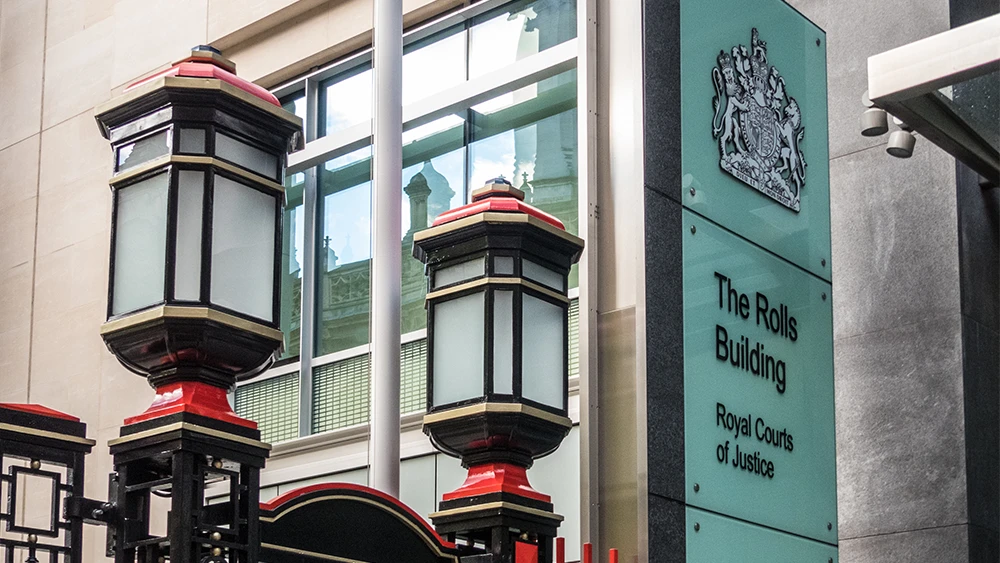
His comments come at a pivotal moment for the Mariana litigation. Pogust Goodhead disputes that the client committee has the authority to remove it on behalf of the wider claimant group and has taken the dispute to the High Court.
Pogust Goodhead co-founder Tom Goodhead, who launched the BHP claim before being ousted as the firm's chief executive last year, has since joined BGI alongside more than 15 lawyers with experience on the Mariana case.
The High Court is due to consider who should represent the claimants at a two-day hearing on 5 and 6 October.
Meanwhile, Pogust Goodhead has separately confirmed it intends to change its name after co-founder and former chairman Harris Pogust launched a public attack on its handling of the control dispute and demanded the firm stop using his name.
The money behind it
Knowles is also concerned that the enormous financial pressures surrounding the litigation risk eclipsing the people it was brought to compensate.
Pogust Goodhead agreed a $550 million investment deal with US hedge fund Gramercy in 2023, refinancing earlier debts and providing working capital for PG's portfolio of mass claims.
When Goodhead appeared on The Non-Billable Podcast last year, he said the firm was burning through $5 to 6 million a month across the Mariana litigation and its other global class actions.
The sums committed to the litigation have continued to grow.
Gramercy provided another $65 million credit facility last year and, in June this year, agreed a new facility of up to $150 million dedicated exclusively to the Mariana litigation, as PG brought in Quinn Emanuel to support it during the damages phase.
The Financial Times reported last week that Gramercy pushed Goodhead to accept a roughly $1.4 billion settlement offer in 2025 from BHP and Vale, the mining giants behind the joint venture that operated the dam.
Goodhead was said to have considered it too low and refused. He was then removed from the firm about two months later, telling the publication it was “no coincidence" it came so soon after his refusal to settle.
Gramercy has repeatedly denied having any involvement in Pogust Goodhead’s management or its cases, but said Goodhead was removed over alleged financial misconduct, which he denies.
An internal investigation commissioned by PG's new board last year alleged “excessive and uncontrolled spending” under Goodhead, including private jets and helicopters, staff yacht parties and luxury accommodation.
Goodhead disputed the characterisation, previously telling Non-Billable the expenditure was necessary for conducting business and that the corporate hospitality was consistent with other large City law firms.
He also said no client or ring-fenced litigation funds had been used for his personal expenditure.
For Knowles, the reports have been difficult to stomach.
“The [Pogust Goodhead] lawyers went to Brazil, sat down one by one and heard about their deaths, loss of incomes and how it completely messed up people’s lives,” he said.
“They’ve incurred all this debt and spent it not on the case, but on them having a good time and enjoying themselves,” he added.
‘Colonial smash and grab’
Knowles is now 62. Since returning to Britain he has moved between jobs, including driving and factory work, but says health problems have recently left him unable to work.
He had hoped the English courts would provide a route to justice. Instead, he says the dispute has become a “colonial smash and grab” which has left him questioning whether the system is listening to the people it is supposed to serve.
Knowles recently attended an event at the House of Commons where he sat beside another person affected by the disaster. She told him she had lost her husband and daughter.
“I’m living it all over again,” Knowles recalled her telling him.
The encounter brought home his frustration with how far the litigation has drifted from the people whose losses underpin it, as they continue to wait for a resolution.
“Ideally I should be involved,” he said. “It’s going to affect my future. Why can’t I stand up and say anything?”
Join 10,000+ City law professionals who start their day with our newsletter.
The essential read for commercially aware lawyers.