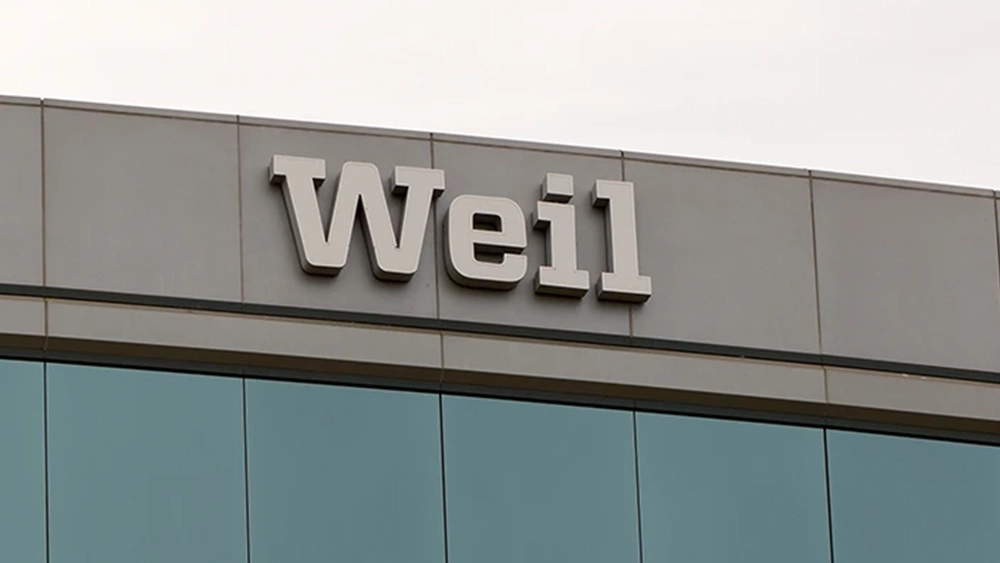
Weil’s partners have approved an orderly wind-down after senior departures, failed merger talks with Willkie and leadership uncertainty.
Many partners, associates and trainees across its 16 offices face uncertain futures as rival firms recruit teams.
Weil partners approved an orderly wind-down of the firm on Tuesday, appointing a three-member committee to oversee the dissolution of the 95-year-old New York firm.
The vote followed the management committee’s recommendation on 28 October to wind down the business after reviewing strategic alternatives. It caps weeks of senior departures, failed merger talks with Willkie and uncertainty over the firm’s leadership succession.
The wind-down committee consists of Weil general counsel Robert Carangelo, tax partner Paul Wessel and independent director Patricia Ferrari, Bloomberg Law reported. Longstanding executive partner and chair Barry Wolf will reportedly advise the committee.
The futures of many partners, associates and business services staff across Weil’s 16 offices remain unresolved, even as rivals move to recruit teams.
The unravelling gathered pace in September when corporate chair Michael Aiello left for Cravath alongside five other M&A partners. Weil said at the time that the team was leaving for a “smaller platform” and maintained that it intended to accelerate its growth strategy.
The leadership picture grew more uncertain when Ramona Nee, who was due to succeed Barry Wolf as executive partner in January, turned down the top job. She has since moved to Kirkland & Ellis as part of a 40-lawyer private equity, M&A and debt finance team.
London leavers
In London, senior partner exits have included M&A partner Murray Cox, former office co-head David Avery-Gee and finance head Tom Richards.
Gibson Dunn is also set to recruit Weil’s entire London private funds team, as part of a transatlantic swoop that is set to see roughly 120 lawyers move to the US firm's London and New York offices, including more than 20 partners and Weil’s private funds practice head, New York-based partner Andrew Chizzik, and London private funds group co-chiefs James Bromley and James Sargent.
Private equity heavyweights Marco Compagnoni and Jonathan Wood are also understood to be in negotiations to join Sidley Austin's London office, in a team move that could involve lawyers from the firm's Paris and German offices.
Firms including Latham & Watkins and Sullivan & Cromwell have moved to take on many of Weil's trainees and future trainees in London.
An avoidable collapse?
Founded in New York in 1931, Weil built a formidable reputation in corporate work and restructuring, advising on landmark bankruptcies including Enron, WorldCom and Lehman Brothers.
Maurice Allen, a legal consultant at Sunstone who helped launch Weil’s London office as London co-managing partner in 1996, recalled the stature of its leading US lawyers: “We grew up with those guys who frightened the bejesus out of us. Major figures in the US market like Dennis Block, Ira Millstein and Harvey Miller.”
Allen expressed sadness and surprise at the firm’s collapse: “At the end of the day, even if you lose lots of people, the grown-ups would normally circle the wagons and incentivise people to stay. People inside the firm are saying this should have been avoidable.”
London became Weil’s second-largest office, with particular strengths in private equity, leveraged finance and restructuring. The firm generated $2 billion in revenue and profit per equity partner of around $5.5 million in 2025, according to figures published by The American Lawyer.
Yale law professor John Morley told The Non-Billable Podcast last week that Weil ultimately collapsed because its profitability had fallen relative to its rivals, leaving partners open to poaching and triggering a self-reinforcing run on the firm.
Join 10,000+ City law professionals who start their day with our newsletter.
The essential read for commercially aware lawyers.