The Economics Of Disputes: What GCs And Law Firms Say About Litigation In 2026
Cost, delay and the prospect of recovering an award are shaping how businesses decide which disputes to pursue and when to settle.



General counsel and the law firms that represent them have traditionally judged commercial litigation claims by one straightforward question: Do we have a strong case? Increasingly, that is no longer enough.
Burford Capital’s latest research, conducted in association with The Lawyer and based on a survey of 100 UK general counsel and law firm lawyers, suggests that commercial disputes are being assessed through a broader commercial lens.
Legal merits remain essential, but they are being weighed alongside cost, duration, enforcement risk and how best to use the business’s capital. In many cases, the question is whether a claim makes commercial sense to pursue, as well as whether it can succeed.
Cost decides what gets pursued and what gets settled
One of the clearest themes emerging from the research is the extent to which economics shapes litigation strategy.
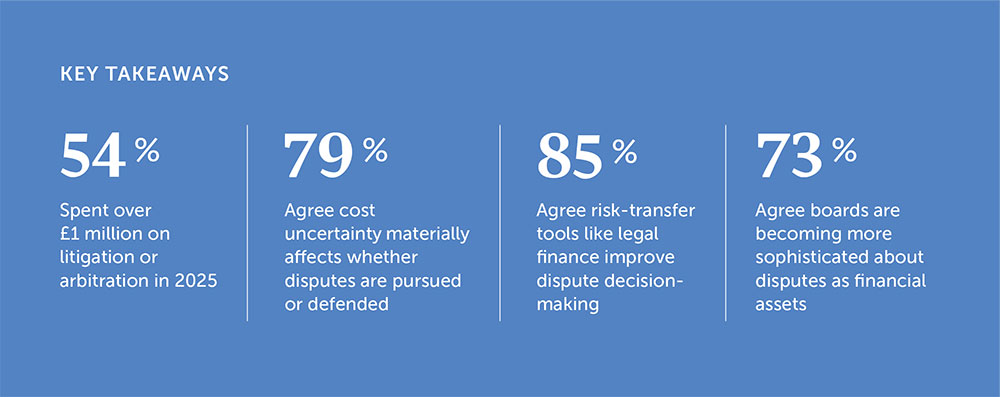
When respondents were asked what most influences the decision to pursue a dispute, cost ranked first by a considerable margin. More than half (57%) cited it, ahead of reputational risk (32%) and the strategic or precedential value of the case (31%). The expected duration of proceedings also matters: nearly two-thirds (64%) said it is highly relevant to the decision to litigate.
The influence of cost does not end once proceedings begin. Six in ten respondents (60%) agreed that settlement decisions are often driven by management fatigue rather than the underlying strength of the case.

Together, the findings suggest that the financial and organisational burden of litigation can shape both whether a dispute is pursued and how long a business is prepared to pursue it.
Disputes are increasingly viewed as significant business investments. Boards and management teams are asking the same questions they would of any major use of capital: What is the likely return? How long will capital be tied up? What are the risks if circumstances change?
Increasingly, cost is one of the biggest factors... you look at costs, you look at enforcement and merits. - Law firm partner
That commercial scrutiny changes behaviour. Strong legal claims may never reach a courtroom because the financial commitment required to pursue them cannot be justified.
The gap between legal entitlement and outcome
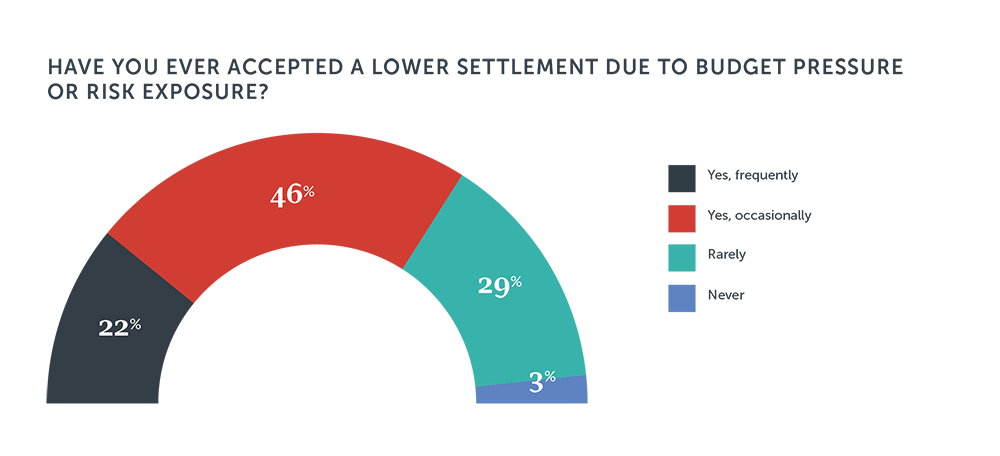
Perhaps the most revealing finding is how frequently businesses compromise despite believing they are entitled to more.
More than two-thirds of respondents (68%) said they had frequently or occasionally accepted a lower settlement than they believed their claim warranted because of cost pressures or litigation risk. Such compromises appear to be a common feature of commercial disputes.
The pressure appears to increase as claims become larger. More than four in five respondents (82%) believed higher-value disputes are more likely to settle early. Larger claims can attract greater board scrutiny, larger legal budgets and more significant reputational considerations, increasing the incentive to manage risk through settlement.
Businesses are also becoming increasingly focused on whether an award can be enforced. Winning a judgment is only part of the equation if recovery remains uncertain.
As several interviewees noted, success ultimately depends on whether there is “money at the end of the day”. General counsel and their external lawyers may be reluctant to spend money on cases where recovery is uncertain, even if they are confident of winning.
A more strategic role for legal finance
As the economics of disputes have evolved, legal finance has become a more established part of commercial dispute strategy.
Nearly three-quarters of the lawyers surveyed (73%) had direct experience of legal finance, while four in ten had used it multiple times. Among private practice lawyers, almost 40% said they always discuss funding options with clients, reflecting how far legal finance has moved into mainstream practice.
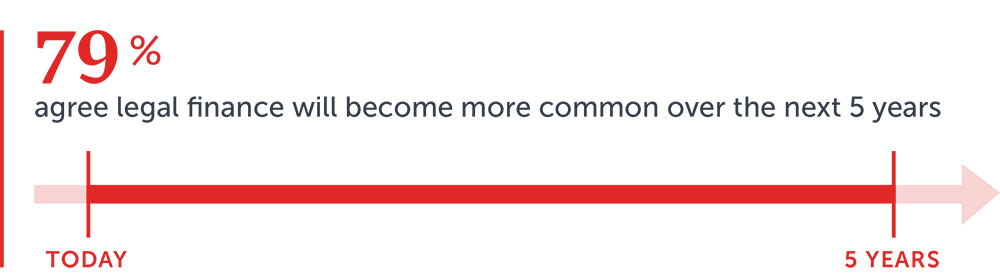
Looking ahead, 79% of respondents expected its use to become more widespread over the next five years.
That shift reflects broader changes in how businesses approach disputes. They increasingly expect greater certainty around costs and more flexibility in how claims are financed.
Many now see legal finance as a tool for managing capital and reducing financial risk, as well as paying legal fees. It can allow decisions to be driven by the merits of the dispute rather than the constraints of the litigation budget.
As commercial disputes face the same financial scrutiny applied elsewhere in the business, that trend seems unlikely to reverse. Understanding the economics can help businesses make better decisions about when to pursue, settle or finance valuable legal claims.
Produced in partnership with Burford Capital, the institutional quality finance firm focused on law.