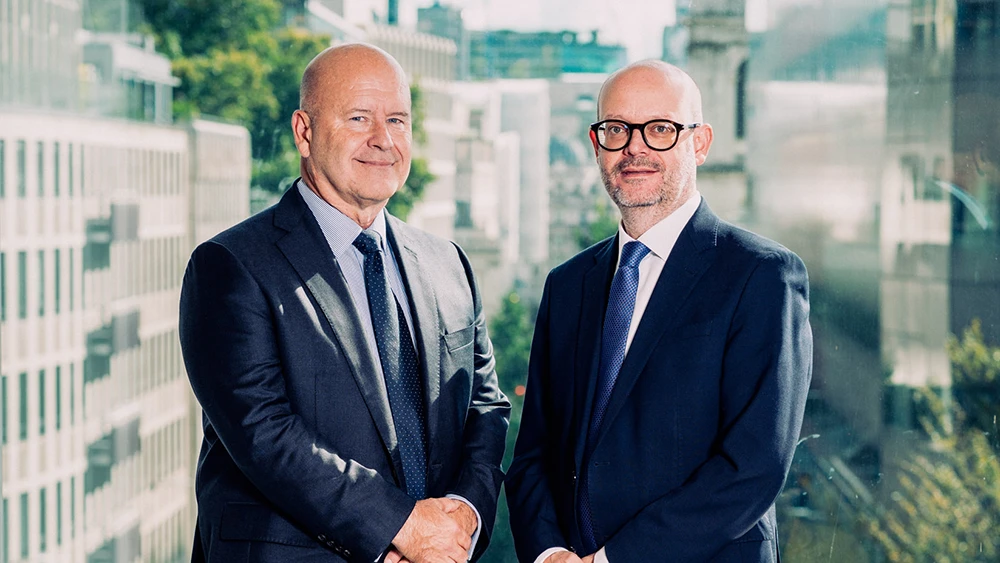
Q&A: Former EY Law boss Jeff Soar on building a PE-backed professional services firm
The former EY leader on starting afresh, EQT backing and what City law partners could learn from the model.


Contents
After more than two decades in the Big Four, including a series of leadership roles at EY across its tax and law arm, Jeff Soar is now building WTS UK with backing from private equity firm EQT.
The tax business is starting from scratch in the UK, but draws on an established international network. Soar says that combination gives it the freedom to rethink how it recruits, invests in technology and charges clients, while retaining the expertise and reach they expect from an established firm.
We spoke to him about persuading partners to leave large organisations, what external capital changes, how AI is reshaping the work clients buy, and what a group of City law firm partners should get right before attempting something similar.
Stay ahead of the City law market with our free email briefing - essential industry news and analysis, in your inbox three times a week.
What can you do differently by starting a professional services firm from scratch?
Ask anyone in professional services and they'll have a view on how it could be done differently or better. Even people who are happy where they are will have something they'd like to change.
I'd spent 10 or 12 years in leadership roles at EY, seeing things that could be done differently. Then someone comes along and asks: would you be interested in helping us do this? After years of thinking about it, suddenly someone's saying: go on then.
Here, we can get things done really quickly. Nothing's off the table. The big firms recognise that things could be done differently, but making that happen is difficult. In many ways, transforming an existing business is much harder than starting one from scratch.
The big firms recognise that things could be done differently, but making that happen is difficult.
Focus was also important. We're not trying to boil the ocean or do everything. We're focused on what we want to do and working with others to do the rest. And while we're a startup in the UK, we have a big sister and plenty of cousins around the world. That was really important too.
What has surprised you most about starting again?
In the big firms, you see the serene duck gliding along the surface, but not the feet paddling frantically underneath.
We arrived knowing there were lots of things we needed to build. But there were also things we'd never thought about, such as getting a company bank account or mobile phone contracts for everyone. Those are small examples, but they're things you take for granted until you have to do them yourself.
Every tax business has a familiar routine on Budget day: watch the chancellor, read the HMRC briefings and produce a Budget alert. We started planning ours, then suddenly thought: but who are we going to send it to? We don't have a mailing list. So you have to think about ways around that.
You expect a certain amount, but there’s always more you hadn’t considered because, in a big firm, it was already there.
How do you persuade successful partners to leave an established firm?
We thought we'd need five conversations to find someone who wanted to proceed. In fact, 95% of the people we talk to want to go ahead.
What we've found is that people are very institutionalised. We can get to an offer in two or three meetings, but persuading someone to resign can take another five or six. That's when it becomes real: am I leaving this big firm to join a startup?
They resign and their firm raises concerns about the risks. They come back to us, we talk those concerns through and explain how we've addressed them. Then they go back and say they're really leaving, and the firm pushes back again. Breaking that institutional hold takes longer than we expected.
We've focused on reducing the risk of the move, because tax people are naturally a little risk averse. Alongside that, you need a clear vision of the business you're building and the culture you want, and you have to stick to it.
How do you persuade clients to trust a new firm?
In tax, as in law, the reputation of the partner is incredibly important.
Clients don’t necessarily mind whether they’re buying Jeff Soar at EY or Jeff Soar at WTS - subject to covenants, of course. It's an expert market. Someone may have moved firms, but they have the same knowledge and expertise they had two days earlier.
What clients want to know is whether we have the capacity and how easy it will be to work with us. We were determined not to make that difficult.
Our engagement letter, for example, is two and a half pages long. We tried desperately to get it down to two, but couldn't quite manage it.
The WTS global network has also been huge for us. We probably receive five to seven engagements a week from our overseas colleagues. Having people in established businesses selling for you from the outset is a great way to reduce the risk of starting a new firm.
What does private equity backing make possible that a traditional partnership struggles to achieve?
Moving from a partnership that distributes all its profits to a corporate structure is liberating.
In a full distribution partnership, the longest planning horizon you get is 364 days, and every day it gets one day shorter.
In a full distribution partnership, the longest planning horizon you get is 364 days.
Being able to invest for the longer term in technology and AI has been incredibly helpful, because those things take time to build and pay off. The same applies to bringing in a partner or a new team. You're looking beyond this year's result to a four- or five-year cycle.
Most people reach leadership positions in large professional services firms because they're very good at tax, audit or law. External capital brings in people with experience of other markets and different ways of doing things. It's incredibly valuable to have someone say: this is how another industry does it, or this is how we think as an investor.
EQT has an internal team of technologists supporting its portfolio companies. One of the first people I spoke to after joining was the person assigned to help with our technology strategy, make introductions and find people. That is really valuable.
There are lots of examples like that, but the experience and knowledge from outside professional services is massively important. That gets less attention than it deserves.
What do partners give up in return for external investment?
Most Big Four firms in the UK probably have between 700 and 1,000 partners. It can be difficult to feel a strong sense of ownership when you're one of a thousand.
There are challenges when an existing firm moves into private ownership and its financial arrangements change. Our situation is different because we're a startup, built from scratch. It doesn't feel as though we've given up very much, to be honest.
We're talking to the same clients about the same issues, but delivering the work differently. If anything, it feels more like being a partner here. Our view is that everyone is equally important; they simply have different responsibilities. There's less hierarchy than there might be elsewhere.
How are you building AI into WTS UK?
AI is a small word for a big topic. It saves time on all sorts of things, including sorting and reviewing data and producing a first cut.
In tax, perhaps 75-80% of a final opinion is relatively generic. The remainder is the hard part. Technology helps you access the knowledge and get to an answer more quickly.
Base research that might previously have taken 10 hours can probably be done in 45 minutes. People can then spend a couple of hours thinking through the issue and developing the advice. That's the most valuable part of the work.
We need a training programme that enables people to work in these different ways. We're not going to replace junior staff entirely with AI agents. We're going to use the technology to make people more effective.
One of our biggest advantages is that we're starting afresh. We don't have to switch off a legacy system or unpick an established way of working. That makes it much easier.
How will AI change what clients need from professional services firms?
There was an FT article recently suggesting that the biggest competitor to professional services firms would be the client's own AI. I think that's probably right.
We received a request for proposal where the client had already put the issue through AI and produced a memo. They wanted us to review it and say whether we agreed.
We're happy to do that. We have the expertise, and if that's how clients want to work, that's fine with us. If they don't want to use their own AI, or don't have it, we can get them to that stage more quickly ourselves.
You'll see new skills coming into tax and more technologists. People will apply their knowledge not just to advising clients, but to building tools that can do some of that work automatically. I see it as a change in how the work gets done. I don't think there'll be a mass reduction in people.
How does your model change what you charge clients?
Charging for time - hours multiplied by rate - is really difficult in an AI market, because how do you price the AI? I think we'll see more fixed fees and more value-based billing.
At WTS, we use fixed fees wherever possible. Clients prefer the certainty. When people ask for rate cards, we try to say no, because we'd rather have a conversation about a fixed fee.
We're very open with clients about our financial model. They're paying for the advice they receive, rather than the extensive HR, IT and marketing infrastructure that pushes up prices elsewhere.
We don't want to be a cheap alternative to the Big Four. We simply don't charge as much, and we don't need to. We pay slightly more at the same grades, but we don't carry the same bench of staff.
We don’t want to be a cheap alternative to the Big Four. We just don’t charge as much.
Because we've built our infrastructure from scratch using the best of what's available, it's an awful lot cheaper. We can reach the same profit margin on a much lower cost base.
What should City law firm partners get right before building a similar business?
Work out what you need to keep and what you want to change. Clients will still want lawyers to give them legal advice, so much of the business will need to look familiar. What's the sacred cow, and what's up for change?
Be clear about what you want to achieve. Don't just do the same thing you did yesterday with some extra cash. Are you narrowing your focus to become more specialist? Are you expanding globally?
Get the level of ambition right as well. You can aim for massive change without having enough support, or have all the support you need and then undercook it. That balance matters.
You need to embrace the difference. Otherwise, all you've got is a different investor.
And bring your people with you. We've seen examples where firms have taken third-party capital and a disenfranchised group has left quite quickly. It's not for everyone, and that's okay. But you want to manage that as much as you can.
Law Firm | Trainee First Year | Trainee Second Year | Newly Qualified (NQ) |
|---|---|---|---|
| Addleshaw Goddard | £52,000 | £56,000 | £100,000 |
| Akin | £60,000 | £65,000 | £174,418 |
| A&O Shearman | £56,000 | £61,000 | £150,000 |
| Ashurst Perkins Coie | £57,000 | £62,000 | £140,000 |
| Baker McKenzie | £56,000 | £61,000 | £150,000 |
| Bird & Bird | £48,500 | £53,500 | £102,000 |
| Bristows | £48,000 | £52,000 | £95,000 |
| Bryan Cave Leighton Paisner | £53,000 | £58,000 | £125,000 |
| Burges Salmon | £49,500 | £51,500 | £76,000 |
| Charles Russell Speechlys | £52,000 | £55,000 | £93,000 |
| Cleary Gottlieb | £62,500 | £67,500 | £164,500 |
| Clifford Chance | £56,000 | £61,000 | £150,000 |
| Clyde & Co | £48,500 | £51,000 | £90,000 |
| CMS | £50,000 | £55,000 | £120,000 |
| Cooley | £55,000 | £60,000 | £157,000 |
| Davis Polk | £65,000 | £70,000 | £180,000 |
| Debevoise | £55,000 | £60,000 | £173,000 |
| Dechert | £55,000 | £61,000 | £165,000 |
| Dentons | £52,000 | £56,000 | £104,000 |
| DLA Piper | £55,000 | £60,000 | £140,000 |
| Eversheds Sutherland | £50,000 | £55,000 | £120,000 |
| Farrer & Co | £48,500 | £51,000 | £89,000 |
| Fieldfisher | £48,500 | £52,000 | £100,000 |
| Freshfields | £56,000 | £61,000 | £150,000 |
| Fried Frank | £55,000 | £60,000 | £175,000 |
| Gibson Dunn | £65,000 | £70,000 | £180,000 |
| Goodwin Procter | £55,000 | £60,000 | £175,000 |
| Gowling WLG | £48,500 | £53,500 | £108,000 |
| Herbert Smith Freehills Kramer | £56,000 | £61,000 | £145,000 |
| HFW | £52,000 | £56,000 | £103,500 |
| Hill Dickinson | £44,000 | £45,000 | £80,000 |
| Hogan Lovells | £56,000 | £61,000 | £145,000 |
| Irwin Mitchell | £43,500 | £45,500 | £78,000 |
| Jones Day | £60,000 | £68,000 | £170,000 |
| K&L Gates | £50,000 | £55,000 | £115,000 |
| Kennedys | £43,000 | £46,000 | £85,000 |
| King & Spalding | £62,000 | £67,000 | £175,000 |
| Kirkland & Ellis | £60,000 | £65,000 | £174,418 |
| Latham & Watkins | £60,000 | £65,000 | £174,418 |
| Linklaters | £56,000 | £61,000 | £150,000 |
| Macfarlanes | £60,000 | £65,000 | £150,000 |
| Mayer Brown | £55,000 | £60,000 | £150,000 |
| McDermott Will & Schulte | £65,000 | £70,000 | £174,418 |
| Milbank | £65,000 | £70,000 | £174,418 |
| Mills & Reeve | £46,800 | £47,000 | £84,000 |
| Mishcon de Reya | £52,500 | £57,500 | £110,000 |
| Morgan Lewis | £57,500 | £62,500 | £173,000 |
| Norton Rose Fulbright | £56,000 | £61,000 | £140,000 |
| Orrick | £60,000 | £65,000 | £170,000 |
| Osborne Clarke | £55,500 | £57,500 | £97,000 |
| Paul Hastings | £60,000 | £68,000 | £173,000 |
| Paul Weiss | £60,000 | £65,000 | £180,000 |
| Penningtons Manches Cooper | £48,000 | £50,000 | £83,000 |
| Pinsent Masons | £54,000 | £59,000 | £109,000 |
| Quinn Emanuel | n/a | n/a | £189,000 |
| Reed Smith | £55,000 | £60,000 | £135,000 |
| Ropes & Gray | £62,000 | £67,000 | £170,000 |
| RPC | £48,000 | £52,000 | £95,000 |
| Shoosmiths | £45,000 | £47,000 | £105,000 |
| Sidley Austin | £60,000 | £65,000 | £175,000 |
| Simmons & Simmons | £56,000 | £61,000 | £130,000 |
| Simpson Thacher | n/a | n/a | £178,000 |
| Skadden | £58,000 | £63,000 | £177,000 |
| Slaughter and May | £56,000 | £61,000 | £150,000 |
| Squire Patton Boggs | £50,000 | £55,000 | £110,000 |
| Stephenson Harwood | £50,000 | £55,000 | £105,000 |
| Sullivan & Cromwell | £65,000 | £70,000 | £177,000 |
| TLT | £44,000 | £47,500 | £85,000 |
| Travers Smith | £55,000 | £60,000 | £130,000 |
| Trowers & Hamlins | £50,000 | £54,000 | £90,000 |
| Vinson & Elkins | £60,000 | £65,000 | £173,077 |
| Watson Farley & Williams | £51,500 | £56,000 | £107,000 |
| Weightmans | £36,000 | £38,000 | £70,000 |
| Weil | £60,000 | £65,000 | £170,000 |
| White & Case | £62,000 | £67,000 | £175,000 |
| Willkie Farr & Gallagher | £60,000 | £65,000 | £180,000 |
| Winston Taylor | £56,000 | £61,000 | £125,000 |
| Withers | £47,000 | £52,000 | £95,000 |
| Womble Bond Dickinson | £43,000 | £45,000 | £83,000 |
Rank | Law Firm | Revenue | Profit per Equity Partner (PEP) |
|---|---|---|---|
| 1 | DLA Piper* | £3,130,000,000 | £2,500,000 |
| 2 | A&O Shearman | £2,900,000,000 | £2,000,000 |
| 3 | Clifford Chance | £2,400,000,000 | £2,100,000 |
| 4 | Hogan Lovells | £2,320,000,000 | £2,400,000 |
| 5 | Linklaters | £2,320,000,000 | £2,200,000 |
| 6 | Freshfields | £2,250,000,000 | Not disclosed |
| 7 | CMS** | £1,800,000,000 | Not disclosed |
| 8 | Norton Rose Fulbright* | £1,800,000,000 | Not disclosed |
| 9 | HSF Kramer | £1,360,000,000 | £1,400,000 |
| 10 | Ashurst | £1,030,000,000 | £1,390,000 |
| 11 | Clyde & Co | £854,000,000 | Not disclosed |
| 12 | Eversheds Sutherland | £769,000,000 | £1,400,000 |
| 13 | Pinsent Masons | £680,000,000 | £790,000 |
| 14 | Slaughter and May*** | £650,000,000 | Not disclosed |
| 15 | BCLP* | £640,000,000 | £790,000 |
| 16 | Simmons & Simmons | £615,000,000 | £1,120,000 |
| 17 | Bird & Bird** | £580,000,000 | £720,000 |
| 18 | Addleshaw Goddard | £550,000,000 | £1,000,000 |
| 19 | Taylor Wessing | £526,000,000 | £1,100,000 |
| 20 | Osborne Clarke** | £476,000,000 | £800,000 |
| 21 | DWF | £466,000,000 | Not disclosed |
| 22 | Womble Bond Dickinson | £450,000,000 | Not disclosed |
| 23 | Kennedys | £428,000,000 | Not disclosed |
| 24 | Fieldfisher | £385,000,000 | £1,000,000 |
| 25 | Macfarlanes | £371,000,000 | £3,100,000 |
What do City lawyers actually do each day?
For a closer look at the day-to-day of some of the most common types of lawyers working in corporate law firms, explore our lawyer job profiles:
| Firm | London office since | Known for in London |
|---|---|---|
| Akin | 1997 | Restructuring, funds |
| Baker McKenzie | 1961 | Finance, capital markets, TMT |
| Davis Polk | 1972 | Leveraged finance, corporate/M&A |
| Gibson Dunn | 1979 | Private equity, arbitration, energy, resources and infrastructure |
| Goodwin | 2008 | Private equity, funds, life sciences |
| Kirkland & Ellis | 1994 | Private equity, funds, restructuring |
| Latham & Watkins | 1990 | Finance, private equity, capital markets |
| McDermott Will & Schulte | 1998 | Finance, funds, healthcare |
| Milbank | 1979 | Finance, capital markets, energy, resources and infrastructure |
| Paul Hastings | 1997 | Leveraged finance, structured finance, infrastructure |
| Paul Weiss | 2001 | Private equity, leveraged finance |
| Quinn Emanuel | 2008 | Litigation |
| Sidley Austin | 1974 | Leveraged finance, capital markets, corporate/M&A |
| Simpson Thacher | 1978 | Leveraged finance, private equity, funds |
| Skadden | 1988 | Finance, corporate/M&A, arbitration |
| Sullivan & Cromwell | 1972 | Corporate/M&A, restructuring, capital markets |
| Weil | 1996 | Restructuring, private equity, leverage finance |
| White & Case | 1971 | Capital markets, arbitration, energy, resources and infrastructure |
| Law firm | Type | First-year salary |
|---|---|---|
| White & Case | US firm | £32,000 |
| Stephenson Harwood | International | £30,000 |
| A&O Shearman | Magic Circle | £28,000 |
| Charles Russell Speechlys | International | £28,000 |
| Freshfields | Magic Circle | £28,000 |
| Herbert Smith Freehills | Silver Circle | £28,000 |
| Hogan Lovells | International | £28,000 |
| Linklaters | Magic Circle | £28,000 |
| Mishcon de Reya | International | £28,000 |
| Norton Rose Fulbright | International | £28,000 |
Law Firm | Trainee First Year | Trainee Second Year | Newly Qualified (NQ) |
|---|---|---|---|
| A&O Shearman | £56,000 | £61,000 | £150,000 |
| Clifford Chance | £56,000 | £61,000 | £150,000 |
| Freshfields Bruckhaus Deringer | £56,000 | £61,000 | £150,000 |
| Linklaters | £56,000 | £61,000 | £150,000 |
| Slaughter and May | £56,000 | £61,000 | £150,000 |
Law Firm | Trainee First Year | Trainee Second Year | Newly Qualified (NQ) |
|---|---|---|---|
| A&O Shearman | £56,000 | £61,000 | £150,000 |
| Clifford Chance | £56,000 | £61,000 | £150,000 |
| Freshfields Bruckhaus Deringer | £56,000 | £61,000 | £150,000 |
| Linklaters | £56,000 | £61,000 | £150,000 |
| Slaughter and May | £56,000 | £61,000 | £150,000 |
Law Firm | Trainee First Year | Trainee Second Year | Newly Qualified (NQ) |
|---|---|---|---|
| Ashurst | £57,000 | £62,000 | £140,000 |
| Bryan Cave Leighton Paisner | £53,000 | £58,000 | £125,000 |
| Herbert Smith Freehills | £56,000 | £61,000 | £145,000 |
| Macfarlanes | £60,000 | £65,000 | £150,000 |
| Travers Smith | £55,000 | £60,000 | £130,000 |
| Firm | Merger year | Known for in London |
|---|---|---|
| BCLP | 2018 | Real estate, corporate/M&A, litigation |
| DLA Piper | 2005 | Corporate/M&A, real estate, energy, resources and infrastructure |
| Eversheds Sutherland | 2017 | Corporate/M&A, finance |
| Hogan Lovells | 2011 | Litigation, regulation, finance |
| Mayer Brown | 2002 | Finance, capital markets, real estate |
| Norton Rose Fulbright | 2013 | Energy, resources and infrastructure, insurance, finance |
| Reed Smith | 2007 | Shipping, finance, TMT |
| Squire Patton Boggs | 2011 | Corporate/M&A, pensions, TMT |
Law Firm | Trainee First Year | Trainee Second Year | Newly Qualified (NQ) |
|---|---|---|---|
| Ashurst | £57,000 | £62,000 | £140,000 |
| Bryan Cave Leighton Paisner | £53,000 | £58,000 | £125,000 |
| Herbert Smith Freehills Kramer | £56,000 | £61,000 | £145,000 |
| Macfarlanes | £60,000 | £65,000 | £150,000 |
| Travers Smith | £55,000 | £60,000 | £130,000 |
Know what's moving the market
Get the free email that keeps UK lawyers ahead on the stories that matter.
We send a short summary of the biggest legal industry and business stories you need to know about three times a week. Free to join. Unsubscribe at any time.