Addleshaw Goddard is winning a growing share of headline City mandates after more than a decade of investment in London and international expansion.
The firm's largest sector, financial services, now generates around a third of revenue and is driving its next phase of growth.
When Addleshaw Goddard moved into its new London headquarters opposite the Bank of England last year, it was hard not to see the move as symbolic.
The firm took over 41 Lothbury, the former head office of London & Westminster Bank (now part of NatWest), creating one of the most impressive law firm offices in the City - complete with lobby staff who greet visitors by name.
For many, it stood for something more: a firm once best known as a regional powerhouse increasingly competing at the top end of the London market.
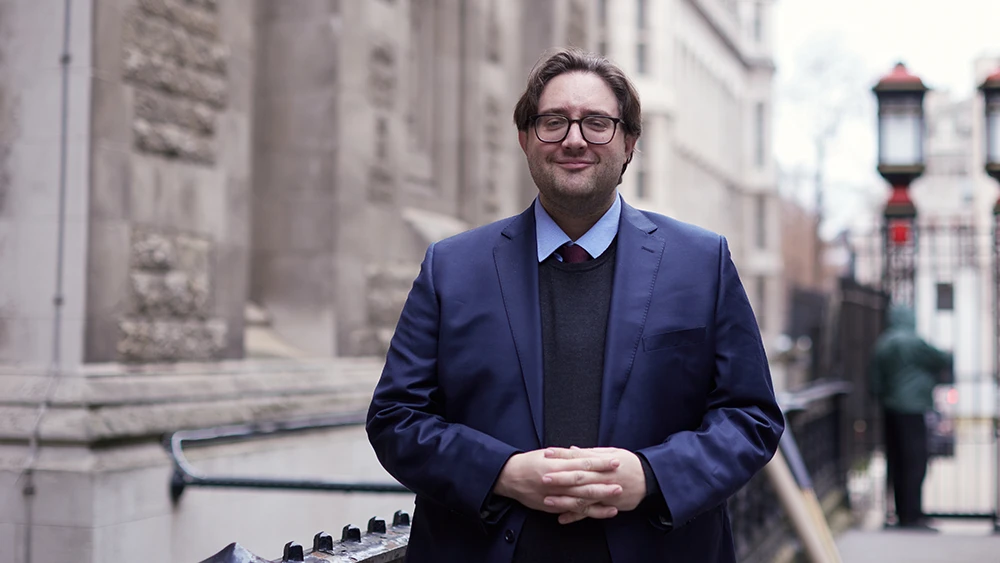
Non-Billable sat down with partner Ben Koehne, the firm's global head of financial services, who said the move was the product of a strategy that has been in place for more than a decade and has more recently been turbo-charged under the firm’s “2030” growth strategy of managing partner Andrew Johnston.
"It has been very much part of an intentional strategy," says Koehne.
From regional powerhouse to City player
Koehne joined AG from Allen & Overy in 2013. At the time, he says, the firm had already recognised that future growth would require deeper investment in London and international expansion.
"The firm had identified that in order to succeed, it needed to invest in the City, build on what was already a very strong national base and internationalise."
Today, AG is regularly advising on mandates that would once have been expected to go to more traditional City firms.
Recent instructions suggest the firm's ambitions are translating into market share. In the past 18 months, AG has advised on some of the UK's most high-profile financial services and infrastructure deals.
They include advising the National Wealth Fund on the £36 billion financing package for Sizewell C, acting for Coventry Building Society on its £780 million acquisition of The Co-operative Bank and advising Nationwide on certain aspects of its £2.9 billion takeover of Virgin Money.
Koehne says those mandates are the result of years of investment rather than any single turning point.
"It's a real testament to our growth and the way we've built our practice and relationships over many years that we are securing some groundbreaking mandates."
Financial services at the centre
Financial services has been central to that growth. The sector accounts for around a third of the firm's total revenues, making it comfortably AG’s largest industry group.
"It's our biggest sector in the firm," Koehne says. "It's really been a core strength of the firm."
The sector group brings together lawyers from financial regulation, banking, disputes, data and corporate practices.
"Our focus on our sectors has been a key part of our growth strategy," he says. "Really ensuring that we've got expertise not just in individual practice areas, but in joining up those areas from a sector perspective."
That approach is particularly important in financial services, where clients increasingly need advice that goes beyond technical legal analysis. The job is often about helping them understand risk and make decisions in highly regulated markets.
"One thing that flows through all of our practice areas, whatever we're advising on, is being able to advise clients on risk so they can take a view internally on how to deal with issues," Koehne says.
The sector-led strategy has been accompanied by an ambitious international expansion. Since opening its first continental European office in Hamburg in 2019, AG has built a European network spanning Ireland, Germany, France, Spain, Luxembourg and Poland, where it entered the market last year with an 80-lawyer team from Linklaters in Warsaw.
The firm also entered the Netherlands through a merger with Amsterdam-based law firm Florent, the latest chapter in its European expansion.
For Koehne, it’s not about opening offices for the sake of it. "It's really important for us that we have a strong, credible presence on the ground, rather than just a flag in the ground."
The next phase: tech and AI
Technology is an increasingly important part of the firm's offering, changing how it delivers services to clients. In a high-profile move last year, the firm brought in former Macfarlanes innovation head Chris Tart-Roberts to help lead tech-enabled services for financial institutions.
Koehne says clients are moving quickly to embrace AI and expect their law firms to do the same. Many are now including the use of AI and technology at the centre of their RFPs with firms increasingly being assessed on their technological capabilities and efficiency, emphasising how important innovation has become to the competitive landscape for legal services.
"It's becoming an expectation that you're using tech, or can support them in being able to use tech."
Despite the industry’s focus on AI, Koehne is clear that the firms that stay ahead will be those that use technology with purpose.
In his view, the firms that succeed will be those that stay relentlessly focused on clients, combining judgement and sector insight with smart use of tech to deliver for clients.
Join 10,000+ City law professionals who start their day with our newsletter.
The essential read for commercially aware lawyers.