Boies Schiller’s Tim Foden on the business of suing governments
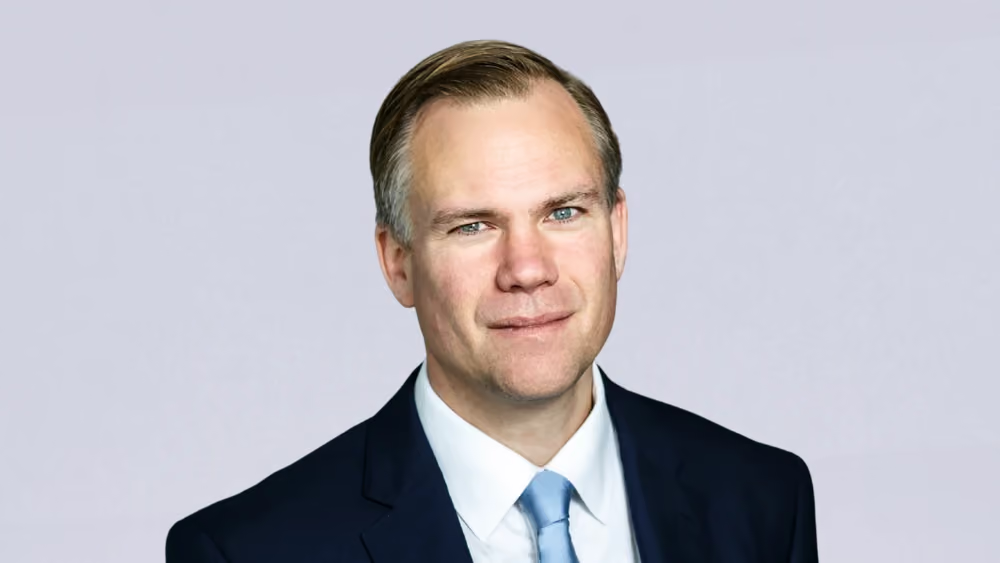
Boes Schiller’s Tim Foden specialises in investor-state disputes, representing companies whose assets have been harmed by government action.
He argues litigation funders back only the strongest claims and remains bullish on London's position in the global disputes market.
Tim Foden's practice has taken him to some unusual places.
Speaking on The Non-Billable Podcast, the Boies Schiller Flexner arbitration partner describes site visits to illegal mining operations in sub-Saharan Africa, a serious car accident in the Russian steppe that he suspected was sabotage and situations where he feared being detained at the airport.
"I've had government officials make implicit threats to me and my safety," Foden says. "Because we dared speak truth to power."
Foden, co-head of Boies Schiller's international arbitration group in London, specialises in investor-state disputes, regularly representing mining companies whose investments have been harmed by government action.
As a litigation funder friend of Foden put it, many of these cases fall into one of two categories: "cases with guns or with laws".
On the "laws" side, disputes often arise when governments change the regulatory framework around a project or use legislation to block an investor from developing an asset. The "guns" cases can be more dramatic.
"Either government officials, the army, police, or third parties show up at the mine and they take it by force," Foden says.
Much of his work involves bringing claims under contracts or investment treaties after investments have been seized or otherwise interfered with.
Funding fights
On the topic of litigation funders, Foden notes that many clients have a single major asset and, when that asset is taken or impaired, they may no longer have the resources to pursue a claim themselves.
He pushes back against suggestions that funders encourage weak cases.
"They diligence these cases within an inch of their lives," he says. "The idea that they're throwing money behind claims that otherwise wouldn't be brought is fatuous."
Foden also argues that the impact of the Supreme Court's PACCAR decision has been overstated, saying strong claims have continued to attract funding without significant disruption.
The London question
The conversation also covers London's position in the global disputes market, with Foden dismissing suggestions that the city is losing ground to rival arbitration centres.
"People have been saying London is under threat for the entire 15 years that I've lived here," he says. "Ultimately, people really like English law for their contracts, so they like to have disputes heard here."
Listen to the full conversation with Tim Foden on The Non-Billable Podcast.
Join 10,000+ City law professionals who start their day with our newsletter.
The essential read for commercially aware lawyers.