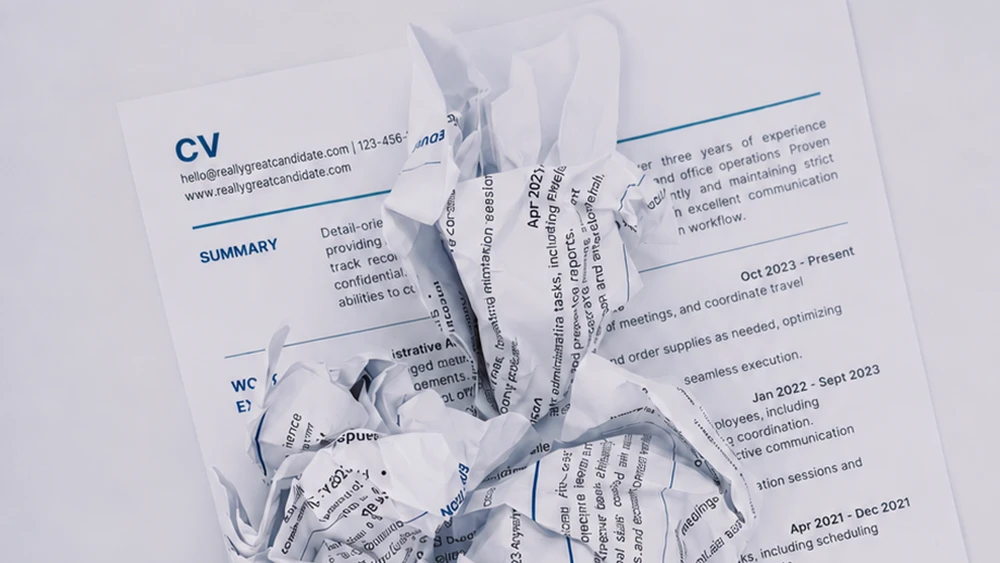
White & Case M&A partner Ferdinand Mason has warned against AI-inflated CVs after reviewing hundreds from students.
Law firms are setting boundaries on AI-assisted applications, urging candidates to preserve their own voice and avoid exaggerating their skills and experience.
A White & Case partner has warned aspiring lawyers against using AI to inflate their CVs, after reviewing hundreds of applications from students looking to secure training contracts.
Ferdinand Mason, an M&A partner at the US firm, said some candidates were claiming extensive deal experience after just a few weeks on vacation schemes.
“More than a few arrive with two full pages of M&A deals off the back of a few weeks on a vacation scheme,” Mason wrote in a LinkedIn post.
“Reading the roles claimed, you do wonder how the firm managed to keep the lights on before they arrived.”
Mason described a problem with “AI inflation” in applications, urging students to give an honest account of their experience rather than overstating their role.
“Look, I know it is the Hunger Games out there," he wrote. “Still, please leave yourselves something left to achieve after qualification.”
Keep it credible
Mason advised students to describe what they actually did, even if that involved relatively routine tasks.
"If your vacation scheme actually involved legal research, checking definitions and sitting quietly on calls, put that down," he wrote.
He encouraged candidates to demonstrate their understanding of the commercial issues behind deals rather than exaggerating their involvement.
A student who understands why a client was willing to concede one contractual warranty but refused to compromise on another may have something more interesting to discuss at an interview than someone claiming to have negotiated the entire agreement.
Mason was not arguing that students should avoid AI altogether.
"And please do use AI to tidy up your drafts," he wrote. "Just read the CV through before sending it, and ask yourself whether you could comfortably explain every claim across the interview table."
Drawing the line
Law firms have set out clearer expectations around the use of AI in graduate recruitment.
Clifford Chance warns applicants that over reliance on AI can weaken their applications, encouraging candidates to avoid generic content and retain their own voice. The firm also says it does not use AI to screen applications or make hiring decisions.
A&O Shearman has advised students against using AI to exaggerate their skills in applications, advising against using AI responses “word for word” and urging candidates to ensure their answers remain “authentic”.
Baker McKenzie takes a stricter approach, allowing AI for research and proofreading but prohibiting candidates from using it to generate application answers or complete assessments.
Its policy states: “AI should not be used to generate, substantially rewrite or provide answers that are then copied directly into an application or used to complete online assessments, assessment exercises or during video interviews.”
The firm warns that misuse of the technology could lead to applicants being withdrawn from the recruitment process.
Even the SRA has published guidance on AI use in its own recruitment process. Updated in October, the policy permits candidates to use AI to improve grammar, structure and clarity, but explicitly prohibits using it to invent or exaggerate experience, qualifications or achievements.
Mason ended his post by acknowledging the pressure on students, recalling that he had started as a paralegal after facing numerous rejections himself.
“There are a lot of us on this side of the table who still remember needing someone to give us a chance,” he wrote.
Join 10,000+ City law professionals who start their day with our newsletter.
The essential read for commercially aware lawyers.