Oxbridge grads dominate top pay for trainee barristers, survey shows
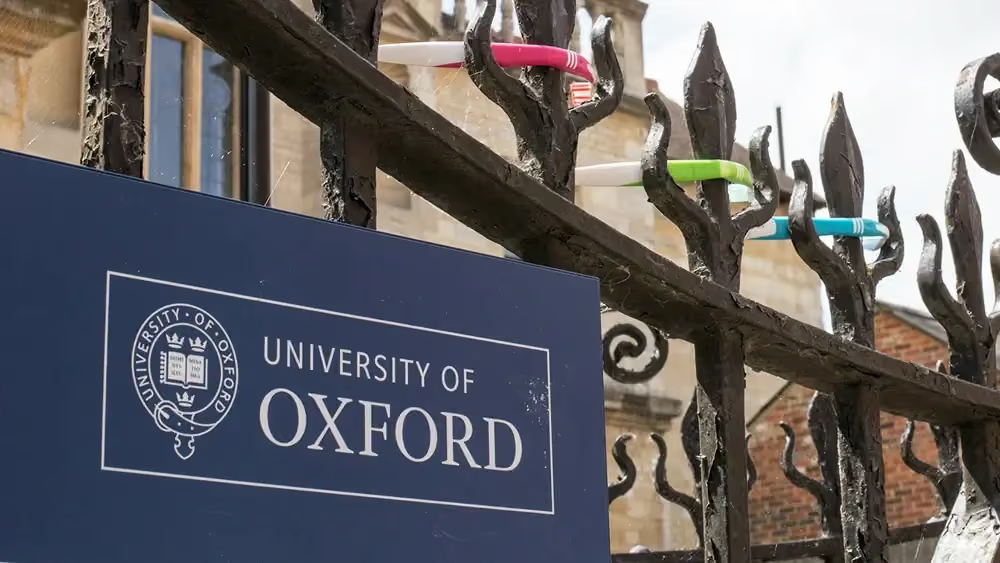
A survey of pupils by the Bar Council has found that Oxbridge graduates were 15 times more likely to receive pupillage awards of £60,000 or more.
While the median award size increased, further imbalances in pupillage awards were reported between men and women, different practice areas and other characteristics.
A new report by the Bar Council has found that pupils who went to Oxford or Cambridge were 15 times as likely to receive pupillage awards of £60,000 or more.
This year’s pupil survey report found that the median pupillage award - the funding paid to trainee barristers - was up this year from between £30,000-£39,000 to between £40,000-£49,999, but the cash isn’t distributed evenly among pupil barristers. Gender, schooling, and practice area all matter when it comes to awards.
For the first time, the survey collected data on the correlation between university and pupillage awards, and found that Oxbridge graduates were 15 times more likely to have secured awards upwards of £60,000 than those who went to all other universities.
61% of them received awards upwards of that benchmark, compared to just 4% of those who attended any other university.
The statistic might be explained by looking at the kinds of chambers Oxbridge graduates end up being pupils of. Spots at the highest-awarding chambers in London are dominated by grads from the elite duo, with Legal Cheek research from the end of last year finding that 58% of tenants at top chambers went to Oxbridge.
The Big Law scene in London dances to a similar tune. Non-Billable found that more than a third of partners appointed at the UK’s top City firms in 2025 were Oxbridge alumni, with Durham following closely behind.
City law is also dominated by the two universities at the trainee level - data from Chambers’ student guide found that nearly a quarter of trainees at Magic Circle and US firms in London (which also tend to be the highest paying) attended Oxford or Cambridge.
Who else gets more?
As well as academic background, award size differed between men and women. Male pupils were more likely to receive higher awards - 29% of male respondents were given £60,000 or more compared to 17% of female respondents, a similar gap to those of the last two years.
Those working in crime were also more likely to get lower awards, with 67% of criminal pupils receiving under £40,000, compared to only 34% in other areas. This group were also the most likely to report experiencing 'a lot' of financial hardship - 19% of criminal pupils did so, compared to 8% of all other pupils.
Only 8% of awards granted to pupils in publicly funded areas hit or exceeded £60,000, a number obtained by 46% of those in privately funded areas. 70% of Chancery pupils had awards over £60,000 as did 83% of pupils in commercial practice.
Join 10,000+ City law professionals who start their day with our newsletter.
The essential read for commercially aware lawyers.