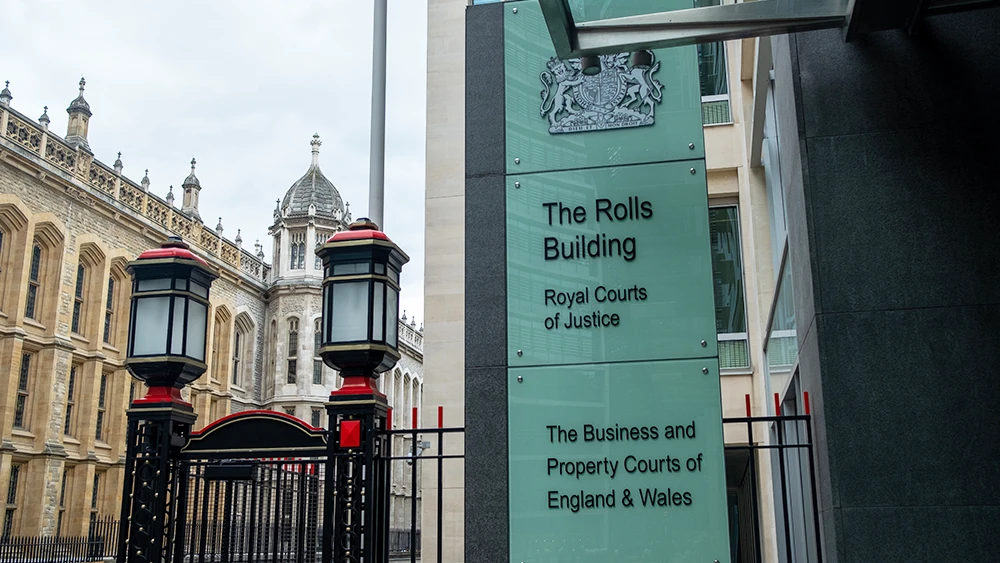
The High Court heard arguments this week over whether a client committee can replace Pogust Goodhead in the Mariana dam litigation.
PG warned that switching firms could expose claimants to more than £2 billion in legal costs. A ruling is expected on Friday or Monday.
The battle for control of the Mariana dam litigation played out in the High Court over two days this week, as lawyers argued over whether a client committee had the power to replace Pogust Goodhead with Bailey Glasser International (BGI) as the law firm representing more than 400,000 claimants.
There is no dispute that individual claimants have the right to terminate PG. But Sa'ad Hossain KC, representing the committee, argued that the committee had the power to make that decision collectively on their behalf.
“If the only way to terminate is through individual claimants, that is completely impractical,” Mr Justice Waksman told Alan Maclean KC, representing PG.
Collective action
The proceedings pit PG against a client committee chaired by Brazilian indigenous group leader Marcelo Krenak, alongside other committee members and claimants.
Hossain argued that the committee was created to act as the collective voice of the claimants and had the power to put their decision to change lawyers into effect.
“There needs to be some form of common action,” Hossain said. “The only way to do these things is collectively, and that is why the committee was created.”
He argued it would be “wholly unrealistic” to expect hundreds of thousands of claimants who wanted to continue the litigation with a different firm to coordinate the change individually.
PG pushes back
PG argued that the committee's interpretation gave it a power that simply did not exist in the agreements governing the claims.
Maclean described the contractual arrangement as “tripartite” rather than simply a relationship between principal and agent, stressing that PG was itself a contracting party.
He argued that the committee remained subject to obligations under the Litigation Management Agreement, which governs how the claims are managed and the committee's role, while individual claimants also had obligations to cooperate with PG.
“How on earth could these claimants with these obligations conceivably enter into an agreement with BGI?” Maclean asked.
Maclean argued that terminating the existing agreements would also bring an end to the committee created under them. The committee could not then use those powers to enter into a replacement agreement with BGI.
“You can't come back from the dead,” he said.
PG also warned that replacing the firm could expose claimants to more than £2 billion in legal costs, arguing that terminating the existing agreements would remove contractual protections and leave them facing collective personal liability.
Justice Waksman pressed PG on what that would mean for claimants who wanted to change firms. Maclean maintained that individual claimants could coordinate their individual decisions to terminate, without giving the committee itself the power to remove PG on their behalf.
Battle for control
The dispute follows months of upheaval around one of the largest group actions in English legal history.
PG secured a major victory for the claimants last year when the High Court found BHP liable over the 2015 Fundão dam collapse. The litigation has since moved towards the next phase of determining damages.
A 17-member client committee voted unanimously on 28 August to replace Pogust Goodhead with BGI. The attempted transfer has also put PG co-founder Tom Goodhead on the opposite side of the firm he helped build.
Goodhead, who launched the BHP claim in 2018 before being ousted as PG's chief executive last year, joined BGI last month alongside more than 15 lawyers with experience on the litigation.
PG has meanwhile brought in Quinn Emanuel for the next phase, with London senior partner Richard East and partner Justin Michaelson working on the case.
Privacy fight
The hearing opened on Monday with a dispute over confidentiality. PG criticised an application by lawyers for the committee to restrict access to parts of the proceedings, arguing that it “flies in the face of access to justice”.
The committee argued that disclosure of certain documents could give BHP access to privileged or confidential material and an advantage in the underlying litigation.
Justice Waksman declined to make the privacy order, although he acknowledged a “clear public interest” in protecting privileged material. He said confidentiality issues could instead be decided case-by-case if they arose during the hearing.
The two-day hearing concluded on Tuesday. Waksman said he expects to give his decision on Friday or Monday next week.
Join 10,000+ City law professionals who start their day with our newsletter.
The essential read for commercially aware lawyers.