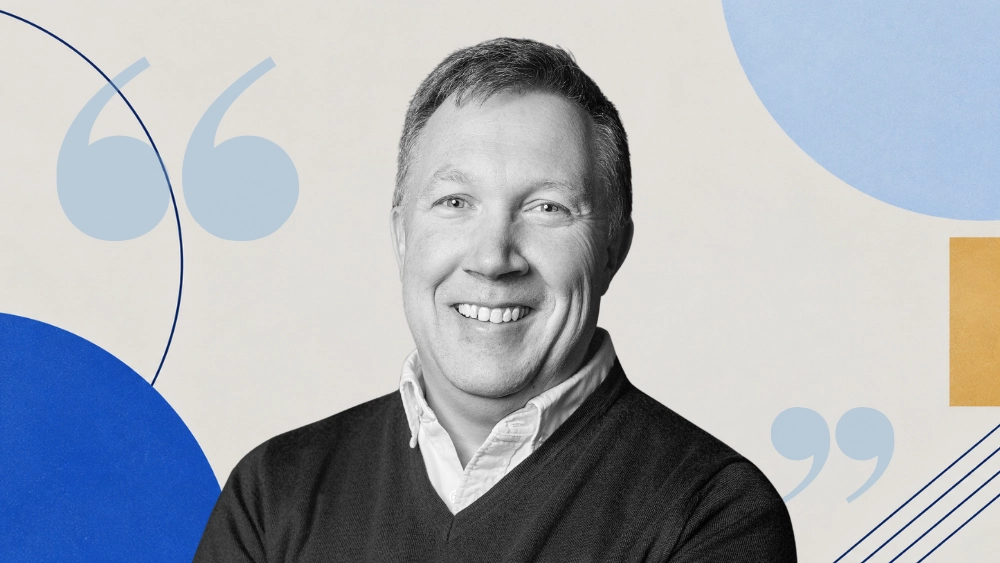
The ex-Kirkland lawyer fixing the unglamorous side of private funds
How former City funds lawyer Amr Jomaa turned a 3am late night in the office into legal tech startup Navys.


Contents
London-based startup Navys, fresh off a $1 million pre-seed round backed by The LegalTech Fund, is targeting a niche but fast-growing pressure point in private markets: limited partner (LP) transfers.
The secondaries market has expanded rapidly in recent years as investors seek earlier liquidity and portfolio rebalancing, making LP transfers a far more regular part of fund operations.
Deal volumes surged 41% in 2025 to $226 billion and are expected to double by 2030. Investor EQT’s recent $3.7 billion acquisition of secondaries giant Coller Capital is a telling sign of how central the market has become.
That context helps explain both the opportunity founder and former Kirkland & Ellis lawyer Amr Jomaa sees and why his background matters. Kirkland is widely regarded as one of the most demanding and sophisticated training grounds for funds lawyers, exposing associates early to complex structures, high-volume deal flow and some of the biggest names in private capital. It is also, by design, a place people do not leave lightly.
Though Jomaa is not the only former Kirkland lawyer to strike out on his own. Former London Kirkland private equity partner Joel Arnell, raised a $5.5 million seed round for Dealstack, a software platform aimed at automating workflows in private capital deals.
Stay ahead of the City law market with our free email briefing - essential industry news and analysis, in your inbox three times a week.
Against that backdrop, Jomaa is clear about what he is not trying to build. When I sat down with him, the conversation quickly moved away from artificial intelligence and towards something far less glamorous.
His ambition, he told me, is not to build another general-purpose legal tech tool, but rather "the brain behind the funds" - starting with one of the most process-heavy and least-loved parts of private markets: LP transfers.
What began as a late-night frustration during his time as a Kirkland funds associate became a broader rethink of how things should work. We talked about why lawyers spend so much time on non-legal tasks, why a lot of AI talk is fluff, how secondaries are changing the game and his own perspective on risk eventually pushing him to step away from the partnership track to build a different kind of business.
Building the brain behind funds
"The endgame for me is to build the legal operating system for funds - the brain behind funds," he says. The ambition extends far beyond any single workflow, but the company is starting with LP transfers, using one of the most process-heavy corners of private markets as a wedge into a much larger vision.
Useful before sexy
Rather than leading with artificial intelligence, the focus is on something more fundamental. "In order to have the AI layer on top of the funds, you need a pre-step which is to structure that data in a manner that works for everyone," he says. The sequencing matters.
"Number one is the infrastructure for funds and layer two is AI and intelligence."
"There’s a lot of hype in legal tech around AI and a lot of it is just marketing," he says. His instinct has been to resist that temptation. "We’re trying to build systems that are useful before we build systems that are sexy."
There’s a lot of hype in legal tech around AI and a lot of it is just marketing.
The work behind the work
The idea emerged directly out of his own experience as a practising lawyer. "When I was a funds lawyer at Kirkland, I noticed one of the biggest pain points was LP transfers," he says.
One particular transaction crystallised that frustration. "It was 29th December 2024 at 3am and I was doing an LP transfer, and I thought, surely there’s a better way to do this. It can’t be so inefficient to do something that is basically just back and forth."
In practice, much of the time spent on LP transfers has little to do with legal analysis. "A lot of time spent on transfers is just process," he says. "It’s chasing signatures, creating PDFs and going back and forth on ‘have you signed this, we need to sign this, you need to sign that, the PDFs didn’t combine.’"
Email, for now, acts as the default infrastructure. "It’s just done on email and I don’t think that’s the most efficient way," he adds. "It’s about 150–200 emails per transfer."
Solving his own problem
The idea for the product began as a personal tool he wished he had while at Kirkland. "I’ve always done a bit of coding on the side and with AI, I was able to do a lot more." From there, the scope expanded. "I thought there’s so much more we can do."
Secondaries are changing the game
The bet on this type of technology is reinforced by structural shifts in private markets. "Private equity is a very illiquid market and conceptually, it’s supposed to be illiquid," he says. Over time, however, that assumption has softened. "It’s become more democratised for investors to move money around for whatever reason. The secondaries market exponentially grew from almost nothing to a huge, separate business."
Liquidity pressures have only accelerated that trend. "Some funds haven’t been able to return enough money to their LPs so they need liquidity, so some leave the fund because they need cash," he says. "People need liquidity and it just makes sense for this market to grow."
Law Firm | Trainee First Year | Trainee Second Year | Newly Qualified (NQ) |
|---|---|---|---|
| Addleshaw Goddard | £52,000 | £56,000 | £100,000 |
| Akin | £60,000 | £65,000 | £174,418 |
| A&O Shearman | £56,000 | £61,000 | £150,000 |
| Ashurst Perkins Coie | £60,000 | £65,000 | £145,000 |
| Baker McKenzie | £56,000 | £61,000 | £150,000 |
| BCLP | £56,000 | £61,000 | £135,000 |
| Bird & Bird | £50,000 | £55,000 | £102,000 |
| Bristows | £48,000 | £52,000 | £95,000 |
| Burges Salmon | £49,500 | £51,500 | £76,000 |
| Charles Russell Speechlys | £52,000 | £55,000 | £93,000 |
| Cleary Gottlieb | £62,500 | £67,500 | £172,500 |
| Clifford Chance | £56,000 | £61,000 | £150,000 |
| Clyde & Co | £48,500 | £51,000 | £90,000 |
| CMS | £50,000 | £55,000 | £120,000 |
| Cooley | £55,000 | £60,000 | £157,000 |
| Davis Polk | £65,000 | £70,000 | £180,000 |
| Debevoise | £55,000 | £60,000 | £173,000 |
| Dechert | £55,000 | £61,000 | £165,000 |
| Dentons | £54,000 | £59,000 | £112,500 |
| DLA Piper | £55,000 | £60,000 | £140,000 |
| Eversheds Sutherland | £50,000 | £55,000 | £120,000 |
| Farrer & Co | £50,000 | £52,000 | £92,000 |
| Fieldfisher | £51,000 | £55,000 | £102,000 |
| Freshfields | £56,000 | £61,000 | £150,000 |
| Fried Frank | £55,000 | £60,000 | £175,000 |
| Gibson Dunn | £65,000 | £70,000 | £180,000 |
| Goodwin Procter | £55,000 | £60,000 | £175,000 |
| Gowling WLG | £48,500 | £53,500 | £108,000 |
| Herbert Smith Freehills Kramer | £56,000 | £61,000 | £145,000 |
| HFW | £52,000 | £56,000 | £103,500 |
| Hill Dickinson | £44,000 | £45,000 | £80,000 |
| Hogan Lovells | £56,000 | £61,000 | £145,000 |
| Irwin Mitchell | £43,500 | £45,500 | £78,000 |
| Jones Day | £60,000 | £68,000 | £170,000 |
| K&L Gates | £55,000 | £60,000 | £125,000 |
| Kennedys | £43,000 | £46,000 | £85,000 |
| King & Spalding | £62,000 | £67,000 | £175,000 |
| Kirkland & Ellis | £70,000 | £75,000 | £174,418 |
| Latham & Watkins | £60,000 | £65,000 | £174,418 |
| Linklaters | £56,000 | £61,000 | £150,000 |
| Macfarlanes | £60,000 | £65,000 | £150,000 |
| Mayer Brown | £55,000 | £60,000 | £150,000 |
| McDermott Will & Schulte | £70,000 | £75,000 | £174,418 |
| Milbank | £70,000 | £75,000 | £174,418 |
| Mills & Reeve | £46,800 | £47,000 | £84,000 |
| Mishcon de Reya | £52,500 | £57,500 | £110,000 |
| Morgan Lewis | £57,500 | £62,500 | £173,000 |
| Norton Rose Fulbright | £56,000 | £61,000 | £140,000 |
| Orrick | £60,000 | £65,000 | £170,000 |
| Osborne Clarke | £57,000 | £59,000 | £100,000 |
| Paul Hastings | £60,000 | £68,000 | £173,000 |
| Paul Weiss | £60,000 | £65,000 | £180,000 |
| Penningtons Manches Cooper | £48,000 | £50,000 | £83,000 |
| Pinsent Masons | £54,000 | £59,000 | £109,000 |
| Quinn Emanuel | n/a | n/a | £189,000 |
| Reed Smith | £55,000 | £60,000 | £135,000 |
| Ropes & Gray | £62,000 | £67,000 | £170,000 |
| RPC | £48,000 | £52,000 | £95,000 |
| Shoosmiths | £45,000 | £47,000 | £105,000 |
| Sidley Austin | £60,000 | £65,000 | £175,000 |
| Simmons & Simmons | £56,000 | £61,000 | £130,000 |
| Simpson Thacher | £65,000 | £70,000 | £178,000 |
| Skadden | £58,000 | £63,000 | £177,000 |
| Slaughter and May | £56,000 | £61,000 | £150,000 |
| Squire Patton Boggs | £50,000 | £55,000 | £110,000 |
| Stephenson Harwood | £50,000 | £55,000 | £105,000 |
| Sullivan & Cromwell | £70,000 | £75,000 | £181,000 |
| TLT | £44,000 | £47,500 | £85,000 |
| Travers Smith | £55,000 | £60,000 | £130,000 |
| Trowers & Hamlins | £50,000 | £54,000 | £90,000 |
| Vinson & Elkins | £60,000 | £65,000 | £173,077 |
| Watson Farley & Williams | £51,500 | £56,000 | £107,000 |
| Weightmans | £36,000 | £38,000 | £70,000 |
| Weil | £60,000 | £65,000 | £170,000 |
| White & Case | £62,000 | £67,000 | £175,000 |
| Willkie Farr & Gallagher | £60,000 | £65,000 | £180,000 |
| Winston Taylor | £56,000 | £61,000 | £125,000 |
| Withers | £47,000 | £52,000 | £95,000 |
| Womble Bond Dickinson | £45,000 | £47,000 | £85,000 |
Rank | Law Firm | Revenue | Profit per Equity Partner (PEP) |
|---|---|---|---|
| 1 | DLA Piper* | £3,130,000,000 | £2,500,000 |
| 2 | A&O Shearman | £2,900,000,000 | £2,000,000 |
| 3 | Clifford Chance | £2,400,000,000 | £2,100,000 |
| 4 | Hogan Lovells | £2,320,000,000 | £2,400,000 |
| 5 | Linklaters | £2,320,000,000 | £2,200,000 |
| 6 | Freshfields | £2,250,000,000 | Not disclosed |
| 7 | CMS** | £1,800,000,000 | Not disclosed |
| 8 | Norton Rose Fulbright* | £1,800,000,000 | Not disclosed |
| 9 | HSF Kramer | £1,360,000,000 | £1,400,000 |
| 10 | Ashurst | £1,030,000,000 | £1,390,000 |
| 11 | Clyde & Co | £854,000,000 | Not disclosed |
| 12 | Eversheds Sutherland | £769,000,000 | £1,400,000 |
| 13 | Pinsent Masons | £680,000,000 | £790,000 |
| 14 | Slaughter and May*** | £650,000,000 | Not disclosed |
| 15 | BCLP* | £640,000,000 | £790,000 |
| 16 | Simmons & Simmons | £615,000,000 | £1,120,000 |
| 17 | Bird & Bird** | £580,000,000 | £720,000 |
| 18 | Addleshaw Goddard | £550,000,000 | £1,000,000 |
| 19 | Taylor Wessing | £526,000,000 | £1,100,000 |
| 20 | Osborne Clarke** | £476,000,000 | £800,000 |
| 21 | DWF | £466,000,000 | Not disclosed |
| 22 | Womble Bond Dickinson | £450,000,000 | Not disclosed |
| 23 | Kennedys | £428,000,000 | Not disclosed |
| 24 | Fieldfisher | £385,000,000 | £1,000,000 |
| 25 | Macfarlanes | £371,000,000 | £3,100,000 |
What do City lawyers actually do each day?
For a closer look at the day-to-day of some of the most common types of lawyers working in corporate law firms, explore our lawyer job profiles:
Walking away from law
The decision to step away from private practice came with obvious trade-offs. "I was on a good track to make partner," he says. What tipped the balance was a long-term perspective. "I always think about things that I will regret at the end of my career. I thought if I don’t do this now, I’ll regret it when I’m 80. There’s a lot of risk involved - giving up your career, a good salary and now it’s all uncertain," he adds.
Inside the company, that uncertainty is acknowledged openly. "In our office, we have a motto: ‘do you believe?’ We ask each other all the time because it’s almost an absurd belief that it’s going to work out."
In our office, we have a motto: ‘do you believe?’
A changing relationship with risk
That willingness to step away from the security of a defined career path is shaped by his personal history. "I grew up in Lebanon and there is a financial crisis there - a lot of people’s money is stuck in banks," he says. "My parents worked their whole lives and saved for their retirement, and they just lost it like that."
The lesson was about how easily security can evaporate. "That made me realise that I may be sacrificing these startup ideas and plans that I have for financial certainty, but it could also be lost at any moment." He sees a broader shift underway. "There are more and more people like me leaving safe, secure jobs to do something novel."
On raising capital
Before raising capital, the focus was on testing demand. "Before we even started raising money, we were trying to sell the product vision to see whether there was interest in the market to have an LP transfer solution," he says. Those conversations often took an unexpected turn. "A lot of our sales meetings ended up being investor meetings. They said, ‘I am also interested in investing, are you taking any investments?’"
"That’s how we started fundraising - we initially bootstrapped some of it." The cap table reflects that approach. "The people on our cap table are people that know the pain points inside and out and are operators in this space."
A collaborative platform
Corporate work, unlike litigation, is inherently collaborative. "We want the same thing which is to sign this contract as fast as possible. That’s the idea behind Navys," he says.
If it works, the impact should be tangible for fund managers. "I want the GP, the fund managers to say, because we’re using Navys, we’re able to have less friction with investors and LPs and basically become more successful."
The platform is designed to serve all the participants involved in the transfer - fund managers, investment firms, buyers and sellers of LP interest, law firms and administrators and advisors, and eventually the investment banks like Evercore and Lazard.
Less grind, more real work
"Law attracts very smart, very academic, hard-working people," he says, but the reality can disappoint. "I went to law school thinking I was going to be doing all these interesting cases and transactions, and that turns out to be about 10% of the job as a junior. You get into these jobs and find yourself doing a lot of non-legal work, pushing paper."
Clients of law firms are also asking for law firms to modernise. The traditional model, he argues, is increasingly hard to justify. "It makes almost no sense now to keep doing manual repetitive tasks that require almost no legal work and billing your client £1,000 an hour."
It makes no sense now to keep doing manual repetitive tasks that require almost no legal work and billing your client £1,000 an hour.
In his view, that balance should reverse. "The legal work that lawyers will be doing in the future will be real legal work, which is the stuff you want to be paying someone £1,000 an hour for - analysis, arguments, thinking about the transaction from a macro perspective."
There may be fewer billable hours, he accepts, but they would consist of more meaningful, valuable work.
Life beyond law
There are elements of practising law he misses. "I miss working with my old colleagues," he says, but the change has brought variety. "At law firms, you work with other lawyers. Now, I work with engineers, with marketing, and I find that it’s really interesting to learn about other jobs."
"I don’t miss the lack of variety and creativity." The part of the job he wants to preserve is the one that drew him to law in the first place. "I will miss that 10% - the very interesting work of sitting with the client and trying to strategise about the next fundraise."
| Firm | London office since | Known for in London |
|---|---|---|
| Akin | 1997 | Restructuring, funds |
| Baker McKenzie | 1961 | Finance, capital markets, TMT |
| Davis Polk | 1972 | Leveraged finance, corporate/M&A |
| Gibson Dunn | 1979 | Private equity, arbitration, energy, resources and infrastructure |
| Goodwin | 2008 | Private equity, funds, life sciences |
| Kirkland & Ellis | 1994 | Private equity, funds, restructuring |
| Latham & Watkins | 1990 | Finance, private equity, capital markets |
| McDermott Will & Schulte | 1998 | Finance, funds, healthcare |
| Milbank | 1979 | Finance, capital markets, energy, resources and infrastructure |
| Paul Hastings | 1997 | Leveraged finance, structured finance, infrastructure |
| Paul Weiss | 2001 | Private equity, leveraged finance |
| Quinn Emanuel | 2008 | Litigation |
| Sidley Austin | 1974 | Leveraged finance, capital markets, corporate/M&A |
| Simpson Thacher | 1978 | Leveraged finance, private equity, funds |
| Skadden | 1988 | Finance, corporate/M&A, arbitration |
| Sullivan & Cromwell | 1972 | Corporate/M&A, restructuring, capital markets |
| Weil | 1996 | Restructuring, private equity, leverage finance |
| White & Case | 1971 | Capital markets, arbitration, energy, resources and infrastructure |
| Law firm | Type | First-year salary |
|---|---|---|
| White & Case | US firm | £32,000 |
| Stephenson Harwood | International | £30,000 |
| A&O Shearman | Magic Circle | £28,000 |
| Charles Russell Speechlys | International | £28,000 |
| Freshfields | Magic Circle | £28,000 |
| Herbert Smith Freehills | Silver Circle | £28,000 |
| Hogan Lovells | International | £28,000 |
| Linklaters | Magic Circle | £28,000 |
| Mishcon de Reya | International | £28,000 |
| Norton Rose Fulbright | International | £28,000 |
Law Firm | Trainee First Year | Trainee Second Year | Newly Qualified (NQ) |
|---|---|---|---|
| A&O Shearman | £56,000 | £61,000 | £150,000 |
| Clifford Chance | £56,000 | £61,000 | £150,000 |
| Freshfields Bruckhaus Deringer | £56,000 | £61,000 | £150,000 |
| Linklaters | £56,000 | £61,000 | £150,000 |
| Slaughter and May | £56,000 | £61,000 | £150,000 |
Law Firm | Trainee First Year | Trainee Second Year | Newly Qualified (NQ) |
|---|---|---|---|
| A&O Shearman | £56,000 | £61,000 | £150,000 |
| Clifford Chance | £56,000 | £61,000 | £150,000 |
| Freshfields | £56,000 | £61,000 | £150,000 |
| Linklaters | £56,000 | £61,000 | £150,000 |
| Slaughter and May | £56,000 | £61,000 | £150,000 |
Law Firm | Trainee First Year | Trainee Second Year | Newly Qualified (NQ) |
|---|---|---|---|
| Ashurst | £60,000 | £65,000 | £145,000 |
| Bryan Cave Leighton Paisner | £53,000 | £58,000 | £135,000 |
| Herbert Smith Freehills | £56,000 | £61,000 | £145,000 |
| Macfarlanes | £60,000 | £65,000 | £150,000 |
| Travers Smith | £55,000 | £60,000 | £130,000 |
| Firm | Merger year | Known for in London |
|---|---|---|
| BCLP | 2018 | Real estate, corporate/M&A, litigation |
| DLA Piper | 2005 | Corporate/M&A, real estate, energy, resources and infrastructure |
| Eversheds Sutherland | 2017 | Corporate/M&A, finance |
| Hogan Lovells | 2011 | Litigation, regulation, finance |
| Mayer Brown | 2002 | Finance, capital markets, real estate |
| Norton Rose Fulbright | 2013 | Energy, resources and infrastructure, insurance, finance |
| Reed Smith | 2007 | Shipping, finance, TMT |
| Squire Patton Boggs | 2011 | Corporate/M&A, pensions, TMT |
Law Firm | Trainee First Year | Trainee Second Year | Newly Qualified (NQ) |
|---|---|---|---|
| Ashurst | £60,000 | £65,000 | £145,000 |
| BCLP | £53,000 | £58,000 | £135,000 |
| Herbert Smith Freehills Kramer | £56,000 | £61,000 | £145,000 |
| Macfarlanes | £60,000 | £65,000 | £150,000 |
| Travers Smith | £55,000 | £60,000 | £130,000 |
Know what's moving the market
Get the free email that keeps UK lawyers ahead on the stories that matter.
We send a short summary of the biggest legal industry and business stories you need to know about three times a week. Free to join. Unsubscribe at any time.