A Big Law partner on retiring early and facing the problem of what comes next
Former Eversheds Sutherland global litigation co-head Paul Worth on retirement, identity and a surprising LinkedIn following.



Contents
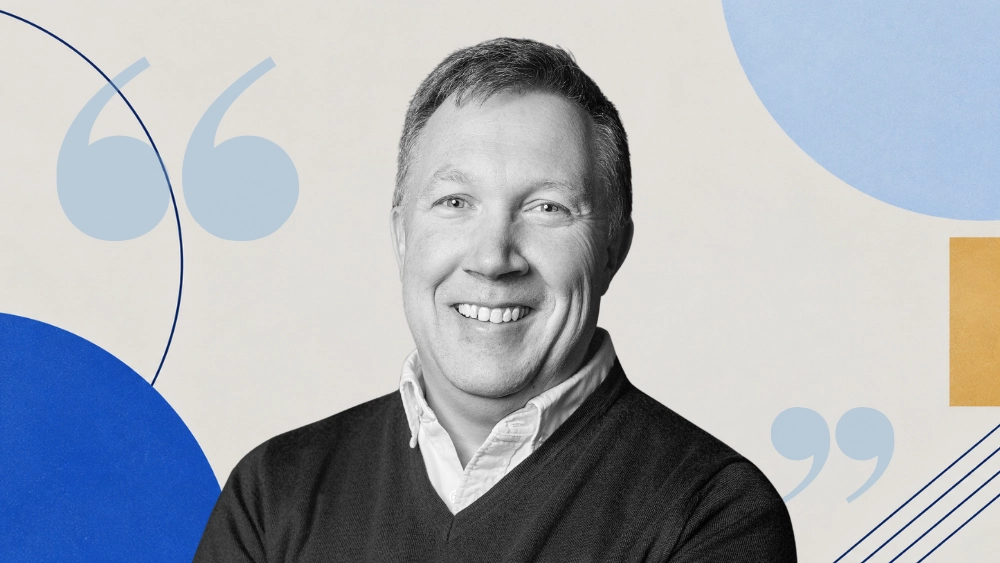
When we spoke, Paul Worth had just returned from the Caribbean - a long way from the packed diary of meetings, flights and client calls that defined his years leading litigation at Eversheds Sutherland. Stepping away from Big Law at the “relatively young” age of 56, he discovered, was the easy part. But figuring out what comes next proved harder.
“There are three different ways to retire,” Worth told me, reflecting on his own transition after leaving Eversheds at the end of 2023, where he had been global co-head of litigation.
“You can just jump off the end of the cliff. That’s what I did, but it’s not for the faint hearted – make sure you’ve got your parachute on.”
“I didn’t have a very clear plan,” he admitted. “Looking back, I didn’t do a very good job of my retirement,” he says.
A more sensible option, he suggests, is what he calls the “glider pilot approach” - slowly descending by reducing your workload and moving to part-time work before stopping altogether.
The third option is what he calls the “Tigger from Winnie-the-Pooh” approach - instead of a clean break, you bounce in and out of retirement - taking on projects, travelling, stepping back again, then popping up somewhere new.
Worth’s parachute, as it turns out, has been stitched together from Yorkshire sea air, a deliberately rebuilt routine and a surprisingly lively second act on LinkedIn, where his posts mix humour, hard-earned advice for the younger generation and candid observations about what retirement does to a person’s sense of self.
Stay ahead of the City law market with our free email briefing - essential industry news and analysis, in your inbox three times a week.
Jumping off
Worth says he loved his job. “I loved pretty much every minute of it.” He could have stayed another three or four years, but after a “very busy eight years” leading the litigation practice group, including through its merger with US firm Sutherland in 2017, he felt ready.
“Eight years in any role is a long time,” he said. “We completed the merger integration with Sutherland. I’d spent a lot of time in the US creating the global litigation practice and led the practice group through a pandemic.”
By 2022, the group was back in the office and momentum had returned. Worth describes the period as one of substantial growth: “We doubled the size of the group from £100 million to a £200 million business and grew to 600 people.”
I just thought, well, this ought to be the pinnacle of your career.
There was also a sense of arriving at a personal summit. In 2023, he said, the firm was recognised as the UK’s largest disputes practice by revenue in the litigation tables.
“I just thought, well, this ought to be the pinnacle of your career.” He added: “I didn’t aspire to be the chief executive or the global managing partner of the firm,” he said. “That would have just put me back on the road and involved huge amounts of international travel in my late 50s.”
Add to that the pull of life outside the office. His daughters had finished university and were working, and the family had a second home on the Yorkshire coast, bought “with one eye to retirement”. Worth and his wife wanted to spend more time there and do more travelling. There was also a more personal reason.
“My mum passed away when she was only 59 of bowel cancer and that’s always stayed with me, that my mum never really got the retirement that she deserved,” he said. “You just don’t know what’s around the corner, and I just thought this feels like it could be a good time,” he says.
Leaving ‘neat and tidy’
After more than two decades at the firm, Worth wanted to make sure his departure was handled smoothly.
“When you’ve been at a firm for 22 years, you want to make sure that you’re leaving everything neat and tidy,” he said. “That was my mindset.”
He began transferring client responsibilities well ahead of his exit. “I handed over a banking client partner relationship to a very capable colleague about a year before I retired so that I’d be around to help with the handover.”
Eversheds announced his successor, Mark Davenport, internally around nine months before retirement, with the role handed over three months before his official end date. The transition, Worth says, was “nice and orderly”, noting the group has continued to thrive - with a wry acknowledgement: “They didn’t need me after all.”
They didn't need me after all.
Many UK law firms have historically operated with a mandatory retirement age for partners - often around 60 - though many large firms have relaxed or removed these policies in recent years.
Worth himself lands on flexibility. “I think it’s good for firms to have a degree of flexibility because everybody’s circumstances are different and firms’ needs differ,” he said. “Lots of people are still completely on top of their game at 62 or 63.”
But the bigger point, for him, is that “just because you retire from life in Big Law doesn’t mean you have to put your slippers on, light a pipe, sit by the fire and read the newspaper for the next 25 years. There’s a big wide world out there.”
Law Firm | Trainee First Year | Trainee Second Year | Newly Qualified (NQ) |
|---|---|---|---|
| Addleshaw Goddard | £52,000 | £56,000 | £100,000 |
| Akin | £60,000 | £65,000 | £174,418 |
| A&O Shearman | £56,000 | £61,000 | £150,000 |
| Ashurst Perkins Coie | £60,000 | £65,000 | £145,000 |
| Baker McKenzie | £56,000 | £61,000 | £150,000 |
| BCLP | £56,000 | £61,000 | £135,000 |
| Bird & Bird | £50,000 | £55,000 | £102,000 |
| Bristows | £48,000 | £52,000 | £95,000 |
| Burges Salmon | £49,500 | £51,500 | £76,000 |
| Charles Russell Speechlys | £52,000 | £55,000 | £93,000 |
| Cleary Gottlieb | £62,500 | £67,500 | £172,500 |
| Clifford Chance | £56,000 | £61,000 | £150,000 |
| Clyde & Co | £48,500 | £51,000 | £90,000 |
| CMS | £50,000 | £55,000 | £120,000 |
| Cooley | £55,000 | £60,000 | £157,000 |
| Davis Polk | £65,000 | £70,000 | £180,000 |
| Debevoise | £55,000 | £60,000 | £173,000 |
| Dechert | £55,000 | £61,000 | £165,000 |
| Dentons | £54,000 | £59,000 | £112,500 |
| DLA Piper | £55,000 | £60,000 | £140,000 |
| Eversheds Sutherland | £50,000 | £55,000 | £120,000 |
| Farrer & Co | £50,000 | £52,000 | £92,000 |
| Fieldfisher | £51,000 | £55,000 | £102,000 |
| Freshfields | £56,000 | £61,000 | £150,000 |
| Fried Frank | £55,000 | £60,000 | £175,000 |
| Gibson Dunn | £65,000 | £70,000 | £180,000 |
| Goodwin Procter | £55,000 | £60,000 | £175,000 |
| Gowling WLG | £48,500 | £53,500 | £108,000 |
| Herbert Smith Freehills Kramer | £56,000 | £61,000 | £145,000 |
| HFW | £52,000 | £56,000 | £103,500 |
| Hill Dickinson | £44,000 | £45,000 | £80,000 |
| Hogan Lovells | £56,000 | £61,000 | £145,000 |
| Irwin Mitchell | £43,500 | £45,500 | £78,000 |
| Jones Day | £60,000 | £68,000 | £170,000 |
| K&L Gates | £55,000 | £60,000 | £125,000 |
| Kennedys | £43,000 | £46,000 | £85,000 |
| King & Spalding | £62,000 | £67,000 | £175,000 |
| Kirkland & Ellis | £70,000 | £75,000 | £174,418 |
| Latham & Watkins | £60,000 | £65,000 | £174,418 |
| Linklaters | £56,000 | £61,000 | £150,000 |
| Macfarlanes | £60,000 | £65,000 | £150,000 |
| Mayer Brown | £55,000 | £60,000 | £150,000 |
| McDermott Will & Schulte | £70,000 | £75,000 | £174,418 |
| Milbank | £70,000 | £75,000 | £174,418 |
| Mills & Reeve | £46,800 | £47,000 | £84,000 |
| Mishcon de Reya | £52,500 | £57,500 | £110,000 |
| Morgan Lewis | £57,500 | £62,500 | £173,000 |
| Norton Rose Fulbright | £56,000 | £61,000 | £140,000 |
| Orrick | £60,000 | £65,000 | £170,000 |
| Osborne Clarke | £57,000 | £59,000 | £100,000 |
| Paul Hastings | £60,000 | £68,000 | £173,000 |
| Paul Weiss | £60,000 | £65,000 | £180,000 |
| Penningtons Manches Cooper | £48,000 | £50,000 | £83,000 |
| Pinsent Masons | £54,000 | £59,000 | £109,000 |
| Quinn Emanuel | n/a | n/a | £189,000 |
| Reed Smith | £55,000 | £60,000 | £135,000 |
| Ropes & Gray | £62,000 | £67,000 | £170,000 |
| RPC | £48,000 | £52,000 | £95,000 |
| Shoosmiths | £45,000 | £47,000 | £105,000 |
| Sidley Austin | £60,000 | £65,000 | £175,000 |
| Simmons & Simmons | £56,000 | £61,000 | £130,000 |
| Simpson Thacher | £65,000 | £70,000 | £178,000 |
| Skadden | £58,000 | £63,000 | £177,000 |
| Slaughter and May | £56,000 | £61,000 | £150,000 |
| Squire Patton Boggs | £50,000 | £55,000 | £110,000 |
| Stephenson Harwood | £50,000 | £55,000 | £105,000 |
| Sullivan & Cromwell | £70,000 | £75,000 | £181,000 |
| TLT | £44,000 | £47,500 | £85,000 |
| Travers Smith | £55,000 | £60,000 | £130,000 |
| Trowers & Hamlins | £50,000 | £54,000 | £90,000 |
| Vinson & Elkins | £60,000 | £65,000 | £173,077 |
| Watson Farley & Williams | £51,500 | £56,000 | £107,000 |
| Weightmans | £36,000 | £38,000 | £70,000 |
| Weil | £60,000 | £65,000 | £170,000 |
| White & Case | £62,000 | £67,000 | £175,000 |
| Willkie Farr & Gallagher | £60,000 | £65,000 | £180,000 |
| Winston Taylor | £56,000 | £61,000 | £125,000 |
| Withers | £47,000 | £52,000 | £95,000 |
| Womble Bond Dickinson | £45,000 | £47,000 | £85,000 |
Rank | Law Firm | Revenue | Profit per Equity Partner (PEP) |
|---|---|---|---|
| 1 | DLA Piper* | £3,130,000,000 | £2,500,000 |
| 2 | A&O Shearman | £2,900,000,000 | £2,000,000 |
| 3 | Clifford Chance | £2,400,000,000 | £2,100,000 |
| 4 | Hogan Lovells | £2,320,000,000 | £2,400,000 |
| 5 | Linklaters | £2,320,000,000 | £2,200,000 |
| 6 | Freshfields | £2,250,000,000 | Not disclosed |
| 7 | CMS** | £1,800,000,000 | Not disclosed |
| 8 | Norton Rose Fulbright* | £1,800,000,000 | Not disclosed |
| 9 | HSF Kramer | £1,360,000,000 | £1,400,000 |
| 10 | Ashurst | £1,030,000,000 | £1,390,000 |
| 11 | Clyde & Co | £854,000,000 | Not disclosed |
| 12 | Eversheds Sutherland | £769,000,000 | £1,400,000 |
| 13 | Pinsent Masons | £680,000,000 | £790,000 |
| 14 | Slaughter and May*** | £650,000,000 | Not disclosed |
| 15 | BCLP* | £640,000,000 | £790,000 |
| 16 | Simmons & Simmons | £615,000,000 | £1,120,000 |
| 17 | Bird & Bird** | £580,000,000 | £720,000 |
| 18 | Addleshaw Goddard | £550,000,000 | £1,000,000 |
| 19 | Taylor Wessing | £526,000,000 | £1,100,000 |
| 20 | Osborne Clarke** | £476,000,000 | £800,000 |
| 21 | DWF | £466,000,000 | Not disclosed |
| 22 | Womble Bond Dickinson | £450,000,000 | Not disclosed |
| 23 | Kennedys | £428,000,000 | Not disclosed |
| 24 | Fieldfisher | £385,000,000 | £1,000,000 |
| 25 | Macfarlanes | £371,000,000 | £3,100,000 |
What do City lawyers actually do each day?
For a closer look at the day-to-day of some of the most common types of lawyers working in corporate law firms, explore our lawyer job profiles:
Loss of identity
Worth is open about what the first months after leaving were like. “I went from a 65 or 70-hour week to nothing overnight,” he said. “It’s literally like jumping off the end of the cliff.”
“We’re pack animals. We need to be around people. We need social connectivity. We need a sense of purpose,” he said. “We need structure and we also require a sense of identity.”
Work, he argues, supplies all of these almost by default, especially in large law firms. “Certainly in Big Law, you get lots of social fabric - you’re constantly surrounded by people.” Identity is baked into introductions: “You meet somebody at a bar and they ask, ‘What do you do?’ Your job gives you a very clear sense of identity.”
The lady in the coffee shop doesn’t want to know that I used to be a senior lawyer…she just wants to know whether I want a flat white or a cappuccino.
Retirement strips that away, often quite abruptly.
“The lady in the coffee shop doesn’t want to know that I used to be a senior lawyer…she just wants to know whether I want a flat white or a cappuccino,” he said. “She just wants my £3.50.”
Worth admits he is still navigating that shift himself. “I still cling on to my identity as a retired lawyer. I’ve not been able to fully let go, but I am forging a new identity,” he says.
Too much freedom
Structure is another loss - one most people think they’re desperate to escape.
During his years practising law, Worth’s diary was tightly packed with meetings, travel and client commitments, often involving multiple trips to London each week and regular international travel.
“You think that when you retire you can’t wait for all of that to disappear and have complete freedom to do whatever you want every day,” he said. “And it sounds amazing. You might not do a long road trip around Scotland when you’re working. But when you're retired, you can pack the car up and drive around Scotland for three weeks.”
You think that when you retire you can’t wait to have complete freedom...
“It’s brilliant for a while, but after a while, you just get bored of the choice,” he says.
Over time, Worth says, you start to rebuild some structure. For him that means a few anchors: gym visits, weeks split between his home in West Yorkshire and his house on the coast, holidays dotted throughout the year and a weekly afternoon visit with his father.
“You start to put back in place some of the architecture and structure into your life that the human condition requires,” he says. Two years into retirement, he feels he has “more or less cracked the rhythm”.
A second act on LinkedIn
After retiring, Worth spent a full year away from LinkedIn and didn’t log on to the platform at all.
“I didn’t touch LinkedIn for a year,” he said. “It never even occurred to me that it was remotely relevant to me,” he says.
Then, at the end of 2024, he posted a simple New Year message. “It was nothing profound, literally ‘have a great New Year’,” he said, but the response surprised him. “The post got a lot of traction and people seemed to be pleased to hear from me.”

He began posting more regularly and discovered an appetite for a topic lawyers don’t often talk about: what happens after the title disappears. “There’s very little retirement-related content,” Worth said. “There’s financial advisors who are trying to sell financial planning, but there’s not much beyond that. There’s a bit of a gap,” he says.
“I’ve had DMs from people in the States and New Zealand saying, please keep posting this stuff, it’s really helpful,” he said.
He also sees LinkedIn as one way to connect and supplement real-world relationships, complementing time spent reconnecting with people from his cricket days and other friends he hadn’t spoken to in years.
I get quite a lot of younger people reaching out for help with their career...
“Being part of the legal LinkedIn community is a good easy way of maintaining a different kind of connectivity,” he said. And he insists the motivation is not commercial. “I don’t have a personal brand to sell, I don’t have anything to promote, and I don’t want a job.”
Mostly, he says, “I just do it for a bit of fun.”
The result has been an unexpected new role: informal adviser to people he’s never met. “I get quite a lot of younger people reaching out for help with their career and if I can spend half an hour with somebody and point them in the right direction, that’s a nice way to give back a little,” he said.
He’s equally clear about the limits: “I’m not a qualified coach, but I’m happy to share thoughts.”
Worth describes it as “cheering your team on from the sidelines”, adding that someone once dubbed him “the Alex Ferguson of legal” - retired, but still watching from the stands, like the legendary former Manchester United manager.
| Firm | London office since | Known for in London |
|---|---|---|
| Akin | 1997 | Restructuring, funds |
| Baker McKenzie | 1961 | Finance, capital markets, TMT |
| Davis Polk | 1972 | Leveraged finance, corporate/M&A |
| Gibson Dunn | 1979 | Private equity, arbitration, energy, resources and infrastructure |
| Goodwin | 2008 | Private equity, funds, life sciences |
| Kirkland & Ellis | 1994 | Private equity, funds, restructuring |
| Latham & Watkins | 1990 | Finance, private equity, capital markets |
| McDermott Will & Schulte | 1998 | Finance, funds, healthcare |
| Milbank | 1979 | Finance, capital markets, energy, resources and infrastructure |
| Paul Hastings | 1997 | Leveraged finance, structured finance, infrastructure |
| Paul Weiss | 2001 | Private equity, leveraged finance |
| Quinn Emanuel | 2008 | Litigation |
| Sidley Austin | 1974 | Leveraged finance, capital markets, corporate/M&A |
| Simpson Thacher | 1978 | Leveraged finance, private equity, funds |
| Skadden | 1988 | Finance, corporate/M&A, arbitration |
| Sullivan & Cromwell | 1972 | Corporate/M&A, restructuring, capital markets |
| Weil | 1996 | Restructuring, private equity, leverage finance |
| White & Case | 1971 | Capital markets, arbitration, energy, resources and infrastructure |
| Law firm | Type | First-year salary |
|---|---|---|
| White & Case | US firm | £32,000 |
| Stephenson Harwood | International | £30,000 |
| A&O Shearman | Magic Circle | £28,000 |
| Charles Russell Speechlys | International | £28,000 |
| Freshfields | Magic Circle | £28,000 |
| Herbert Smith Freehills | Silver Circle | £28,000 |
| Hogan Lovells | International | £28,000 |
| Linklaters | Magic Circle | £28,000 |
| Mishcon de Reya | International | £28,000 |
| Norton Rose Fulbright | International | £28,000 |
Law Firm | Trainee First Year | Trainee Second Year | Newly Qualified (NQ) |
|---|---|---|---|
| A&O Shearman | £56,000 | £61,000 | £150,000 |
| Clifford Chance | £56,000 | £61,000 | £150,000 |
| Freshfields Bruckhaus Deringer | £56,000 | £61,000 | £150,000 |
| Linklaters | £56,000 | £61,000 | £150,000 |
| Slaughter and May | £56,000 | £61,000 | £150,000 |
Law Firm | Trainee First Year | Trainee Second Year | Newly Qualified (NQ) |
|---|---|---|---|
| A&O Shearman | £56,000 | £61,000 | £150,000 |
| Clifford Chance | £56,000 | £61,000 | £150,000 |
| Freshfields | £56,000 | £61,000 | £150,000 |
| Linklaters | £56,000 | £61,000 | £150,000 |
| Slaughter and May | £56,000 | £61,000 | £150,000 |
Law Firm | Trainee First Year | Trainee Second Year | Newly Qualified (NQ) |
|---|---|---|---|
| Ashurst | £60,000 | £65,000 | £145,000 |
| Bryan Cave Leighton Paisner | £53,000 | £58,000 | £135,000 |
| Herbert Smith Freehills | £56,000 | £61,000 | £145,000 |
| Macfarlanes | £60,000 | £65,000 | £150,000 |
| Travers Smith | £55,000 | £60,000 | £130,000 |
| Firm | Merger year | Known for in London |
|---|---|---|
| BCLP | 2018 | Real estate, corporate/M&A, litigation |
| DLA Piper | 2005 | Corporate/M&A, real estate, energy, resources and infrastructure |
| Eversheds Sutherland | 2017 | Corporate/M&A, finance |
| Hogan Lovells | 2011 | Litigation, regulation, finance |
| Mayer Brown | 2002 | Finance, capital markets, real estate |
| Norton Rose Fulbright | 2013 | Energy, resources and infrastructure, insurance, finance |
| Reed Smith | 2007 | Shipping, finance, TMT |
| Squire Patton Boggs | 2011 | Corporate/M&A, pensions, TMT |
Law Firm | Trainee First Year | Trainee Second Year | Newly Qualified (NQ) |
|---|---|---|---|
| Ashurst | £60,000 | £65,000 | £145,000 |
| BCLP | £53,000 | £58,000 | £135,000 |
| Herbert Smith Freehills Kramer | £56,000 | £61,000 | £145,000 |
| Macfarlanes | £60,000 | £65,000 | £150,000 |
| Travers Smith | £55,000 | £60,000 | £130,000 |
Know what's moving the market
Get the free email that keeps UK lawyers ahead on the stories that matter.
We send a short summary of the biggest legal industry and business stories you need to know about three times a week. Free to join. Unsubscribe at any time.