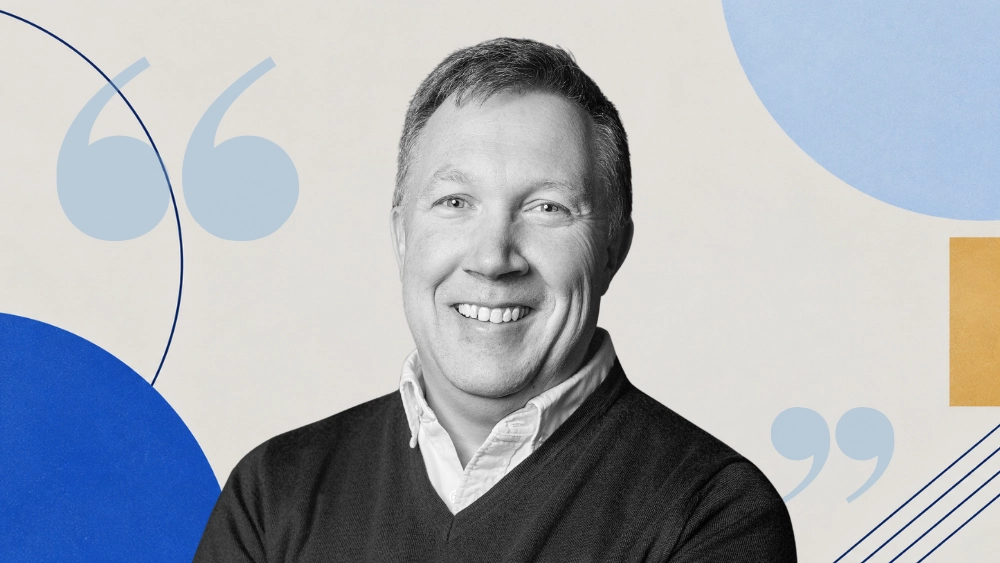
The business of becoming a lawyer: BARBRI’s Lucie Allen on the SQE and training in the AI age
The legal education leader reflects on almost five years of the SQE, rising costs and what still needs fixing.



Contents
When Lucie Allen becomes BARBRI's sole chief executive in January next year, she will become both the first woman and the first UK-based executive to lead the legal education company in its more than 50-year history.
She will also take charge at a time when legal education is still adjusting to its biggest reforms in a generation.
Almost five years after the Solicitors Qualifying Examination (SQE) was introduced, questions remain over pass rates and affordability. At the same time, legal education providers are grappling with the implications of AI, while lawyers increasingly seek qualifications that support careers spanning multiple jurisdictions.
Current co-CEO Allen joined BARBRI in 2021 as the first SQE candidates sat the new assessment, and has spent much of the past five years watching the new regime take shape.
Stay ahead of the City law market with our free email briefing - essential industry news and analysis, in your inbox three times a week.
Taking stock of the SQE
Allen is broadly supportive of the SQE, although candid about the challenges that remain.
For her, one of the SQE's most significant achievements has been the introduction of a standardised assessment regime, alongside the expansion of alternative routes into the profession. Apprenticeships stand out as a particular success story.
"I think it's been really positive for apprentices, and apprentices are performing higher on average than non-apprentices through the process," she says.
The SRA reports that across all assessments since November 2021, apprentices scored higher in all but one SQE2 sitting and better in most SQE1 sittings.
The qualification has also helped create alternative pathways into legal careers by reducing reliance on the traditional training contract route. Candidates no longer need to follow a conventional path through legal education, creating opportunities for a broader range of entrants to qualify.
‘A uniquely stressful experience’
At the same time, Allen believes there are aspects of the system that warrant closer scrutiny.
SQE1 pass rates have historically hovered around the 50-55% mark, with first-time candidates generally performing better, although there are outliers. The July 2025 assessment pass rate dropped to a record-low of 41% of all candidates.
"That would indicate there's something wrong with the exam rather than something wrong with the population cohort that are taking it," she says.
While professional qualifications are rarely designed to be easy, Allen suggests persistently low pass rates raise legitimate questions about whether the assessment is operating as intended.
The candidate experience is another area attracting scrutiny.
A survey published earlier this year by the National Junior Lawyers Division found that many candidates reported exhaustion, anxiety, isolation and financial pressure, with respondents describing the qualification process as a "uniquely stressful experience".
Costs and transparency
When the SQE was introduced, one of its stated objectives was to create a more accessible route into the profession. While it has achieved that in several ways, rising examination fees remain a source of debate.
"Now just to sit the exams, before you think about any prep, it's well over £5,000," she says.
For candidates sponsored by law firms, those costs are often covered. For self-funded candidates, however, repeated attempts can quickly become expensive, particularly when preparation costs are added.
Allen would also like to see more transparency around provider performance.
"The SRA hasn't yet been able to publish results by provider," she says. "That feels quite restrictive for students deciding which company makes the most sense to work with.”
While the July 2025 SQE1 exam had a record-low pass rate of 41%, BARBRI says its pass rate was 62% for those who completed at least 90% of their course.
As the number of SQE course providers continues to grow, she argues prospective candidates should have access to more information when deciding where to study.
Law Firm | Trainee First Year | Trainee Second Year | Newly Qualified (NQ) |
|---|---|---|---|
| Addleshaw Goddard | £52,000 | £56,000 | £100,000 |
| Akin | £60,000 | £65,000 | £174,418 |
| A&O Shearman | £56,000 | £61,000 | £150,000 |
| Ashurst Perkins Coie | £57,000 | £62,000 | £140,000 |
| Baker McKenzie | £56,000 | £61,000 | £150,000 |
| BCLP | £56,000 | £61,000 | £135,000 |
| Bird & Bird | £48,500 | £53,500 | £102,000 |
| Bristows | £48,000 | £52,000 | £95,000 |
| Burges Salmon | £49,500 | £51,500 | £76,000 |
| Charles Russell Speechlys | £52,000 | £55,000 | £93,000 |
| Cleary Gottlieb | £62,500 | £67,500 | £172,500 |
| Clifford Chance | £56,000 | £61,000 | £150,000 |
| Clyde & Co | £48,500 | £51,000 | £90,000 |
| CMS | £50,000 | £55,000 | £120,000 |
| Cooley | £55,000 | £60,000 | £157,000 |
| Davis Polk | £65,000 | £70,000 | £180,000 |
| Debevoise | £55,000 | £60,000 | £173,000 |
| Dechert | £55,000 | £61,000 | £165,000 |
| Dentons | £52,000 | £56,000 | £104,000 |
| DLA Piper | £55,000 | £60,000 | £140,000 |
| Eversheds Sutherland | £50,000 | £55,000 | £120,000 |
| Farrer & Co | £48,500 | £51,000 | £89,000 |
| Fieldfisher | £48,500 | £52,000 | £100,000 |
| Freshfields | £56,000 | £61,000 | £150,000 |
| Fried Frank | £55,000 | £60,000 | £175,000 |
| Gibson Dunn | £65,000 | £70,000 | £180,000 |
| Goodwin Procter | £55,000 | £60,000 | £175,000 |
| Gowling WLG | £48,500 | £53,500 | £108,000 |
| Herbert Smith Freehills Kramer | £56,000 | £61,000 | £145,000 |
| HFW | £52,000 | £56,000 | £103,500 |
| Hill Dickinson | £44,000 | £45,000 | £80,000 |
| Hogan Lovells | £56,000 | £61,000 | £145,000 |
| Irwin Mitchell | £43,500 | £45,500 | £78,000 |
| Jones Day | £60,000 | £68,000 | £170,000 |
| K&L Gates | £50,000 | £55,000 | £115,000 |
| Kennedys | £43,000 | £46,000 | £85,000 |
| King & Spalding | £62,000 | £67,000 | £175,000 |
| Kirkland & Ellis | £70,000 | £75,000 | £174,418 |
| Latham & Watkins | £60,000 | £65,000 | £174,418 |
| Linklaters | £56,000 | £61,000 | £150,000 |
| Macfarlanes | £60,000 | £65,000 | £150,000 |
| Mayer Brown | £55,000 | £60,000 | £150,000 |
| McDermott Will & Schulte | £70,000 | £75,000 | £174,418 |
| Milbank | £70,000 | £75,000 | £174,418 |
| Mills & Reeve | £46,800 | £47,000 | £84,000 |
| Mishcon de Reya | £52,500 | £57,500 | £110,000 |
| Morgan Lewis | £57,500 | £62,500 | £173,000 |
| Norton Rose Fulbright | £56,000 | £61,000 | £140,000 |
| Orrick | £60,000 | £65,000 | £170,000 |
| Osborne Clarke | £55,500 | £57,500 | £97,000 |
| Paul Hastings | £60,000 | £68,000 | £173,000 |
| Paul Weiss | £60,000 | £65,000 | £180,000 |
| Penningtons Manches Cooper | £48,000 | £50,000 | £83,000 |
| Pinsent Masons | £54,000 | £59,000 | £109,000 |
| Quinn Emanuel | n/a | n/a | £189,000 |
| Reed Smith | £55,000 | £60,000 | £135,000 |
| Ropes & Gray | £62,000 | £67,000 | £170,000 |
| RPC | £48,000 | £52,000 | £95,000 |
| Shoosmiths | £45,000 | £47,000 | £105,000 |
| Sidley Austin | £60,000 | £65,000 | £175,000 |
| Simmons & Simmons | £56,000 | £61,000 | £130,000 |
| Simpson Thacher | n/a | n/a | £178,000 |
| Skadden | £58,000 | £63,000 | £177,000 |
| Slaughter and May | £56,000 | £61,000 | £150,000 |
| Squire Patton Boggs | £50,000 | £55,000 | £110,000 |
| Stephenson Harwood | £50,000 | £55,000 | £105,000 |
| Sullivan & Cromwell | £70,000 | £75,000 | £177,000 |
| TLT | £44,000 | £47,500 | £85,000 |
| Travers Smith | £55,000 | £60,000 | £130,000 |
| Trowers & Hamlins | £50,000 | £54,000 | £90,000 |
| Vinson & Elkins | £60,000 | £65,000 | £173,077 |
| Watson Farley & Williams | £51,500 | £56,000 | £107,000 |
| Weightmans | £36,000 | £38,000 | £70,000 |
| Weil | £60,000 | £65,000 | £170,000 |
| White & Case | £62,000 | £67,000 | £175,000 |
| Willkie Farr & Gallagher | £60,000 | £65,000 | £180,000 |
| Winston Taylor | £56,000 | £61,000 | £125,000 |
| Withers | £47,000 | £52,000 | £95,000 |
| Womble Bond Dickinson | £43,000 | £45,000 | £83,000 |
Rank | Law Firm | Revenue | Profit per Equity Partner (PEP) |
|---|---|---|---|
| 1 | DLA Piper* | £3,130,000,000 | £2,500,000 |
| 2 | A&O Shearman | £2,900,000,000 | £2,000,000 |
| 3 | Clifford Chance | £2,400,000,000 | £2,100,000 |
| 4 | Hogan Lovells | £2,320,000,000 | £2,400,000 |
| 5 | Linklaters | £2,320,000,000 | £2,200,000 |
| 6 | Freshfields | £2,250,000,000 | Not disclosed |
| 7 | CMS** | £1,800,000,000 | Not disclosed |
| 8 | Norton Rose Fulbright* | £1,800,000,000 | Not disclosed |
| 9 | HSF Kramer | £1,360,000,000 | £1,400,000 |
| 10 | Ashurst | £1,030,000,000 | £1,390,000 |
| 11 | Clyde & Co | £854,000,000 | Not disclosed |
| 12 | Eversheds Sutherland | £769,000,000 | £1,400,000 |
| 13 | Pinsent Masons | £680,000,000 | £790,000 |
| 14 | Slaughter and May*** | £650,000,000 | Not disclosed |
| 15 | BCLP* | £640,000,000 | £790,000 |
| 16 | Simmons & Simmons | £615,000,000 | £1,120,000 |
| 17 | Bird & Bird** | £580,000,000 | £720,000 |
| 18 | Addleshaw Goddard | £550,000,000 | £1,000,000 |
| 19 | Taylor Wessing | £526,000,000 | £1,100,000 |
| 20 | Osborne Clarke** | £476,000,000 | £800,000 |
| 21 | DWF | £466,000,000 | Not disclosed |
| 22 | Womble Bond Dickinson | £450,000,000 | Not disclosed |
| 23 | Kennedys | £428,000,000 | Not disclosed |
| 24 | Fieldfisher | £385,000,000 | £1,000,000 |
| 25 | Macfarlanes | £371,000,000 | £3,100,000 |
What do City lawyers actually do each day?
For a closer look at the day-to-day of some of the most common types of lawyers working in corporate law firms, explore our lawyer job profiles:
The rise of dual qualification
One of the bigger shifts Allen has observed during her time at BARBRI is the growing demand for dual qualification.
Historically, much of BARBRI's UK business focused on helping lawyers qualify in US jurisdictions such as New York and California. That remains an important part of the business, but Allen says the introduction of the SQE has created demand flowing increasingly in the opposite direction.
"We've seen a rise in people getting an extra SQE English and Welsh qualification over and above the US journey," she says.
According to Allen, around 30% of SQE candidates are already qualified overseas lawyers seeking an additional qualification. Demand is growing across the Middle East, Asia and parts of Africa as international firms continue to expand and cross-border work becomes increasingly routine.
The UAE has emerged as a particularly important growth market.
"There is quite a lot of change and transformation going on there," Allen says. "Saudi employers are wanting to upskill local talent and looking for partnerships with companies like BARBRI to help do that."
India is another market attracting attention, driven in part by growing interest in English qualification among lawyers working on international matters.
Training lawyers in the AI era
If the SQE has changed how lawyers qualify, AI is increasingly changing what law firms expect once they arrive.
"Judgement, critical thinking, empathy, commercial skills and business development," have always mattered, according to Allen. But she believes they are becoming increasingly important as technology takes over some of the work that was historically performed by junior lawyers.
For that reason, she prefers the term “business-critical skills” to the usual “soft skills”.
Judgement, critical thinking, empathy, commercial skills and business development have always mattered.
The challenge facing law firms is that many of the tasks traditionally used to train young lawyers are changing rapidly. Activities such as research, document review and other foundational work are increasingly being supported by AI, raising questions about how future lawyers will develop professional judgement and commercial awareness.
"Yes, you understand the law, but how do you properly translate that into problem solving and delivering for clients?"
For Allen, that question sits at the heart of legal education's next chapter. Increasingly, the debate is about how lawyers develop judgement, commercial instincts and client skills that technology cannot easily replace.
| Firm | London office since | Known for in London |
|---|---|---|
| Akin | 1997 | Restructuring, funds |
| Baker McKenzie | 1961 | Finance, capital markets, TMT |
| Davis Polk | 1972 | Leveraged finance, corporate/M&A |
| Gibson Dunn | 1979 | Private equity, arbitration, energy, resources and infrastructure |
| Goodwin | 2008 | Private equity, funds, life sciences |
| Kirkland & Ellis | 1994 | Private equity, funds, restructuring |
| Latham & Watkins | 1990 | Finance, private equity, capital markets |
| McDermott Will & Schulte | 1998 | Finance, funds, healthcare |
| Milbank | 1979 | Finance, capital markets, energy, resources and infrastructure |
| Paul Hastings | 1997 | Leveraged finance, structured finance, infrastructure |
| Paul Weiss | 2001 | Private equity, leveraged finance |
| Quinn Emanuel | 2008 | Litigation |
| Sidley Austin | 1974 | Leveraged finance, capital markets, corporate/M&A |
| Simpson Thacher | 1978 | Leveraged finance, private equity, funds |
| Skadden | 1988 | Finance, corporate/M&A, arbitration |
| Sullivan & Cromwell | 1972 | Corporate/M&A, restructuring, capital markets |
| Weil | 1996 | Restructuring, private equity, leverage finance |
| White & Case | 1971 | Capital markets, arbitration, energy, resources and infrastructure |
| Law firm | Type | First-year salary |
|---|---|---|
| White & Case | US firm | £32,000 |
| Stephenson Harwood | International | £30,000 |
| A&O Shearman | Magic Circle | £28,000 |
| Charles Russell Speechlys | International | £28,000 |
| Freshfields | Magic Circle | £28,000 |
| Herbert Smith Freehills | Silver Circle | £28,000 |
| Hogan Lovells | International | £28,000 |
| Linklaters | Magic Circle | £28,000 |
| Mishcon de Reya | International | £28,000 |
| Norton Rose Fulbright | International | £28,000 |
Law Firm | Trainee First Year | Trainee Second Year | Newly Qualified (NQ) |
|---|---|---|---|
| A&O Shearman | £56,000 | £61,000 | £150,000 |
| Clifford Chance | £56,000 | £61,000 | £150,000 |
| Freshfields Bruckhaus Deringer | £56,000 | £61,000 | £150,000 |
| Linklaters | £56,000 | £61,000 | £150,000 |
| Slaughter and May | £56,000 | £61,000 | £150,000 |
Law Firm | Trainee First Year | Trainee Second Year | Newly Qualified (NQ) |
|---|---|---|---|
| A&O Shearman | £56,000 | £61,000 | £150,000 |
| Clifford Chance | £56,000 | £61,000 | £150,000 |
| Freshfields | £56,000 | £61,000 | £150,000 |
| Linklaters | £56,000 | £61,000 | £150,000 |
| Slaughter and May | £56,000 | £61,000 | £150,000 |
Law Firm | Trainee First Year | Trainee Second Year | Newly Qualified (NQ) |
|---|---|---|---|
| Ashurst | £57,000 | £62,000 | £140,000 |
| Bryan Cave Leighton Paisner | £53,000 | £58,000 | £135,000 |
| Herbert Smith Freehills | £56,000 | £61,000 | £145,000 |
| Macfarlanes | £60,000 | £65,000 | £150,000 |
| Travers Smith | £55,000 | £60,000 | £130,000 |
| Firm | Merger year | Known for in London |
|---|---|---|
| BCLP | 2018 | Real estate, corporate/M&A, litigation |
| DLA Piper | 2005 | Corporate/M&A, real estate, energy, resources and infrastructure |
| Eversheds Sutherland | 2017 | Corporate/M&A, finance |
| Hogan Lovells | 2011 | Litigation, regulation, finance |
| Mayer Brown | 2002 | Finance, capital markets, real estate |
| Norton Rose Fulbright | 2013 | Energy, resources and infrastructure, insurance, finance |
| Reed Smith | 2007 | Shipping, finance, TMT |
| Squire Patton Boggs | 2011 | Corporate/M&A, pensions, TMT |
Law Firm | Trainee First Year | Trainee Second Year | Newly Qualified (NQ) |
|---|---|---|---|
| Ashurst | £57,000 | £62,000 | £140,000 |
| BCLP | £53,000 | £58,000 | £135,000 |
| Herbert Smith Freehills Kramer | £56,000 | £61,000 | £145,000 |
| Macfarlanes | £60,000 | £65,000 | £150,000 |
| Travers Smith | £55,000 | £60,000 | £130,000 |
Know what's moving the market
Get the free email that keeps UK lawyers ahead on the stories that matter.
We send a short summary of the biggest legal industry and business stories you need to know about three times a week. Free to join. Unsubscribe at any time.