How Proskauer got ahead of the private credit boom in London
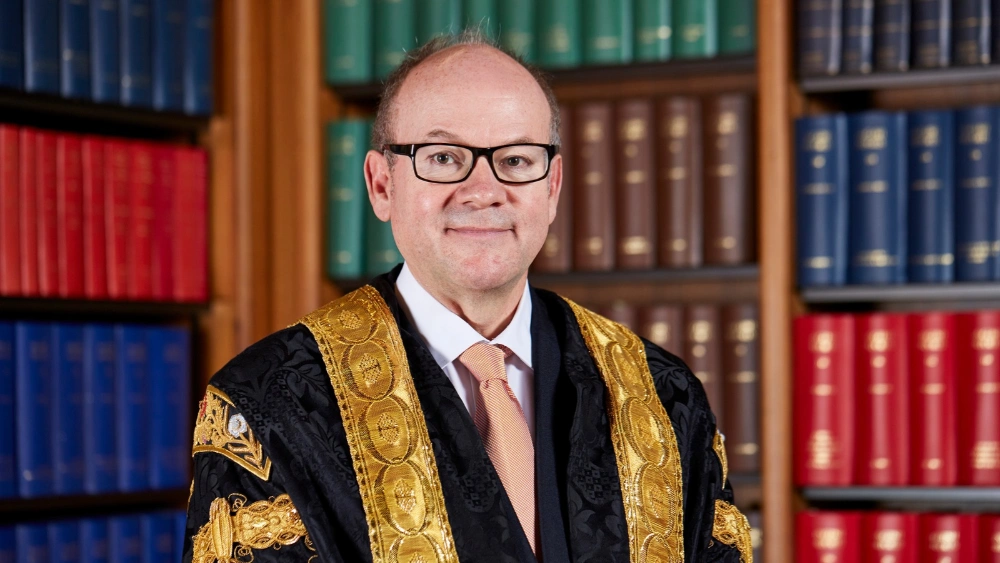
London practice head Alex Griffith on why the US firm backed private credit early and the hires that helped it win bigger deals.

These days, it seems that every banking lawyer is a private credit lawyer, but when Alex Griffith joined Proskauer in 2015 some private equity sponsors were questioning whether the market would last at all.
Credit funds were offering more leverage and greater flexibility than banks but not everyone wanted to rely on them to finance acquisitions.
“Some people didn’t trust private credit. They just thought it was a flash in the pan,” says Griffith, who leads Proskauer’s London private credit practice.
The New York firm saw an opportunity and decided to invest early. It recruited Griffith from DLA Piper to build a dedicated London practice in an area its American lawyers already knew well.
Eleven years later, Proskauer has more than 20 finance partners in London, compared with three just five years ago, according to Griffith. The wider London office generated $227 million in revenue in 2025, up about 45%.
Its growth offers a neat example of how US law firms have gained ground in London, by drawing on American client relationships and experience to move into areas yet to take off in Europe.
An American head start
It’s worth briefly revisiting how the private credit boom came to be in the first place. After the financial crisis, stricter regulation constrained traditional bank lending and non-bank lenders stepped in to fill the gap. Low interest rates encouraged investors to look for higher returns in less liquid assets, such as private debt.
Calling it a boom hardly seems an exaggeration. Goldman Sachs put global private credit assets under management at around $3.5 trillion in a report this year, with direct lending the largest segment of the market.
For Proskauer, the opportunity came through Griffith’s existing relationships. At DLA, he had worked with Ares, whose European direct lending team included former Barclays bankers he knew from a secondment. Proskauer already advised Ares in the US, so when it asked who to hire in London, Griffith’s name came up.
He joined an existing team of just three lawyers. At DLA, he says, he had struggled to get the internal buy-in to develop his private credit work. Proskauer had eight or nine US partners dedicated to the space, sharing structures and deal experience that were less familiar in Europe.
“We were way ahead of our competitors in terms of bringing that product offering alongside the deal doers to Europe,” Griffith says.
We were way ahead of our competitors in bringing the product offering to Europe.
As American credit funds opened London offices and bankers left to start their own shops, Griffith’s team concentrated on middle-market direct lending for buyouts. Over its first four or five years, it grew to four partners and roughly ten associates.
Starting with private credit gave Proskauer a head start, while many rivals were still fitting the work into their existing banking practices.
“So many other firms have added in private credit to a traditional banking department,” he says. “We came from the complete opposite, starting with private credit and then adding other areas.”
Getting onto the bigger deals
As its clients grew, however, Proskauer found that relationships with lenders didn’t guarantee a seat at the table on their largest deals.
On bigger buyouts, private equity sponsors and their lawyers often influence or determine which firm represents the lending group. Under the designation model, a lender’s preferred adviser may not get the mandate.
“We capped out at a certain deal size or with certain sponsor relationships,” Griffith says.
We capped out at a certain deal size.
Proskauer initially thought one senior hire might solve the problem but soon decided it needed an entire team, recruiting Philip Bowden and Megan Lawrence from A&O Shearman and Warren Newton, Jake Keaveny and Courtland Tisdale from Cahill in 2024.
Bowden was the former co-head of legacy A&O's global banking practice and one of the market’s top names. He brought relationships and experience across syndicated banking and large-cap leveraged finance.
The combination worked in both directions, Griffith says. Bowden’s team brought access to sponsor relationships and designation work, while the existing practice brought longstanding relationships with credit funds.
Designation has long divided opinion in the market. Supporters argue that familiar lawyers and documentation make deals quicker and more efficient. But the practice also gives sponsors and their lawyers considerable influence over who advises the lenders sitting across the table, raising questions about how freely those advisers can push back when future mandates may depend on the same relationships.
Griffith says designation is spreading from large-cap deals into the mid-market as sponsors active across both seek to align their documentation. There's a balance to be struck, he says, as they want lender side advisers who know their terms, while ensuring lenders feel properly advised. Sponsors pay the legal bills and therefore expect a say in who gets hired. “It’s the way the market’s evolved,” he says.
A byproduct of designation is that it can create more work for lawyers. Individual lenders sometimes instruct separate “shadow counsel” behind the scenes when another firm holds the designated role, paying for that additional advice themselves.
Winning work now means maintaining relationships beyond the credit funds, including with sponsors, their lawyers and debt advisers. Being a lender specialist is not enough on its own.
Following the money
The core of Proskauer’s private credit practice remains a middle-market lending business that Griffith says handles 50 to 60 deals a year, generating further work as borrowers make acquisitions or amend financings. Since the arrival of Bowden and his team, Proskauer has also increasingly been involved in executing private credit deals in the upper mid cap and large cap markets.
Competition in direct lending has pushed managers towards other ways of deploying capital, including real estate, infrastructure and lending against fund portfolios. Proskauer has followed, adding expertise in infra finance, real estate finance, fund finance and CLOs alongside its existing leveraged lending practice.
“They’ve got to get their money out the door. They are constantly evolving their deployment strategies,” Griffith says.
The work extends across the London office. Fund formation remains its largest practice by partner numbers, followed by finance and then private equity, according to Griffith. The aim is to advise asset managers from raising a fund through investments, refinancings, restructurings and exit.
The takeover of Spire Healthcare is a recent example. Proskauer advised Three Hills and Ares on their equity investments and participation in the acquisition financing. Griffith says the work drew on private equity, private credit, tax and real estate finance expertise, including recently recruited partner Usman Khan from McDermott.
Without that new real estate finance capability, he says, the firm would have struggled to cover the deal itself.
Structured credit follows a similar logic. Hiring CLO lawyers lets Proskauer advise managers that package loan portfolios into securities, extending relationships beyond the original lending transactions. The firm brought in seasoned CLO specialist John Goldfinch from A&O Shearman, and formerly Milbank, in 2024.
Heavy concentration on a single asset class carries risks, of course. Private credit was rattled in the first half of the year as fears that AI could disrupt software companies - many PE-backed - alongside some high-profile write-downs on loans to those businesses, shook confidence in the market.
Griffith says he has not seen those concerns translate into a broad European lending slowdown, but wants to expand restructuring capabilities as more distress emerges.
He expects the London private credit and broader finance practice to add further partners in the coming years, as opportunities continue to grow.
Asked what keeps him up at night, Griffith’s answer is keeping everyone busy and the practice relevant as competition evolves.
“We’re deal junkies,” he says. “It takes over your whole life and sometimes you wish you had a bit of down time. And then as soon as you’re quiet, all you think about is the next deal.”
Join 10,000+ City law professionals who start their day with our newsletter.
The essential read for commercially aware lawyers.