Big Law's branding makeover
From White & Case's bold new look to post-merger identities, major law firms are rethinking how they present themselves.


Contents
Big Law is having something of a makeover, with major firms swapping their traditional identities for more modern looks as they compete to stand out in a crowded market.
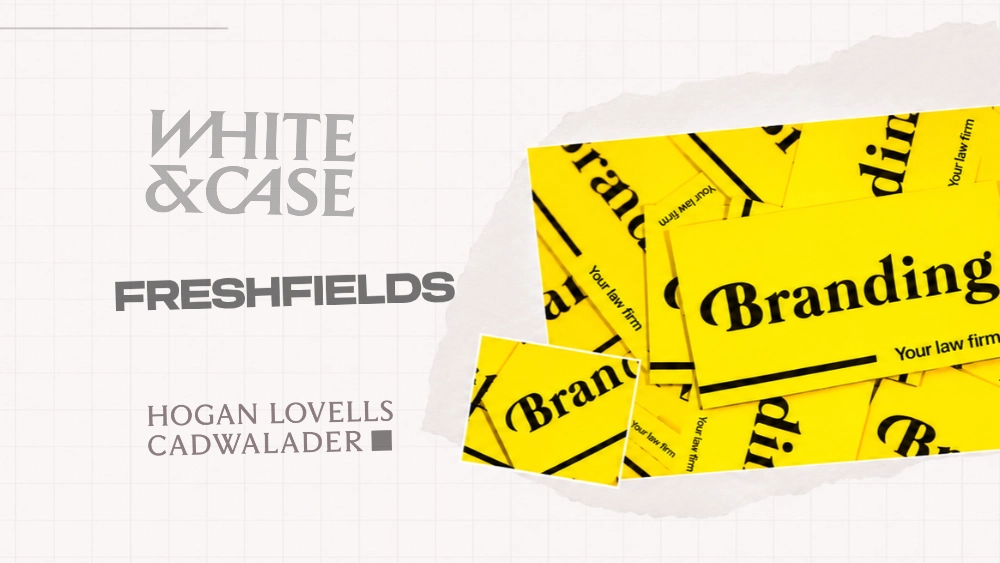
White & Case has swapped its familiar blue logo for sharply angled lettering and a much bolder look. Freshfields ditched two surnames and its historic angel emblem, while Clifford Chance, Paul Hastings, Macfarlanes and Slaughters have more subtly refreshed their visual identities.
Then there are the mergers. A&O Shearman introduced a new identity in 2024, followed by McDermott Will & Schulte in 2025. More recent tie-ups have produced some increasingly long law firm names, with Hogan Lovells Cadwalader, Herbert Smith Freehills Kramer and Ashurst Perkins Coie among the latest.
It's a noticeable shift for an industry that has traditionally favoured conservative colours, understated logos and names that rarely change.
Ian Stephens, founder and CEO of brand consultancy Principia, has worked with major law firms and professional services businesses for around two decades. He says the legal sector has become much more sophisticated about branding.
The challenge is standing out in a crowded market. In most industries, Stephens says, customers might narrow their choice to five leading brands. In law, a company looking for outside counsel could have 25, 35 or even 45 firms competing for its business, many offering similar services and making similar claims about their expertise.
For law firms, that makes building a recognisable identity important, particularly when trying to attract new clients and expand into different practice areas and markets.
Stay ahead of the City law market with our free email briefing - essential industry news and analysis, in your inbox three times a week.
Breaking with tradition
In October, White & Case unveiled its first major rebrand in 13 years, replacing its relatively conventional blue-and-white identity with a bold new look developed by renowned creative agency Uncommon.
The redesign centres on "The Power of Complexity", a positioning statement intended to reflect the firm's ability to navigate high-stakes legal matters.
Uncommon’s brief was to pull the firm out of a "sea of sameness", with the agency’s chief design officer saying the legal sector is "drowning in navy blue slabs, borrowing from tired financial and tech clichés, and safe choices.”

White & Case’s new visual identity includes a custom typeface inspired by Roman stone inscriptions, sharply angled lettering and a deeper colour called Catalyst Blue.
The public reaction has been mixed. Some praised the firm's willingness to break with legal industry conventions, while others compared the new typography on social media to that of an old investment bank or the television series Law & Order.
Stephens sees the willingness to provoke a reaction as potentially valuable. A subtle refresh might avoid criticism, but it also risks going unnoticed.
He believes White & Case will have anticipated the attention surrounding its new look. The bigger question is whether that attention translates into something commercially useful.
Freshfields took a different approach in 2024, shortening its formal name from Freshfields Bruckhaus Deringer and replacing its longstanding angel emblem with a minimalist black and white wordmark.
The shorter name reflected what clients and lawyers already called the firm, while dropping Bruckhaus Deringer, the German names added following its 2000 merger with two German firms.
The rebrand also came as Freshfields was investing heavily in its US expansion, prompting some observers to interpret the change as an attempt to give the firm a more American edge.
The redesign drew criticism from Stephen Holmes, founder of communications firm Endeavour, who argued that Freshfields should have modernised its existing branding rather than abandoning its recognisable elements.
By getting rid of its “quirks and heritage”, he wrote on LinkedIn, the firm had ended up looking “very vanilla”, sacrificing brand recognition built up over centuries.
The subtle refresh
Other firms have opted for more understated changes. Macfarlanes quietly introduced a more modern logo and colour palette earlier this year, without a major public announcement.
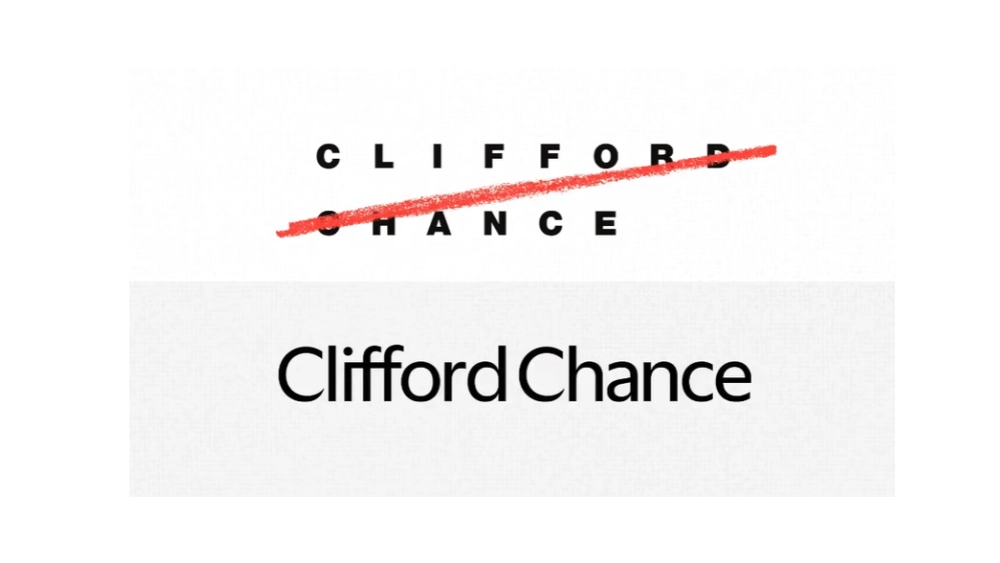
Clifford Chance took a similar approach in September 2025, modernising its logo while retaining its established identity. Slaughter and May has also taken a low-key approach, making subtle tweaks to its typography and visual identity rather than introducing an entirely new look.
Even small details can involve considerable thought. When Simmons & Simmons rebranded in 2019, it replaced the '&' in its logo with a '+' sign, which its branding agency said was more universally recognisable and better suited to a modern visual identity.
These branding exercises can come with substantial price tags. A New York Law Journal report in 2025 estimated that the research stage of a major US law firm rebrand could cost $300,000 to $400,000, with another $200,000 to $600,000 for developing the brand itself.
The merger spotlight
For firms merging across borders, branding presents a particularly valuable opportunity to explain their commercial strategy. Stephens says that mergers attract an unusual level of attention, creating a moment when potential clients are actively reassessing what a firm can offer.
Too often, he says, firms squander that opportunity by announcing little more than increased size and geographic reach.
He points to Ashurst Perkins Coie as a stronger example, praising its decision to articulate a strategy built around three priority sectors rather than relying solely on the benefits of scale.
That's the moment to put your proposition on the table.
“You are going to get more attention than you have ever got and ever will get," he says. "That's the moment to put your proposition on the table."
The difficulty is that law firm mergers are already politically complicated. Partners must agree on leadership, economics, integration and the future direction of the business. Branding can easily become another area of disagreement.
Unlike most organisations, where a relatively small leadership team can approve major strategic decisions, law firms may have hundreds of equity partners who expect to be consulted. The result can be a compromise that satisfies everyone without particularly exciting anyone.
Law Firm | Trainee First Year | Trainee Second Year | Newly Qualified (NQ) |
|---|---|---|---|
| Addleshaw Goddard | £52,000 | £56,000 | £100,000 |
| Akin | £60,000 | £65,000 | £174,418 |
| A&O Shearman | £56,000 | £61,000 | £150,000 |
| Ashurst Perkins Coie | £60,000 | £65,000 | £145,000 |
| Baker McKenzie | £56,000 | £61,000 | £150,000 |
| BCLP | £56,000 | £61,000 | £135,000 |
| Bird & Bird | £50,000 | £55,000 | £102,000 |
| Bristows | £48,000 | £52,000 | £95,000 |
| Burges Salmon | £49,500 | £51,500 | £76,000 |
| Charles Russell Speechlys | £52,000 | £55,000 | £93,000 |
| Cleary Gottlieb | £62,500 | £67,500 | £172,500 |
| Clifford Chance | £56,000 | £61,000 | £150,000 |
| Clyde & Co | £48,500 | £51,000 | £90,000 |
| CMS | £50,000 | £55,000 | £120,000 |
| Cooley | £55,000 | £60,000 | £157,000 |
| Davis Polk | £65,000 | £70,000 | £180,000 |
| Debevoise | £55,000 | £60,000 | £173,000 |
| Dechert | £55,000 | £61,000 | £165,000 |
| Dentons | £54,000 | £59,000 | £112,500 |
| DLA Piper | £55,000 | £60,000 | £140,000 |
| Eversheds Sutherland | £50,000 | £55,000 | £120,000 |
| Farrer & Co | £50,000 | £52,000 | £92,000 |
| Fieldfisher | £51,000 | £55,000 | £102,000 |
| Freshfields | £56,000 | £61,000 | £150,000 |
| Fried Frank | £55,000 | £60,000 | £175,000 |
| Gibson Dunn | £65,000 | £70,000 | £180,000 |
| Goodwin Procter | £55,000 | £60,000 | £175,000 |
| Gowling WLG | £48,500 | £53,500 | £108,000 |
| Herbert Smith Freehills Kramer | £56,000 | £61,000 | £145,000 |
| HFW | £52,000 | £56,000 | £103,500 |
| Hill Dickinson | £44,000 | £45,000 | £80,000 |
| Hogan Lovells | £56,000 | £61,000 | £145,000 |
| Irwin Mitchell | £43,500 | £45,500 | £78,000 |
| Jones Day | £60,000 | £68,000 | £170,000 |
| K&L Gates | £55,000 | £60,000 | £125,000 |
| Kennedys | £43,000 | £46,000 | £85,000 |
| King & Spalding | £62,000 | £67,000 | £175,000 |
| Kirkland & Ellis | £70,000 | £75,000 | £174,418 |
| Latham & Watkins | £60,000 | £65,000 | £174,418 |
| Linklaters | £56,000 | £61,000 | £150,000 |
| Macfarlanes | £60,000 | £65,000 | £150,000 |
| Mayer Brown | £55,000 | £60,000 | £150,000 |
| McDermott Will & Schulte | £70,000 | £75,000 | £174,418 |
| Milbank | £70,000 | £75,000 | £174,418 |
| Mills & Reeve | £46,800 | £47,000 | £84,000 |
| Mishcon de Reya | £52,500 | £57,500 | £110,000 |
| Morgan Lewis | £57,500 | £62,500 | £173,000 |
| Norton Rose Fulbright | £56,000 | £61,000 | £140,000 |
| Orrick | £60,000 | £65,000 | £170,000 |
| Osborne Clarke | £57,000 | £59,000 | £100,000 |
| Paul Hastings | £60,000 | £68,000 | £173,000 |
| Paul Weiss | £60,000 | £65,000 | £180,000 |
| Penningtons Manches Cooper | £48,000 | £50,000 | £83,000 |
| Pinsent Masons | £54,000 | £59,000 | £109,000 |
| Quinn Emanuel | n/a | n/a | £189,000 |
| Reed Smith | £55,000 | £60,000 | £135,000 |
| Ropes & Gray | £62,000 | £67,000 | £170,000 |
| RPC | £48,000 | £52,000 | £95,000 |
| Shoosmiths | £45,000 | £47,000 | £105,000 |
| Sidley Austin | £60,000 | £65,000 | £175,000 |
| Simmons & Simmons | £56,000 | £61,000 | £130,000 |
| Simpson Thacher | £65,000 | £70,000 | £178,000 |
| Skadden | £58,000 | £63,000 | £177,000 |
| Slaughter and May | £56,000 | £61,000 | £150,000 |
| Squire Patton Boggs | £50,000 | £55,000 | £110,000 |
| Stephenson Harwood | £50,000 | £55,000 | £105,000 |
| Sullivan & Cromwell | £70,000 | £75,000 | £181,000 |
| TLT | £44,000 | £47,500 | £85,000 |
| Travers Smith | £55,000 | £60,000 | £130,000 |
| Trowers & Hamlins | £50,000 | £54,000 | £90,000 |
| Vinson & Elkins | £60,000 | £65,000 | £173,077 |
| Watson Farley & Williams | £51,500 | £56,000 | £107,000 |
| Weightmans | £36,000 | £38,000 | £70,000 |
| Weil | £60,000 | £65,000 | £170,000 |
| White & Case | £62,000 | £67,000 | £175,000 |
| Willkie Farr & Gallagher | £60,000 | £65,000 | £180,000 |
| Winston Taylor | £56,000 | £61,000 | £125,000 |
| Withers | £47,000 | £52,000 | £95,000 |
| Womble Bond Dickinson | £45,000 | £47,000 | £85,000 |
Rank | Law Firm | Revenue | Profit per Equity Partner (PEP) |
|---|---|---|---|
| 1 | DLA Piper* | £3,130,000,000 | £2,500,000 |
| 2 | A&O Shearman | £2,900,000,000 | £2,000,000 |
| 3 | Clifford Chance | £2,400,000,000 | £2,100,000 |
| 4 | Hogan Lovells | £2,320,000,000 | £2,400,000 |
| 5 | Linklaters | £2,320,000,000 | £2,200,000 |
| 6 | Freshfields | £2,250,000,000 | Not disclosed |
| 7 | CMS** | £1,800,000,000 | Not disclosed |
| 8 | Norton Rose Fulbright* | £1,800,000,000 | Not disclosed |
| 9 | HSF Kramer | £1,360,000,000 | £1,400,000 |
| 10 | Ashurst | £1,030,000,000 | £1,390,000 |
| 11 | Clyde & Co | £854,000,000 | Not disclosed |
| 12 | Eversheds Sutherland | £769,000,000 | £1,400,000 |
| 13 | Pinsent Masons | £680,000,000 | £790,000 |
| 14 | Slaughter and May*** | £650,000,000 | Not disclosed |
| 15 | BCLP* | £640,000,000 | £790,000 |
| 16 | Simmons & Simmons | £615,000,000 | £1,120,000 |
| 17 | Bird & Bird** | £580,000,000 | £720,000 |
| 18 | Addleshaw Goddard | £550,000,000 | £1,000,000 |
| 19 | Taylor Wessing | £526,000,000 | £1,100,000 |
| 20 | Osborne Clarke** | £476,000,000 | £800,000 |
| 21 | DWF | £466,000,000 | Not disclosed |
| 22 | Womble Bond Dickinson | £450,000,000 | Not disclosed |
| 23 | Kennedys | £428,000,000 | Not disclosed |
| 24 | Fieldfisher | £385,000,000 | £1,000,000 |
| 25 | Macfarlanes | £371,000,000 | £3,100,000 |
What do City lawyers actually do each day?
For a closer look at the day-to-day of some of the most common types of lawyers working in corporate law firms, explore our lawyer job profiles:
A merger of identities
The merger of Hogan Lovells and New York firm Cadwalader in July offers a recent example of how major firms are bringing together established brands under a new identity.
The merger created a global firm of around 3,100 lawyers, bringing together established practices in London, Washington, New York and other major markets.
Burkhart Goebel, an IP litigation partner who chairs the firm's brand governance committee, helped lead the process.
Goebel has been involved in Hogan Lovells' branding for more than a decade, including earlier refreshes, but says the merger required something more substantial.
The first big decision was the name. The combined firm could have adopted the initials HLC, shortened the name or explored other combinations. Instead, it deliberately chose Hogan Lovells Cadwalader.
"We spent a lot of time thinking about the name," Goebel said.
The decision was rooted in the nature of the firm's business. Unlike the Big Four accounting firms, which have largely embraced abbreviated identities such as EY and PwC, Goebel believes premium legal services remain fundamentally personal.
"The core of the business is personal trust," he says. "All of that comes with a name, it does not come with an acronym."
The three-part name also tells the story of the combined firm's geographic heritage, including its established presence in the major legal markets of London, Washington and New York.
Goebel acknowledges that abbreviations inevitably creep into informal conversations, whether in the corridor or over coffee. The firm also secured the hlc.com domain, making its website address much easier to type. Officially, however, the full name is used, even in internal communications.
For Goebel, those extra words matter. They signal that the business is no longer quite the same firm it was before the merger.
The lime green dilemma
The name was only half the challenge. Hogan Lovells had spent years building recognition around its distinctive lime green square, an unusually bright colour choice in a profession dominated by blue, grey and burgundy.
Its origins go back to 2008, when partners at legacy firm Lovells voted on competing colour schemes during a partner conference in London. Goebel was among those voting.
"We wanted to be seen," he says of the decision.
The colour survived the creation of Hogan Lovells in 2010 and subsequent branding exercises. By the time Cadwalader joined, the square had become one of the firm's most recognisable assets.
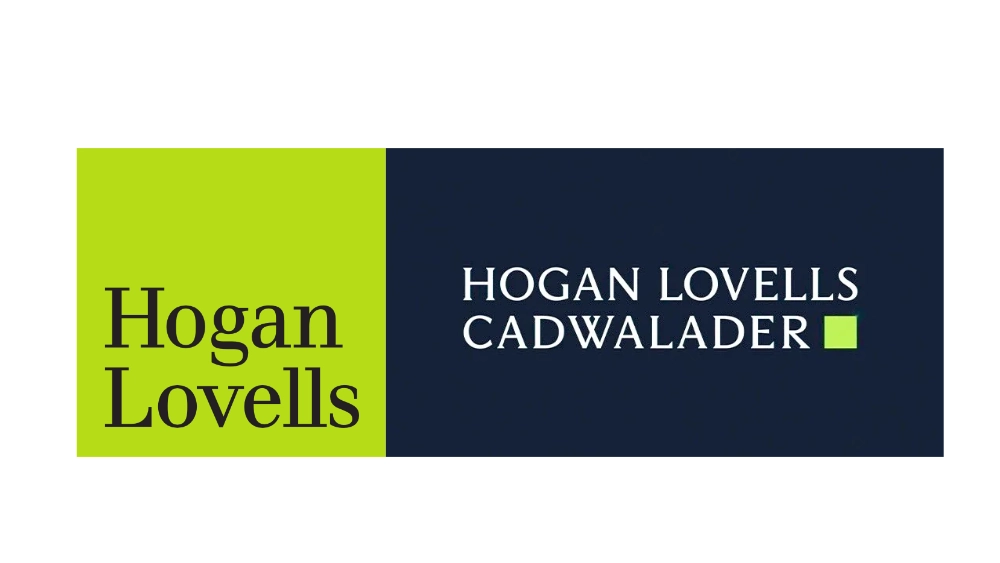
The new name, however, was simply too long to fit inside it.
"If you use that long name you would inevitably move out of the square," Goebel explains.
Rather than abandon a recognisable part of its identity, the firm retained the square in a redesigned form, combining lime-green accents with a midnight-blue palette and bespoke typography.
The process involved more than choosing colours and fonts. Goebel says the team spoke to around 2,500 people in group meetings and presentations before launch, alongside interviews with partners and business services staff.
"If it doesn't resonate with your own people, how would it resonate with the market?” he said.
When names become liabilities
Not every rebrand is driven by growth or strategic ambition. Sometimes firms have to reconsider the names they have built their reputations around.
In October, claimant law firm Pogust Goodhead announced it was reverting to its former name, PGMBM, following a public fallout with its founders, Harris Pogust and Tom Goodhead.
Both founders had demanded that their names be removed amid a dispute over the firm's handling of the Mariana dam litigation, including its decision to bring proceedings against clients in a battle over who should represent them.
The firm said returning to PGMBM, derived from the surnames of five former partners, rather than introducing an unfamiliar identity, would provide continuity for clients during a critical stage of the litigation.
Stephens, who was not involved in the rebrand, says acronyms are generally a bad idea because they are easily confused with other names and difficult to remember.
The transition has also been gradual, with the Pogust Goodhead name still appearing on some of the firm's digital channels after the announcement and continuing to be used in media coverage and everyday industry conversations.
Beyond the logo
For all the attention surrounding new colours, names, fonts and logos, Stephens argues that the strongest law firm brands are not necessarily those with the most distinctive visual identities.
He points to Kirkland & Ellis as an example of a firm whose commercial strategy has become almost inseparable from its brand.
Its reputation for private equity work, aggressive growth and financial performance has given it a recognisable identity without requiring a dramatic visual overhaul.
Stephens compares its standing in the legal industry to that of McKinsey and Goldman Sachs in their respective markets.
“Everyone knows Kirkland, whether you want to work with them or for them or not.”
He sees the firm's focus on private equity as central to its success, particularly given its enormous size.
Everyone knows Kirkland, whether you want to work with them...
"You don't have to be small to be focused," he says.
For other major firms, the challenge is more complicated. Their practices span multiple sectors, jurisdictions and specialisms, making it harder to build a reputation around a single area of expertise.
“Strategy and brand have to work together,” Stephens says, with a firm's identity reflecting not just how it presents itself, but how the business operates.
And that identity is never entirely fixed. As Goebel puts it, a law firm's brand is “a living thing”.
| Firm | London office since | Known for in London |
|---|---|---|
| Akin | 1997 | Restructuring, funds |
| Baker McKenzie | 1961 | Finance, capital markets, TMT |
| Davis Polk | 1972 | Leveraged finance, corporate/M&A |
| Gibson Dunn | 1979 | Private equity, arbitration, energy, resources and infrastructure |
| Goodwin | 2008 | Private equity, funds, life sciences |
| Kirkland & Ellis | 1994 | Private equity, funds, restructuring |
| Latham & Watkins | 1990 | Finance, private equity, capital markets |
| McDermott Will & Schulte | 1998 | Finance, funds, healthcare |
| Milbank | 1979 | Finance, capital markets, energy, resources and infrastructure |
| Paul Hastings | 1997 | Leveraged finance, structured finance, infrastructure |
| Paul Weiss | 2001 | Private equity, leveraged finance |
| Quinn Emanuel | 2008 | Litigation |
| Sidley Austin | 1974 | Leveraged finance, capital markets, corporate/M&A |
| Simpson Thacher | 1978 | Leveraged finance, private equity, funds |
| Skadden | 1988 | Finance, corporate/M&A, arbitration |
| Sullivan & Cromwell | 1972 | Corporate/M&A, restructuring, capital markets |
| Weil | 1996 | Restructuring, private equity, leverage finance |
| White & Case | 1971 | Capital markets, arbitration, energy, resources and infrastructure |
| Law firm | Type | First-year salary |
|---|---|---|
| White & Case | US firm | £32,000 |
| Stephenson Harwood | International | £30,000 |
| A&O Shearman | Magic Circle | £28,000 |
| Charles Russell Speechlys | International | £28,000 |
| Freshfields | Magic Circle | £28,000 |
| Herbert Smith Freehills | Silver Circle | £28,000 |
| Hogan Lovells | International | £28,000 |
| Linklaters | Magic Circle | £28,000 |
| Mishcon de Reya | International | £28,000 |
| Norton Rose Fulbright | International | £28,000 |
Law Firm | Trainee First Year | Trainee Second Year | Newly Qualified (NQ) |
|---|---|---|---|
| A&O Shearman | £56,000 | £61,000 | £150,000 |
| Clifford Chance | £56,000 | £61,000 | £150,000 |
| Freshfields Bruckhaus Deringer | £56,000 | £61,000 | £150,000 |
| Linklaters | £56,000 | £61,000 | £150,000 |
| Slaughter and May | £56,000 | £61,000 | £150,000 |
Law Firm | Trainee First Year | Trainee Second Year | Newly Qualified (NQ) |
|---|---|---|---|
| A&O Shearman | £56,000 | £61,000 | £150,000 |
| Clifford Chance | £56,000 | £61,000 | £150,000 |
| Freshfields | £56,000 | £61,000 | £150,000 |
| Linklaters | £56,000 | £61,000 | £150,000 |
| Slaughter and May | £56,000 | £61,000 | £150,000 |
Law Firm | Trainee First Year | Trainee Second Year | Newly Qualified (NQ) |
|---|---|---|---|
| Ashurst | £60,000 | £65,000 | £145,000 |
| Bryan Cave Leighton Paisner | £53,000 | £58,000 | £135,000 |
| Herbert Smith Freehills | £56,000 | £61,000 | £145,000 |
| Macfarlanes | £60,000 | £65,000 | £150,000 |
| Travers Smith | £55,000 | £60,000 | £130,000 |
| Firm | Merger year | Known for in London |
|---|---|---|
| BCLP | 2018 | Real estate, corporate/M&A, litigation |
| DLA Piper | 2005 | Corporate/M&A, real estate, energy, resources and infrastructure |
| Eversheds Sutherland | 2017 | Corporate/M&A, finance |
| Hogan Lovells | 2011 | Litigation, regulation, finance |
| Mayer Brown | 2002 | Finance, capital markets, real estate |
| Norton Rose Fulbright | 2013 | Energy, resources and infrastructure, insurance, finance |
| Reed Smith | 2007 | Shipping, finance, TMT |
| Squire Patton Boggs | 2011 | Corporate/M&A, pensions, TMT |
Law Firm | Trainee First Year | Trainee Second Year | Newly Qualified (NQ) |
|---|---|---|---|
| Ashurst | £60,000 | £65,000 | £145,000 |
| BCLP | £53,000 | £58,000 | £135,000 |
| Herbert Smith Freehills Kramer | £56,000 | £61,000 | £145,000 |
| Macfarlanes | £60,000 | £65,000 | £150,000 |
| Travers Smith | £55,000 | £60,000 | £130,000 |
Know what's moving the market
Get the free email that keeps UK lawyers ahead on the stories that matter.
We send a short summary of the biggest legal industry and business stories you need to know about three times a week. Free to join. Unsubscribe at any time.