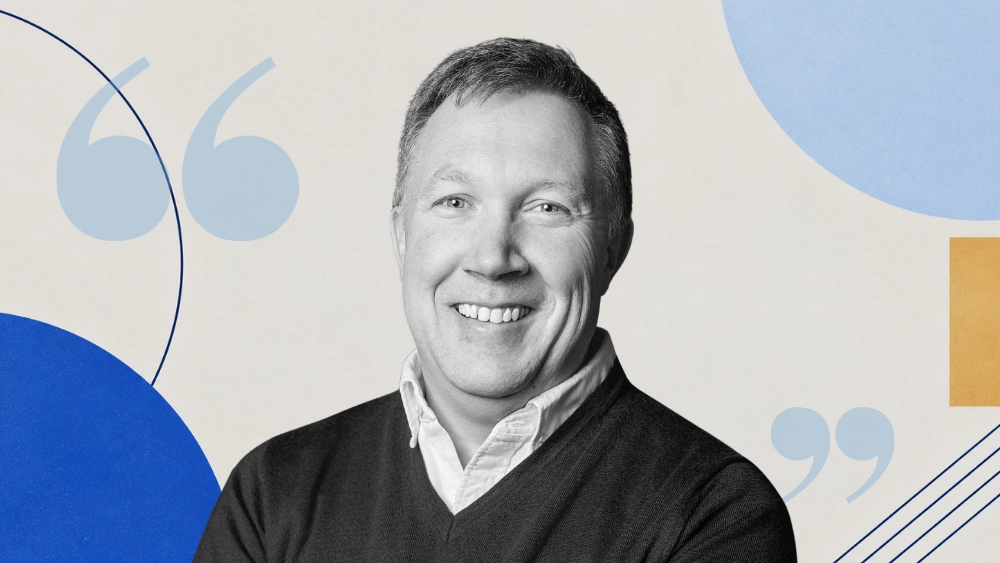
Q&A: What this former City partner learned in the first year running his own law firm
Former Mishcon partner Simon Leaf on launching Three Points, reaching £1m in revenue and how AI is changing the economics of running a law firm.



Contents
A year after launching Three Points with fellow former Mishcon de Reya lawyer Tom Murray, Simon Leaf says the firm has generated more than £1 million in revenue and served close to 60 clients.
Working through Excello Law’s platform, the sports, technology and commercial practice combines senior lawyers with AI tools and a largely fixed-fee or retainer model.
Leaf spoke to Non-Billable about the realities of leaving a City partnership, the work that still falls to the founders and what other partners could learn from the experience.
Stay ahead of the City law market with our free email briefing - essential industry news and analysis, in your inbox three times a week.
What did you want to do at Three Points that you couldn’t do as a partner at Mishcon?
Mishcon is a great firm in so many ways. There’s absolutely no way I would have had the confidence or ability to set up Three Points without spending time in such an entrepreneurial environment.
But bigger law firms, even entrepreneurial ones, are still tied to a very old model. Firms talk about the AI tools they’re using, but it’s hard to change the course of an oil tanker. That’s about the wider industry: how it bills, manages client relationships and runs internal teams.
Even as an equity partner, I had very little autonomy over pricing, the associates I could use or the technology we could try.
For my part of the market - generally commercial contracts and some regulatory work - you don’t necessarily need 20 lawyers from around the world or across the firm. It was a no-brainer to try something different.
That’s harder with a large cross-border M&A transaction, but for the deals we do, there’s no reason firms like Three Points shouldn’t pick up more of that work.
How much financial runway did you need to get started?
It’s a gamble whenever you start a business, but we were quietly confident. We had a small number of clients carved out from my restrictive covenants at Mishcon, and Excello cut out a lot of the upfront costs you might expect when setting up a law firm.
Law Firm | Trainee First Year | Trainee Second Year | Newly Qualified (NQ) |
|---|---|---|---|
| Addleshaw Goddard | £52,000 | £56,000 | £100,000 |
| Akin | £60,000 | £65,000 | £174,418 |
| A&O Shearman | £56,000 | £61,000 | £150,000 |
| Ashurst Perkins Coie | £60,000 | £65,000 | £145,000 |
| Baker McKenzie | £56,000 | £61,000 | £150,000 |
| BCLP | £56,000 | £61,000 | £135,000 |
| Bird & Bird | £50,000 | £55,000 | £102,000 |
| Bristows | £48,000 | £52,000 | £95,000 |
| Burges Salmon | £49,500 | £51,500 | £76,000 |
| Charles Russell Speechlys | £52,000 | £55,000 | £93,000 |
| Cleary Gottlieb | £62,500 | £67,500 | £172,500 |
| Clifford Chance | £56,000 | £61,000 | £150,000 |
| Clyde & Co | £48,500 | £51,000 | £90,000 |
| CMS | £50,000 | £55,000 | £120,000 |
| Cooley | £55,000 | £60,000 | £157,000 |
| Davis Polk | £65,000 | £70,000 | £180,000 |
| Debevoise | £55,000 | £60,000 | £173,000 |
| Dechert | £55,000 | £61,000 | £165,000 |
| Dentons | £54,000 | £59,000 | £112,500 |
| DLA Piper | £55,000 | £60,000 | £140,000 |
| Eversheds Sutherland | £50,000 | £55,000 | £120,000 |
| Farrer & Co | £50,000 | £52,000 | £92,000 |
| Fieldfisher | £51,000 | £55,000 | £102,000 |
| Freshfields | £56,000 | £61,000 | £150,000 |
| Fried Frank | £55,000 | £60,000 | £175,000 |
| Gibson Dunn | £65,000 | £70,000 | £180,000 |
| Goodwin Procter | £55,000 | £60,000 | £175,000 |
| Gowling WLG | £48,500 | £53,500 | £108,000 |
| Herbert Smith Freehills Kramer | £56,000 | £61,000 | £145,000 |
| HFW | £52,000 | £56,000 | £103,500 |
| Hill Dickinson | £44,000 | £45,000 | £80,000 |
| Hogan Lovells | £56,000 | £61,000 | £145,000 |
| Irwin Mitchell | £43,500 | £45,500 | £78,000 |
| Jones Day | £60,000 | £68,000 | £170,000 |
| K&L Gates | £55,000 | £60,000 | £125,000 |
| Kennedys | £43,000 | £46,000 | £85,000 |
| King & Spalding | £62,000 | £67,000 | £175,000 |
| Kirkland & Ellis | £70,000 | £75,000 | £174,418 |
| Latham & Watkins | £60,000 | £65,000 | £174,418 |
| Linklaters | £56,000 | £61,000 | £150,000 |
| Macfarlanes | £60,000 | £65,000 | £150,000 |
| Mayer Brown | £55,000 | £60,000 | £150,000 |
| McDermott Will & Schulte | £70,000 | £75,000 | £174,418 |
| Milbank | £70,000 | £75,000 | £174,418 |
| Mills & Reeve | £46,800 | £47,000 | £84,000 |
| Mishcon de Reya | £52,500 | £57,500 | £110,000 |
| Morgan Lewis | £57,500 | £62,500 | £173,000 |
| Norton Rose Fulbright | £56,000 | £61,000 | £140,000 |
| Orrick | £60,000 | £65,000 | £170,000 |
| Osborne Clarke | £57,000 | £59,000 | £100,000 |
| Paul Hastings | £60,000 | £68,000 | £173,000 |
| Paul Weiss | £60,000 | £65,000 | £180,000 |
| Penningtons Manches Cooper | £48,000 | £50,000 | £83,000 |
| Pinsent Masons | £54,000 | £59,000 | £109,000 |
| Quinn Emanuel | n/a | n/a | £189,000 |
| Reed Smith | £55,000 | £60,000 | £135,000 |
| Ropes & Gray | £62,000 | £67,000 | £170,000 |
| RPC | £48,000 | £52,000 | £95,000 |
| Shoosmiths | £45,000 | £47,000 | £105,000 |
| Sidley Austin | £60,000 | £65,000 | £175,000 |
| Simmons & Simmons | £56,000 | £61,000 | £130,000 |
| Simpson Thacher | £65,000 | £70,000 | £178,000 |
| Skadden | £58,000 | £63,000 | £177,000 |
| Slaughter and May | £56,000 | £61,000 | £150,000 |
| Squire Patton Boggs | £50,000 | £55,000 | £110,000 |
| Stephenson Harwood | £50,000 | £55,000 | £105,000 |
| Sullivan & Cromwell | £70,000 | £75,000 | £181,000 |
| TLT | £44,000 | £47,500 | £85,000 |
| Travers Smith | £55,000 | £60,000 | £130,000 |
| Trowers & Hamlins | £50,000 | £54,000 | £90,000 |
| Vinson & Elkins | £60,000 | £65,000 | £173,077 |
| Watson Farley & Williams | £51,500 | £56,000 | £107,000 |
| Weightmans | £36,000 | £38,000 | £70,000 |
| Weil | £60,000 | £65,000 | £170,000 |
| White & Case | £62,000 | £67,000 | £175,000 |
| Willkie Farr & Gallagher | £60,000 | £65,000 | £180,000 |
| Winston Taylor | £56,000 | £61,000 | £125,000 |
| Withers | £47,000 | £52,000 | £95,000 |
| Womble Bond Dickinson | £45,000 | £47,000 | £85,000 |
Rank | Law Firm | Revenue | Profit per Equity Partner (PEP) |
|---|---|---|---|
| 1 | DLA Piper* | £3,130,000,000 | £2,500,000 |
| 2 | A&O Shearman | £2,900,000,000 | £2,000,000 |
| 3 | Clifford Chance | £2,400,000,000 | £2,100,000 |
| 4 | Hogan Lovells | £2,320,000,000 | £2,400,000 |
| 5 | Linklaters | £2,320,000,000 | £2,200,000 |
| 6 | Freshfields | £2,250,000,000 | Not disclosed |
| 7 | CMS** | £1,800,000,000 | Not disclosed |
| 8 | Norton Rose Fulbright* | £1,800,000,000 | Not disclosed |
| 9 | HSF Kramer | £1,360,000,000 | £1,400,000 |
| 10 | Ashurst | £1,030,000,000 | £1,390,000 |
| 11 | Clyde & Co | £854,000,000 | Not disclosed |
| 12 | Eversheds Sutherland | £769,000,000 | £1,400,000 |
| 13 | Pinsent Masons | £680,000,000 | £790,000 |
| 14 | Slaughter and May*** | £650,000,000 | Not disclosed |
| 15 | BCLP* | £640,000,000 | £790,000 |
| 16 | Simmons & Simmons | £615,000,000 | £1,120,000 |
| 17 | Bird & Bird** | £580,000,000 | £720,000 |
| 18 | Addleshaw Goddard | £550,000,000 | £1,000,000 |
| 19 | Taylor Wessing | £526,000,000 | £1,100,000 |
| 20 | Osborne Clarke** | £476,000,000 | £800,000 |
| 21 | DWF | £466,000,000 | Not disclosed |
| 22 | Womble Bond Dickinson | £450,000,000 | Not disclosed |
| 23 | Kennedys | £428,000,000 | Not disclosed |
| 24 | Fieldfisher | £385,000,000 | £1,000,000 |
| 25 | Macfarlanes | £371,000,000 | £3,100,000 |
What do City lawyers actually do each day?
For a closer look at the day-to-day of some of the most common types of lawyers working in corporate law firms, explore our lawyer job profiles:
The initial capital we needed was relatively low. We could hit the ground running, and the founder clients grew quickly through word of mouth and our reputation. A couple of months after launching, we were already bringing in additional resource.
We went into this expecting we wouldn’t necessarily earn the same amounts as at a big City firm. But it’s not just about how much money you make. It’s about how much happier you are, how much freedom you have and the ability to grow something new.
How has the first year compared with your financial expectations?
We’ve turned over more than £1 million, exceeding by some distance the relatively challenging budget we set ourselves 12 months ago.
We’ve been able to reinvest that money in the business rather than take it out or need investment from elsewhere.
What has been harder than you expected?
You can’t underestimate the safety net you have in a big firm: knowledge development lawyers, business development, HR and all those functions you sometimes take for granted. Excello has been fantastic, but the buck now stops with us. We’re doing more of that work than perhaps we expected.
I also don’t think we anticipated how much additional lawyering we would do. We’ve spent a long time investing in prompts and workflows to make the AI tools relevant to us and our clients. But our model relies on senior lawyers reviewing absolutely everything.
I’m probably more in the depths of the work than I have been since I was an associate a decade ago.
I’m far more in the weeds of matters than I was 12 or 18 months ago, when an army of associates and trainees would review everything before it came to me. I’m probably more in the depths of the work than I have been since I was an associate a decade ago.
How does working through Excello operate in practice?
The way I describe it to clients is that we’ve essentially outsourced the back office to a much more established, experienced law firm that’s been going for the best part of two decades.
That has allowed us to focus on winning work, doing a good job for clients and picking up repeat work. For the important things you take for granted as a private practice lawyer - AML, KYC and conflict checks, and making sure we’re compliant - we rely heavily on Excello’s established team, with input from our team as well.
How have clients responded?
We had about a dozen founder clients on day one. I don’t think we anticipated how quickly that would grow. Some clients who were initially restricted moved across as soon as the covenants came to an end.
We’re now close to 60 clients served over that period, with about 12 on retainer-type relationships. It’s a broad mix of clients we knew from Mishcon and new ones recommended through intermediaries, word of mouth or reading about us.
On the commercial side, we work with clients such as Hewlett Packard Enterprise, Shaftesbury Capital and IWG, as well as fast-growing technology businesses. In sport, we still act for high-profile players, F1 drivers and boxers, alongside institutional clients such as clubs.
What do those retainer relationships look like?
Some clients don’t have any in-house capability and are at the stage of looking for their first head of legal. We can manage that role as senior lawyers using technology, with a network through which we can procure advice in other areas. We play the role of fractional GC, much as a CFO might work across a few different businesses.
You previously said AI was replacing the need for junior lawyers. Has that view held up?
I think it has. Using AI in place of associates isn’t without challenges. We’ve all seen the occasional hallucinations. But when we look at what we can deliver, how much more quickly and efficiently we can do it, and how much more cheaply than in a bigger firm, the benefits outweigh the drawbacks.
These tools can create problems if they’re not used carefully. In the hands of senior, expert lawyers who know the law, the deal and the client, you can guide them in a way that gives you much better results.
Everyone we’ve brought in has been at the senior end. But it requires a mindset shift. We’re asking people who may have been partners for years to get much more into the detail. Instead of associates doing the initial research and drafting, it’s down to them to prompt and use the tools. That’s a different skill set.
How do you charge clients?
The vast majority of our work is on a retainer or a fixed fee for a project, agreed upfront.
We also have an offering called Three Points Flow, through which we help clients build workflows, templates and playbooks so they can self-serve, or we can manage some of those workflows for them. That has a slightly different pricing dynamic.
Some clients still insist on hourly billing. Ironically, they sometimes get the best deal because they pay for the time we spend, and we can spend far less time.
Some clients still insist on hourly billing. Ironically, they sometimes get the best deal.
It’s not as simple as putting in a prompt and having everything done in five minutes. You still spend a long time checking everything. But it’s less than a purely manual process, particularly one involving a team of associates with billable-hour targets.
Do the savings go to clients or into higher margins?
We’re not trying to make this a race to the bottom or charge bargain basement rates. But we’re a lot cheaper than we would have been 12 or 18 months ago, and we’re passing the vast majority of the savings to clients.
We’re passing the vast majority of the savings to clients.
We still record time to monitor how we spend our day, but we’re rarely asked to share it because we agree the project cost upfront. In almost all cases, we deliver to that estimate.
There’s also investment behind the scenes in refining the workflows and prompts. No two deals are exactly the same, but many tasks are similar to ones we’ve done before. If we can get closer to the final draft first time, everyone benefits.
AI costs are going up, and we’re watching moves towards consumption-based pricing closely. But the savings from not needing as much additional support and junior resource are still significant. We can pass savings to clients and still make a decent margin.
Could private equity be part of Three Points’ future?
There are no plans at this stage. I’d be lying if I said we weren’t approached fairly regularly, because of our sports and technology work and how we’ve set ourselves up.
We don’t currently see a need for external investment. We would only take it if we felt it could offer something genuinely different to clients that we couldn’t offer ourselves.
Personally, I don’t think private equity and professional services firms are good bedfellows. I think the incentives are misaligned. It’s harder to establish the relationships we want when there’s effectively a third party in the room with a different view on how a client should be serviced and charged.
Our approach is relationship-driven. I struggle to see how private equity involvement wouldn’t damage those relationships, both with clients and within the firm.
How big do you want the firm to become?
We’re a team of five now, and I think there’s room to bring in more people. We’ve added corporate and IP expertise, mainly to serve the technology, sports and IP-rich businesses we work with. But we’re trying to stay in our lane rather than grow too quickly and become full service.
Excello is pretty much full service, so we’re never far from an expert. We’ve also sent well over half a million pounds of work to bigger City firms, to partners we know and trust, where we don’t have the capacity or expertise ourselves.
Part of the reason for leaving Big Law was that I was running a team of about 30 and spending my days dealing with recruitment and internal issues. I don’t know if I’m desperate to build a supersized firm.
What would you tell a City partner considering something similar?
Don’t delay. The tools are there. They’re not perfect, and there’s absolutely a need for experienced lawyers to work with technology and rethink how services can be delivered.
One of the biggest challenges is breaking out of the idea that because you did something a particular way for years, it must be right. Even how we talk to clients, quote and bill looks very different from a year or 18 months ago.
One of the biggest challenges is breaking out of the idea that because you did something a particular way for years, it must be right.
On the happiness scale - not something that’s necessarily discussed much in private practice - I feel 10 times happier. Not because I was so unhappy at Mishcon, but because I feel more fulfilled. We’ve been able to support charities and take on pro bono projects while running a profitable business.
There’s a real opportunity for other senior lawyers who want to do things differently.
| Firm | London office since | Known for in London |
|---|---|---|
| Akin | 1997 | Restructuring, funds |
| Baker McKenzie | 1961 | Finance, capital markets, TMT |
| Davis Polk | 1972 | Leveraged finance, corporate/M&A |
| Gibson Dunn | 1979 | Private equity, arbitration, energy, resources and infrastructure |
| Goodwin | 2008 | Private equity, funds, life sciences |
| Kirkland & Ellis | 1994 | Private equity, funds, restructuring |
| Latham & Watkins | 1990 | Finance, private equity, capital markets |
| McDermott Will & Schulte | 1998 | Finance, funds, healthcare |
| Milbank | 1979 | Finance, capital markets, energy, resources and infrastructure |
| Paul Hastings | 1997 | Leveraged finance, structured finance, infrastructure |
| Paul Weiss | 2001 | Private equity, leveraged finance |
| Quinn Emanuel | 2008 | Litigation |
| Sidley Austin | 1974 | Leveraged finance, capital markets, corporate/M&A |
| Simpson Thacher | 1978 | Leveraged finance, private equity, funds |
| Skadden | 1988 | Finance, corporate/M&A, arbitration |
| Sullivan & Cromwell | 1972 | Corporate/M&A, restructuring, capital markets |
| Weil | 1996 | Restructuring, private equity, leverage finance |
| White & Case | 1971 | Capital markets, arbitration, energy, resources and infrastructure |
| Law firm | Type | First-year salary |
|---|---|---|
| White & Case | US firm | £32,000 |
| Stephenson Harwood | International | £30,000 |
| A&O Shearman | Magic Circle | £28,000 |
| Charles Russell Speechlys | International | £28,000 |
| Freshfields | Magic Circle | £28,000 |
| Herbert Smith Freehills | Silver Circle | £28,000 |
| Hogan Lovells | International | £28,000 |
| Linklaters | Magic Circle | £28,000 |
| Mishcon de Reya | International | £28,000 |
| Norton Rose Fulbright | International | £28,000 |
This interview has been edited for length and clarity.
Law Firm | Trainee First Year | Trainee Second Year | Newly Qualified (NQ) |
|---|---|---|---|
| A&O Shearman | £56,000 | £61,000 | £150,000 |
| Clifford Chance | £56,000 | £61,000 | £150,000 |
| Freshfields Bruckhaus Deringer | £56,000 | £61,000 | £150,000 |
| Linklaters | £56,000 | £61,000 | £150,000 |
| Slaughter and May | £56,000 | £61,000 | £150,000 |
Law Firm | Trainee First Year | Trainee Second Year | Newly Qualified (NQ) |
|---|---|---|---|
| A&O Shearman | £56,000 | £61,000 | £150,000 |
| Clifford Chance | £56,000 | £61,000 | £150,000 |
| Freshfields | £56,000 | £61,000 | £150,000 |
| Linklaters | £56,000 | £61,000 | £150,000 |
| Slaughter and May | £56,000 | £61,000 | £150,000 |
Law Firm | Trainee First Year | Trainee Second Year | Newly Qualified (NQ) |
|---|---|---|---|
| Ashurst | £60,000 | £65,000 | £145,000 |
| Bryan Cave Leighton Paisner | £53,000 | £58,000 | £135,000 |
| Herbert Smith Freehills | £56,000 | £61,000 | £145,000 |
| Macfarlanes | £60,000 | £65,000 | £150,000 |
| Travers Smith | £55,000 | £60,000 | £130,000 |
| Firm | Merger year | Known for in London |
|---|---|---|
| BCLP | 2018 | Real estate, corporate/M&A, litigation |
| DLA Piper | 2005 | Corporate/M&A, real estate, energy, resources and infrastructure |
| Eversheds Sutherland | 2017 | Corporate/M&A, finance |
| Hogan Lovells | 2011 | Litigation, regulation, finance |
| Mayer Brown | 2002 | Finance, capital markets, real estate |
| Norton Rose Fulbright | 2013 | Energy, resources and infrastructure, insurance, finance |
| Reed Smith | 2007 | Shipping, finance, TMT |
| Squire Patton Boggs | 2011 | Corporate/M&A, pensions, TMT |
Law Firm | Trainee First Year | Trainee Second Year | Newly Qualified (NQ) |
|---|---|---|---|
| Ashurst | £60,000 | £65,000 | £145,000 |
| BCLP | £53,000 | £58,000 | £135,000 |
| Herbert Smith Freehills Kramer | £56,000 | £61,000 | £145,000 |
| Macfarlanes | £60,000 | £65,000 | £150,000 |
| Travers Smith | £55,000 | £60,000 | £130,000 |
Know what's moving the market
Get the free email that keeps UK lawyers ahead on the stories that matter.
We send a short summary of the biggest legal industry and business stories you need to know about three times a week. Free to join. Unsubscribe at any time.