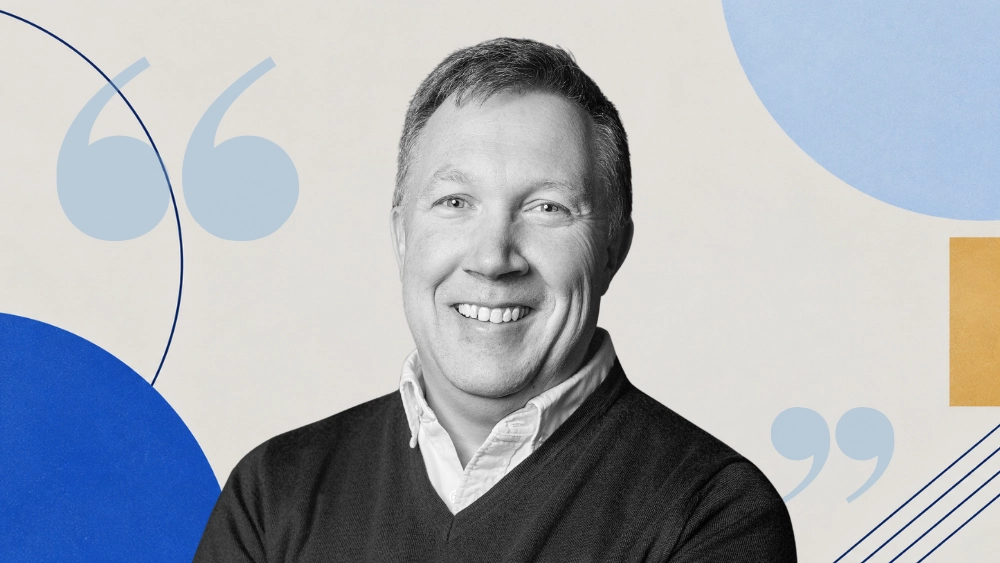
'I wish I'd done this 10 years ago': Why Clydes disputes chair Ben Knowles joined Keystone
After nearly 35 years at Clyde & Co, disputes veteran Ben Knowles has joined consultancy-style Keystone Law.



Contents
Keystone is one of the few publicly listed UK law firms and operates a consultancy-style model rather than a traditional partnership.
Its 455 lawyers are self-employed and largely work remotely, with the option to work from a hot desk in its central London office or meeting rooms across Bristol, Leeds, Manchester and Newcastle.
The full-service firm operates with a lean central management layer, providing regulatory infrastructure, compliance, billing systems and brand resources, while partners retain control of their own practices. Lawyers at Keystone are free to set their own rates and workloads, and retain up to 75% of what they bill.
Former Clyde & Co disputes chair Ben Knowles has recently joined Keystone after nearly 35 years, along with colleagues Ian Hopkinson and Milena Szuniewicz.
Knowles says increasing conflicts within a large, international platform and a desire to reduce bureaucracy in order to focus on client work were key drivers behind the move.
Stay ahead of the City law market with our free email briefing - essential industry news and analysis, in your inbox three times a week.
“I was at Clydes for nearly 35 years,” he says, describing a career that began as a trainee and evolved into senior leadership.
Over that time he sat on the management board for eight years and chaired the disputes practice group. His practice spans international arbitration, upstream oil and gas and extensive Middle East work built over two decades in the region.
“It would be like working for any big company for 35 years,” he says. “There are pros and cons and things change and all the rest of it. And sometimes a change is as good as the rest.”
Some things, however, have not changed - he joined Keystone alongside Hopkinson and Szuniewicz, his colleagues of twenty years.
Conflicts at scale
International arbitration at the senior end tends to be high value and episodic.
“Once you get to a certain point in your career, your work tends to focus on bigger disputes and those don’t come every day of the week,” he says.
In a large global firm, that can mean multiple potential instructions are blocked because conflicts may arise anywhere across the firm’s international client base and office network - for example if the firm advises the opposing company, one of its subsidiaries, or a related entity elsewhere.
“If you get two, three, four, five cases coming along, which you can’t do as a conflict, that’s incredibly frustrating. And at this level, you may not have a steady flow of smaller disputes.”
If you get two, three, four, five cases coming along, which you can’t do as a conflict, that’s incredibly frustrating.
For Knowles, the issue was compounded by the international footprint of a global platform, particularly in jurisdictions with strict conflict regimes.
“Keystone doesn’t have the same international platform, so I’m not facing conflicts, for example, with our Saudi office that I would have faced at Clydes.”
He notes that Saudi conflict rules can resemble US-style regimes, both of which are known for their strict approach to conflicts.
“Keystone doesn't have a US presence or a Saudi presence. So personally, for me, that's great,” he says.
The boutique route
Knowles and his colleagues explored setting up their own firm, an increasingly attractive approach for many Big Law partners, but in his view the boutique route carried a different set of burdens.
“As you get more senior, particularly in a large law firm, you find that you spend less and less of your time actually doing the work and more of your time running the team,” he says.
Those tasks include firm administration, lateral hiring and recruitment and performance reviews, which he says are “inevitable with that style of business”.
Launching independently would not necessarily have solved those pain points.
It has to some extent many of the advantages of a boutique, but you don’t have to run your own law firm.
“If what you want to do is to go away from management and bureaucracy and get back to law, it doesn’t really accomplish that,” he says.
Keystone, by contrast, offered structural simplicity.
“It has to some extent many of the advantages of a boutique, but you don’t have to run your own law firm,” he says.
“There are no management roles expected other than to manage your own practice.”
Law Firm | Trainee First Year | Trainee Second Year | Newly Qualified (NQ) |
|---|---|---|---|
| Addleshaw Goddard | £52,000 | £56,000 | £100,000 |
| Akin | £60,000 | £65,000 | £174,418 |
| A&O Shearman | £56,000 | £61,000 | £150,000 |
| Ashurst Perkins Coie | £57,000 | £62,000 | £140,000 |
| Baker McKenzie | £56,000 | £61,000 | £150,000 |
| Bird & Bird | £48,500 | £53,500 | £102,000 |
| Bristows | £48,000 | £52,000 | £95,000 |
| Bryan Cave Leighton Paisner | £53,000 | £58,000 | £125,000 |
| Burges Salmon | £49,500 | £51,500 | £76,000 |
| Charles Russell Speechlys | £52,000 | £55,000 | £93,000 |
| Cleary Gottlieb | £62,500 | £67,500 | £172,500 |
| Clifford Chance | £56,000 | £61,000 | £150,000 |
| Clyde & Co | £48,500 | £51,000 | £90,000 |
| CMS | £50,000 | £55,000 | £120,000 |
| Cooley | £55,000 | £60,000 | £157,000 |
| Davis Polk | £65,000 | £70,000 | £180,000 |
| Debevoise | £55,000 | £60,000 | £173,000 |
| Dechert | £55,000 | £61,000 | £165,000 |
| Dentons | £52,000 | £56,000 | £104,000 |
| DLA Piper | £55,000 | £60,000 | £140,000 |
| Eversheds Sutherland | £50,000 | £55,000 | £120,000 |
| Farrer & Co | £48,500 | £51,000 | £89,000 |
| Fieldfisher | £48,500 | £52,000 | £100,000 |
| Freshfields | £56,000 | £61,000 | £150,000 |
| Fried Frank | £55,000 | £60,000 | £175,000 |
| Gibson Dunn | £65,000 | £70,000 | £180,000 |
| Goodwin Procter | £55,000 | £60,000 | £175,000 |
| Gowling WLG | £48,500 | £53,500 | £108,000 |
| Herbert Smith Freehills Kramer | £56,000 | £61,000 | £145,000 |
| HFW | £52,000 | £56,000 | £103,500 |
| Hill Dickinson | £44,000 | £45,000 | £80,000 |
| Hogan Lovells | £56,000 | £61,000 | £145,000 |
| Irwin Mitchell | £43,500 | £45,500 | £78,000 |
| Jones Day | £60,000 | £68,000 | £170,000 |
| K&L Gates | £50,000 | £55,000 | £115,000 |
| Kennedys | £43,000 | £46,000 | £85,000 |
| King & Spalding | £62,000 | £67,000 | £175,000 |
| Kirkland & Ellis | £60,000 | £65,000 | £174,418 |
| Latham & Watkins | £60,000 | £65,000 | £174,418 |
| Linklaters | £56,000 | £61,000 | £150,000 |
| Macfarlanes | £60,000 | £65,000 | £150,000 |
| Mayer Brown | £55,000 | £60,000 | £150,000 |
| McDermott Will & Schulte | £65,000 | £70,000 | £174,418 |
| Milbank | £65,000 | £70,000 | £174,418 |
| Mills & Reeve | £46,800 | £47,000 | £84,000 |
| Mishcon de Reya | £52,500 | £57,500 | £110,000 |
| Morgan Lewis | £57,500 | £62,500 | £173,000 |
| Norton Rose Fulbright | £56,000 | £61,000 | £140,000 |
| Orrick | £60,000 | £65,000 | £170,000 |
| Osborne Clarke | £55,500 | £57,500 | £97,000 |
| Paul Hastings | £60,000 | £68,000 | £173,000 |
| Paul Weiss | £60,000 | £65,000 | £180,000 |
| Penningtons Manches Cooper | £48,000 | £50,000 | £83,000 |
| Pinsent Masons | £54,000 | £59,000 | £109,000 |
| Quinn Emanuel | n/a | n/a | £189,000 |
| Reed Smith | £55,000 | £60,000 | £135,000 |
| Ropes & Gray | £62,000 | £67,000 | £170,000 |
| RPC | £48,000 | £52,000 | £95,000 |
| Shoosmiths | £45,000 | £47,000 | £105,000 |
| Sidley Austin | £60,000 | £65,000 | £175,000 |
| Simmons & Simmons | £56,000 | £61,000 | £130,000 |
| Simpson Thacher | n/a | n/a | £178,000 |
| Skadden | £58,000 | £63,000 | £177,000 |
| Slaughter and May | £56,000 | £61,000 | £150,000 |
| Squire Patton Boggs | £50,000 | £55,000 | £110,000 |
| Stephenson Harwood | £50,000 | £55,000 | £105,000 |
| Sullivan & Cromwell | £65,000 | £70,000 | £177,000 |
| TLT | £44,000 | £47,500 | £85,000 |
| Travers Smith | £55,000 | £60,000 | £130,000 |
| Trowers & Hamlins | £50,000 | £54,000 | £90,000 |
| Vinson & Elkins | £60,000 | £65,000 | £173,077 |
| Watson Farley & Williams | £51,500 | £56,000 | £107,000 |
| Weightmans | £36,000 | £38,000 | £70,000 |
| Weil | £60,000 | £65,000 | £170,000 |
| White & Case | £62,000 | £67,000 | £175,000 |
| Willkie Farr & Gallagher | £60,000 | £65,000 | £180,000 |
| Winston Taylor | £56,000 | £61,000 | £125,000 |
| Withers | £47,000 | £52,000 | £95,000 |
| Womble Bond Dickinson | £43,000 | £45,000 | £83,000 |
Rank | Law Firm | Revenue | Profit per Equity Partner (PEP) |
|---|---|---|---|
| 1 | DLA Piper* | £3,130,000,000 | £2,500,000 |
| 2 | A&O Shearman | £2,900,000,000 | £2,000,000 |
| 3 | Clifford Chance | £2,400,000,000 | £2,100,000 |
| 4 | Hogan Lovells | £2,320,000,000 | £2,400,000 |
| 5 | Linklaters | £2,320,000,000 | £2,200,000 |
| 6 | Freshfields | £2,250,000,000 | Not disclosed |
| 7 | CMS** | £1,800,000,000 | Not disclosed |
| 8 | Norton Rose Fulbright* | £1,800,000,000 | Not disclosed |
| 9 | HSF Kramer | £1,360,000,000 | £1,400,000 |
| 10 | Ashurst | £1,030,000,000 | £1,390,000 |
| 11 | Clyde & Co | £854,000,000 | Not disclosed |
| 12 | Eversheds Sutherland | £769,000,000 | £1,400,000 |
| 13 | Pinsent Masons | £680,000,000 | £790,000 |
| 14 | Slaughter and May*** | £650,000,000 | Not disclosed |
| 15 | BCLP* | £640,000,000 | £790,000 |
| 16 | Simmons & Simmons | £615,000,000 | £1,120,000 |
| 17 | Bird & Bird** | £580,000,000 | £720,000 |
| 18 | Addleshaw Goddard | £550,000,000 | £1,000,000 |
| 19 | Taylor Wessing | £526,000,000 | £1,100,000 |
| 20 | Osborne Clarke** | £476,000,000 | £800,000 |
| 21 | DWF | £466,000,000 | Not disclosed |
| 22 | Womble Bond Dickinson | £450,000,000 | Not disclosed |
| 23 | Kennedys | £428,000,000 | Not disclosed |
| 24 | Fieldfisher | £385,000,000 | £1,000,000 |
| 25 | Macfarlanes | £371,000,000 | £3,100,000 |
What do City lawyers actually do each day?
For a closer look at the day-to-day of some of the most common types of lawyers working in corporate law firms, explore our lawyer job profiles:
A different dynamic
One of the more unexpected elements of working at Keystone has been the level of collaboration.
“One of the things that I didn’t expect, but which has been a really pleasant surprise, is the attitude towards collaboration,” he says.
Within weeks of joining, he says at least 30 partners proactively reached out. In larger firms, he notes, new partners arrive and sometimes people barely notice.
There’s a huge number of partners who have left Big Law...that lifts spirits.
“There’s a huge number of partners who have left Big Law, who are now not burdened with some of the challenges of Big Law. That lifts spirits,” he says.
The firm makes an effort to gather people together, whether in London or elsewhere. For example, Keystone organised a drinks reception following a recent continuing education session, attended by around 100 lawyers.
Keystone’s incentive model, he suggests, also makes collaboration commercially straightforward. The firm operates a fixed 15% client origination fee.
“I know that if I bring in work and give it to somebody else, I’ll benefit from that.”
The alternatives
“I wish I’d done this 10 years ago,” he says.
This trend of senior disputes lawyers moving to boutiques or what he describes as “neo” law firms - newer alternative law firm models - has been playing out for years.
UK-founded firms such as Setfords and Taylor Rose, as well as US FisherBroyles are also prominent players in this space. One of the most notable moves came in 2014, when a group of senior arbitration partners left Freshfields to found specialist boutique Three Crowns.
The rise of platform firms also runs parallel to infrastructure consultancies such as Kindleworth and Prosperant, which assist partners in spinning out of large firms to launch independent boutiques.
For more on the trend of senior lawyers launching their own firms, listen to our podcast episode with Kindleworth partners James Hacking and Mike Estill.
| Firm | London office since | Known for in London |
|---|---|---|
| Akin | 1997 | Restructuring, funds |
| Baker McKenzie | 1961 | Finance, capital markets, TMT |
| Davis Polk | 1972 | Leveraged finance, corporate/M&A |
| Gibson Dunn | 1979 | Private equity, arbitration, energy, resources and infrastructure |
| Goodwin | 2008 | Private equity, funds, life sciences |
| Kirkland & Ellis | 1994 | Private equity, funds, restructuring |
| Latham & Watkins | 1990 | Finance, private equity, capital markets |
| McDermott Will & Schulte | 1998 | Finance, funds, healthcare |
| Milbank | 1979 | Finance, capital markets, energy, resources and infrastructure |
| Paul Hastings | 1997 | Leveraged finance, structured finance, infrastructure |
| Paul Weiss | 2001 | Private equity, leveraged finance |
| Quinn Emanuel | 2008 | Litigation |
| Sidley Austin | 1974 | Leveraged finance, capital markets, corporate/M&A |
| Simpson Thacher | 1978 | Leveraged finance, private equity, funds |
| Skadden | 1988 | Finance, corporate/M&A, arbitration |
| Sullivan & Cromwell | 1972 | Corporate/M&A, restructuring, capital markets |
| Weil | 1996 | Restructuring, private equity, leverage finance |
| White & Case | 1971 | Capital markets, arbitration, energy, resources and infrastructure |
| Law firm | Type | First-year salary |
|---|---|---|
| White & Case | US firm | £32,000 |
| Stephenson Harwood | International | £30,000 |
| A&O Shearman | Magic Circle | £28,000 |
| Charles Russell Speechlys | International | £28,000 |
| Freshfields | Magic Circle | £28,000 |
| Herbert Smith Freehills | Silver Circle | £28,000 |
| Hogan Lovells | International | £28,000 |
| Linklaters | Magic Circle | £28,000 |
| Mishcon de Reya | International | £28,000 |
| Norton Rose Fulbright | International | £28,000 |
Law Firm | Trainee First Year | Trainee Second Year | Newly Qualified (NQ) |
|---|---|---|---|
| A&O Shearman | £56,000 | £61,000 | £150,000 |
| Clifford Chance | £56,000 | £61,000 | £150,000 |
| Freshfields Bruckhaus Deringer | £56,000 | £61,000 | £150,000 |
| Linklaters | £56,000 | £61,000 | £150,000 |
| Slaughter and May | £56,000 | £61,000 | £150,000 |
Law Firm | Trainee First Year | Trainee Second Year | Newly Qualified (NQ) |
|---|---|---|---|
| A&O Shearman | £56,000 | £61,000 | £150,000 |
| Clifford Chance | £56,000 | £61,000 | £150,000 |
| Freshfields Bruckhaus Deringer | £56,000 | £61,000 | £150,000 |
| Linklaters | £56,000 | £61,000 | £150,000 |
| Slaughter and May | £56,000 | £61,000 | £150,000 |
Law Firm | Trainee First Year | Trainee Second Year | Newly Qualified (NQ) |
|---|---|---|---|
| Ashurst | £57,000 | £62,000 | £140,000 |
| Bryan Cave Leighton Paisner | £53,000 | £58,000 | £125,000 |
| Herbert Smith Freehills | £56,000 | £61,000 | £145,000 |
| Macfarlanes | £60,000 | £65,000 | £150,000 |
| Travers Smith | £55,000 | £60,000 | £130,000 |
| Firm | Merger year | Known for in London |
|---|---|---|
| BCLP | 2018 | Real estate, corporate/M&A, litigation |
| DLA Piper | 2005 | Corporate/M&A, real estate, energy, resources and infrastructure |
| Eversheds Sutherland | 2017 | Corporate/M&A, finance |
| Hogan Lovells | 2011 | Litigation, regulation, finance |
| Mayer Brown | 2002 | Finance, capital markets, real estate |
| Norton Rose Fulbright | 2013 | Energy, resources and infrastructure, insurance, finance |
| Reed Smith | 2007 | Shipping, finance, TMT |
| Squire Patton Boggs | 2011 | Corporate/M&A, pensions, TMT |
Law Firm | Trainee First Year | Trainee Second Year | Newly Qualified (NQ) |
|---|---|---|---|
| Ashurst | £57,000 | £62,000 | £140,000 |
| Bryan Cave Leighton Paisner | £53,000 | £58,000 | £125,000 |
| Herbert Smith Freehills Kramer | £56,000 | £61,000 | £145,000 |
| Macfarlanes | £60,000 | £65,000 | £150,000 |
| Travers Smith | £55,000 | £60,000 | £130,000 |
Know what's moving the market
Get the free email that keeps UK lawyers ahead on the stories that matter.
We send a short summary of the biggest legal industry and business stories you need to know about three times a week. Free to join. Unsubscribe at any time.