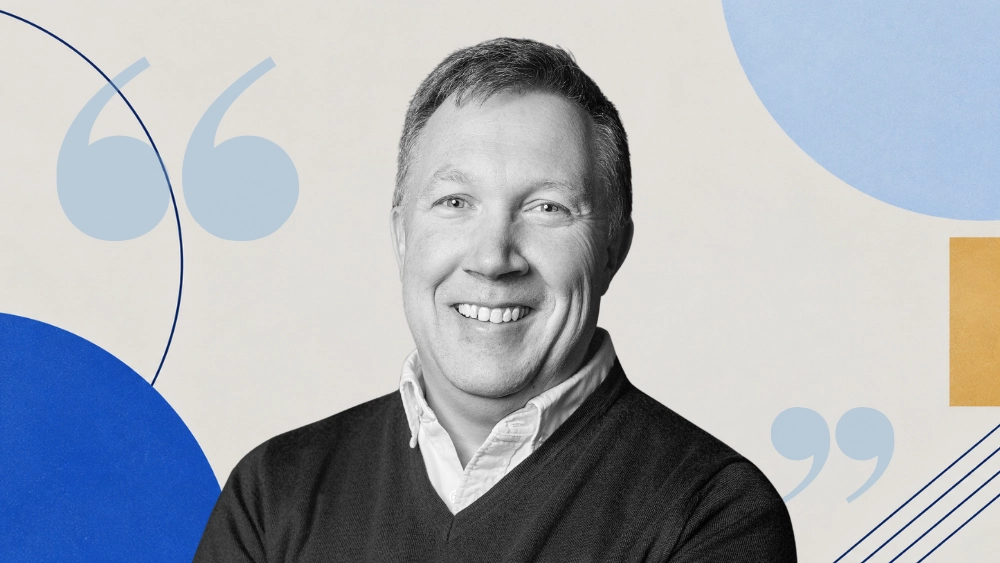
A legal psychologist on why law attracts neurodivergent people
Dr Catherine Sykes discusses why neurodiversity is overrepresented in law, and the benefits and challenges.



Contents
Dr Catherine Sykes, a psychologist who works with City lawyers, sees a significant number of neurodivergent patients in her practice.
She believes there may be an outsized representation of neurodivergence in the legal profession because of both the structure and intensity that a career in law offers.
While she is not keen on the word “disorder”, she says neurodiversity essentially means that someone’s brain works differently from the average person’s and is often associated with diagnoses such as ADHD, dyslexia or autism.
It’s estimated that around 4-5% of the UK population has ADHD or autism, existing on a spectrum, and that roughly 15% of people fall under the broader neurodivergent umbrella.
A study of lawyers funded by the American Bar Association found that 12.5% reported having ADHD, higher than estimates for the general population.
Stay ahead of the City law market with our free email briefing - essential industry news and analysis, in your inbox three times a week.
Why law attracts
While neurodiversity is often associated with workplace or personal challenges, Sykes said it can also explain why some people are particularly well suited to legal careers. For people with autism, law often provides structure and rule-based thinking, while for those with ADHD, it offers intensity, urgency and novelty.
“People with ADHD tend to seek novelty and intensity, enjoying the fast-paced environment and high stimulation,” she said.
People with ADHD tend to seek novelty and intensity...
“People who are on the autistic spectrum are very good at systemising - creating rules and recognising patterns - which can be very useful for a career in law. They see the world in a very different way, which can cultivate creativity,” she said.
Sykes cautioned against overstating the “advantages” of neurodivergence, but said certain cognitive differences can become real strengths in the right environment.
Overcompensating
While there can be benefits, neurodivergence also comes with challenges, particularly in high-pressure work environments.
“If you have ADHD, remaining consistent with your effort may be a challenge. There’s a lot of effort going on in the background to be consistent, what we call overcompensation,” she said.
Sykes said this can create a “self-reinforcing loop”, where people feel they are constantly just managing to keep up despite performing well externally.
“It creates this sense of: ‘I’ve just got away with this.’ If you constantly evaluate your performance, it keeps you on edge, removes some of the satisfaction and can lead to burnout,” she said.
Law Firm | Trainee First Year | Trainee Second Year | Newly Qualified (NQ) |
|---|---|---|---|
| Addleshaw Goddard | £52,000 | £56,000 | £100,000 |
| Akin | £60,000 | £65,000 | £174,418 |
| A&O Shearman | £56,000 | £61,000 | £150,000 |
| Ashurst Perkins Coie | £57,000 | £62,000 | £140,000 |
| Baker McKenzie | £56,000 | £61,000 | £150,000 |
| Bird & Bird | £48,500 | £53,500 | £102,000 |
| Bristows | £48,000 | £52,000 | £95,000 |
| Bryan Cave Leighton Paisner | £53,000 | £58,000 | £125,000 |
| Burges Salmon | £49,500 | £51,500 | £76,000 |
| Charles Russell Speechlys | £52,000 | £55,000 | £93,000 |
| Cleary Gottlieb | £62,500 | £67,500 | £172,500 |
| Clifford Chance | £56,000 | £61,000 | £150,000 |
| Clyde & Co | £48,500 | £51,000 | £90,000 |
| CMS | £50,000 | £55,000 | £120,000 |
| Cooley | £55,000 | £60,000 | £157,000 |
| Davis Polk | £65,000 | £70,000 | £180,000 |
| Debevoise | £55,000 | £60,000 | £173,000 |
| Dechert | £55,000 | £61,000 | £165,000 |
| Dentons | £52,000 | £56,000 | £104,000 |
| DLA Piper | £55,000 | £60,000 | £140,000 |
| Eversheds Sutherland | £50,000 | £55,000 | £120,000 |
| Farrer & Co | £48,500 | £51,000 | £89,000 |
| Fieldfisher | £48,500 | £52,000 | £100,000 |
| Freshfields | £56,000 | £61,000 | £150,000 |
| Fried Frank | £55,000 | £60,000 | £175,000 |
| Gibson Dunn | £65,000 | £70,000 | £180,000 |
| Goodwin Procter | £55,000 | £60,000 | £175,000 |
| Gowling WLG | £48,500 | £53,500 | £108,000 |
| Herbert Smith Freehills Kramer | £56,000 | £61,000 | £145,000 |
| HFW | £52,000 | £56,000 | £103,500 |
| Hill Dickinson | £44,000 | £45,000 | £80,000 |
| Hogan Lovells | £56,000 | £61,000 | £145,000 |
| Irwin Mitchell | £43,500 | £45,500 | £78,000 |
| Jones Day | £60,000 | £68,000 | £170,000 |
| K&L Gates | £50,000 | £55,000 | £115,000 |
| Kennedys | £43,000 | £46,000 | £85,000 |
| King & Spalding | £62,000 | £67,000 | £175,000 |
| Kirkland & Ellis | £60,000 | £65,000 | £174,418 |
| Latham & Watkins | £60,000 | £65,000 | £174,418 |
| Linklaters | £56,000 | £61,000 | £150,000 |
| Macfarlanes | £60,000 | £65,000 | £150,000 |
| Mayer Brown | £55,000 | £60,000 | £150,000 |
| McDermott Will & Schulte | £65,000 | £70,000 | £174,418 |
| Milbank | £65,000 | £70,000 | £174,418 |
| Mills & Reeve | £46,800 | £47,000 | £84,000 |
| Mishcon de Reya | £52,500 | £57,500 | £110,000 |
| Morgan Lewis | £57,500 | £62,500 | £173,000 |
| Norton Rose Fulbright | £56,000 | £61,000 | £140,000 |
| Orrick | £60,000 | £65,000 | £170,000 |
| Osborne Clarke | £55,500 | £57,500 | £97,000 |
| Paul Hastings | £60,000 | £68,000 | £173,000 |
| Paul Weiss | £60,000 | £65,000 | £180,000 |
| Penningtons Manches Cooper | £48,000 | £50,000 | £83,000 |
| Pinsent Masons | £54,000 | £59,000 | £109,000 |
| Quinn Emanuel | n/a | n/a | £189,000 |
| Reed Smith | £55,000 | £60,000 | £135,000 |
| Ropes & Gray | £62,000 | £67,000 | £170,000 |
| RPC | £48,000 | £52,000 | £95,000 |
| Shoosmiths | £45,000 | £47,000 | £105,000 |
| Sidley Austin | £60,000 | £65,000 | £175,000 |
| Simmons & Simmons | £56,000 | £61,000 | £130,000 |
| Simpson Thacher | n/a | n/a | £178,000 |
| Skadden | £58,000 | £63,000 | £177,000 |
| Slaughter and May | £56,000 | £61,000 | £150,000 |
| Squire Patton Boggs | £50,000 | £55,000 | £110,000 |
| Stephenson Harwood | £50,000 | £55,000 | £105,000 |
| Sullivan & Cromwell | £65,000 | £70,000 | £177,000 |
| TLT | £44,000 | £47,500 | £85,000 |
| Travers Smith | £55,000 | £60,000 | £130,000 |
| Trowers & Hamlins | £50,000 | £54,000 | £90,000 |
| Vinson & Elkins | £60,000 | £65,000 | £173,077 |
| Watson Farley & Williams | £51,500 | £56,000 | £107,000 |
| Weightmans | £36,000 | £38,000 | £70,000 |
| Weil | £60,000 | £65,000 | £170,000 |
| White & Case | £62,000 | £67,000 | £175,000 |
| Willkie Farr & Gallagher | £60,000 | £65,000 | £180,000 |
| Winston Taylor | £56,000 | £61,000 | £125,000 |
| Withers | £47,000 | £52,000 | £95,000 |
| Womble Bond Dickinson | £43,000 | £45,000 | £83,000 |
Rank | Law Firm | Revenue | Profit per Equity Partner (PEP) |
|---|---|---|---|
| 1 | DLA Piper* | £3,130,000,000 | £2,500,000 |
| 2 | A&O Shearman | £2,900,000,000 | £2,000,000 |
| 3 | Clifford Chance | £2,400,000,000 | £2,100,000 |
| 4 | Hogan Lovells | £2,320,000,000 | £2,400,000 |
| 5 | Linklaters | £2,320,000,000 | £2,200,000 |
| 6 | Freshfields | £2,250,000,000 | Not disclosed |
| 7 | CMS** | £1,800,000,000 | Not disclosed |
| 8 | Norton Rose Fulbright* | £1,800,000,000 | Not disclosed |
| 9 | HSF Kramer | £1,360,000,000 | £1,400,000 |
| 10 | Ashurst | £1,030,000,000 | £1,390,000 |
| 11 | Clyde & Co | £854,000,000 | Not disclosed |
| 12 | Eversheds Sutherland | £769,000,000 | £1,400,000 |
| 13 | Pinsent Masons | £680,000,000 | £790,000 |
| 14 | Slaughter and May*** | £650,000,000 | Not disclosed |
| 15 | BCLP* | £640,000,000 | £790,000 |
| 16 | Simmons & Simmons | £615,000,000 | £1,120,000 |
| 17 | Bird & Bird** | £580,000,000 | £720,000 |
| 18 | Addleshaw Goddard | £550,000,000 | £1,000,000 |
| 19 | Taylor Wessing | £526,000,000 | £1,100,000 |
| 20 | Osborne Clarke** | £476,000,000 | £800,000 |
| 21 | DWF | £466,000,000 | Not disclosed |
| 22 | Womble Bond Dickinson | £450,000,000 | Not disclosed |
| 23 | Kennedys | £428,000,000 | Not disclosed |
| 24 | Fieldfisher | £385,000,000 | £1,000,000 |
| 25 | Macfarlanes | £371,000,000 | £3,100,000 |
What do City lawyers actually do each day?
For a closer look at the day-to-day of some of the most common types of lawyers working in corporate law firms, explore our lawyer job profiles:
Communication styles
Communication can also become a challenge, particularly where different communication styles are misunderstood in workplace settings.
“People on the autistic spectrum tend to favour direct communication and that can sometimes be interpreted as blunt,” she said. “People with ADHD can be quite emotionally intense in their communication and that can sometimes be interpreted as too much.”
Sykes said these misunderstandings can affect colleague relationships and performance feedback.
“People with neurodiversity often require help in developing effective communication skills to express and adapt their communication,” she said.
The ‘flow state’
Sykes also pointed to the importance of understanding “struggle states” and “flow states” when managing focus and motivation.
She said many people with ADHD find it difficult to complete repetitive tasks and can become reliant on deadline pressure and adrenaline.
“It feels good in the moment because adrenaline improves focus, albeit only in the short term, but it’s not sustainable,” she said.
Instead, she said people with ADHD may benefit from introducing novelty into the early “struggle phase” of a task - for example by changing environments or working methods - to reach a state of flow.
By contrast, people with autism may benefit more from routine and consistency, such as time blocking, to achieve flow.
To disclose or not
Sykes said deciding whether to disclose a diagnosis at work remains a difficult judgement call and depends heavily on workplace culture.
“In an ideal world, the answer would be yes,” she said. “But I think there’s a judgement that has to be made about the culture you work in and whether it would genuinely be receptive.”
She said some organisations are increasingly open to adjustments and support, while others may still perceive neurodivergence as a weakness despite wider awareness efforts.
I think there’s a judgement that has to be made about the culture you work in...
Even without formal disclosure, Sykes said developing self-awareness and communication strategies can make a major difference.
“Self-awareness is the first step,” she said. “You have to understand how it shows up for you and how your brain works.”
She said practical coping strategies often include improving communication, developing conflict resolution skills and building sustainable routines to reduce overcompensation and burnout.
| Firm | London office since | Known for in London |
|---|---|---|
| Akin | 1997 | Restructuring, funds |
| Baker McKenzie | 1961 | Finance, capital markets, TMT |
| Davis Polk | 1972 | Leveraged finance, corporate/M&A |
| Gibson Dunn | 1979 | Private equity, arbitration, energy, resources and infrastructure |
| Goodwin | 2008 | Private equity, funds, life sciences |
| Kirkland & Ellis | 1994 | Private equity, funds, restructuring |
| Latham & Watkins | 1990 | Finance, private equity, capital markets |
| McDermott Will & Schulte | 1998 | Finance, funds, healthcare |
| Milbank | 1979 | Finance, capital markets, energy, resources and infrastructure |
| Paul Hastings | 1997 | Leveraged finance, structured finance, infrastructure |
| Paul Weiss | 2001 | Private equity, leveraged finance |
| Quinn Emanuel | 2008 | Litigation |
| Sidley Austin | 1974 | Leveraged finance, capital markets, corporate/M&A |
| Simpson Thacher | 1978 | Leveraged finance, private equity, funds |
| Skadden | 1988 | Finance, corporate/M&A, arbitration |
| Sullivan & Cromwell | 1972 | Corporate/M&A, restructuring, capital markets |
| Weil | 1996 | Restructuring, private equity, leverage finance |
| White & Case | 1971 | Capital markets, arbitration, energy, resources and infrastructure |
| Law firm | Type | First-year salary |
|---|---|---|
| White & Case | US firm | £32,000 |
| Stephenson Harwood | International | £30,000 |
| A&O Shearman | Magic Circle | £28,000 |
| Charles Russell Speechlys | International | £28,000 |
| Freshfields | Magic Circle | £28,000 |
| Herbert Smith Freehills | Silver Circle | £28,000 |
| Hogan Lovells | International | £28,000 |
| Linklaters | Magic Circle | £28,000 |
| Mishcon de Reya | International | £28,000 |
| Norton Rose Fulbright | International | £28,000 |
On the agenda
Major UK law firms have been introducing neurodiversity initiatives, internal support networks and workplace adjustment programmes as awareness grows across the profession.
Freshfields’ head of risk management James Smither co-founded the Legal Neurodiversity Network in 2023 to help make the legal industry more neuro-inclusive. The organisation has since grown to include more than 100 member firms.
Other firms have also expanded internal support efforts. HSF Kramer launched a neurodiversity mentoring programme last year designed to help neurodivergent professionals better navigate the workplace, while Pinsent Masons operates an internal Neurodiversity Network focused on employee support, education and awareness.
Social media effect
Awareness of neurodivergence has grown in recent years, fuelled in part by social media platforms where people increasingly share their personal experiences - particularly, according to Sykes, during the pandemic when many people lost the coping mechanisms and routines they relied on.
While that initially led to greater openness and destigmatisation, she believes there has recently been a swing back towards scepticism and misunderstanding, fuelled in part by misinformation online.
There is a lot of misinformation...on Instagram or TikTok.
Sykes warned that misinformation surrounding neurodivergence has become a growing problem online and encouraged people to seek out trusted clinical and academic sources rather than relying on social media personalities.
“There is a lot of misinformation and I recommend that people go to reliable sources, not just someone who has an opinion on ADHD or autism on Instagram or TikTok,” she said.
Law Firm | Trainee First Year | Trainee Second Year | Newly Qualified (NQ) |
|---|---|---|---|
| A&O Shearman | £56,000 | £61,000 | £150,000 |
| Clifford Chance | £56,000 | £61,000 | £150,000 |
| Freshfields Bruckhaus Deringer | £56,000 | £61,000 | £150,000 |
| Linklaters | £56,000 | £61,000 | £150,000 |
| Slaughter and May | £56,000 | £61,000 | £150,000 |
Law Firm | Trainee First Year | Trainee Second Year | Newly Qualified (NQ) |
|---|---|---|---|
| A&O Shearman | £56,000 | £61,000 | £150,000 |
| Clifford Chance | £56,000 | £61,000 | £150,000 |
| Freshfields Bruckhaus Deringer | £56,000 | £61,000 | £150,000 |
| Linklaters | £56,000 | £61,000 | £150,000 |
| Slaughter and May | £56,000 | £61,000 | £150,000 |
Law Firm | Trainee First Year | Trainee Second Year | Newly Qualified (NQ) |
|---|---|---|---|
| Ashurst | £57,000 | £62,000 | £140,000 |
| Bryan Cave Leighton Paisner | £53,000 | £58,000 | £125,000 |
| Herbert Smith Freehills | £56,000 | £61,000 | £145,000 |
| Macfarlanes | £60,000 | £65,000 | £150,000 |
| Travers Smith | £55,000 | £60,000 | £130,000 |
| Firm | Merger year | Known for in London |
|---|---|---|
| BCLP | 2018 | Real estate, corporate/M&A, litigation |
| DLA Piper | 2005 | Corporate/M&A, real estate, energy, resources and infrastructure |
| Eversheds Sutherland | 2017 | Corporate/M&A, finance |
| Hogan Lovells | 2011 | Litigation, regulation, finance |
| Mayer Brown | 2002 | Finance, capital markets, real estate |
| Norton Rose Fulbright | 2013 | Energy, resources and infrastructure, insurance, finance |
| Reed Smith | 2007 | Shipping, finance, TMT |
| Squire Patton Boggs | 2011 | Corporate/M&A, pensions, TMT |
Law Firm | Trainee First Year | Trainee Second Year | Newly Qualified (NQ) |
|---|---|---|---|
| Ashurst | £57,000 | £62,000 | £140,000 |
| Bryan Cave Leighton Paisner | £53,000 | £58,000 | £125,000 |
| Herbert Smith Freehills Kramer | £56,000 | £61,000 | £145,000 |
| Macfarlanes | £60,000 | £65,000 | £150,000 |
| Travers Smith | £55,000 | £60,000 | £130,000 |
Know what's moving the market
Get the free email that keeps UK lawyers ahead on the stories that matter.
We send a short summary of the biggest legal industry and business stories you need to know about three times a week. Free to join. Unsubscribe at any time.