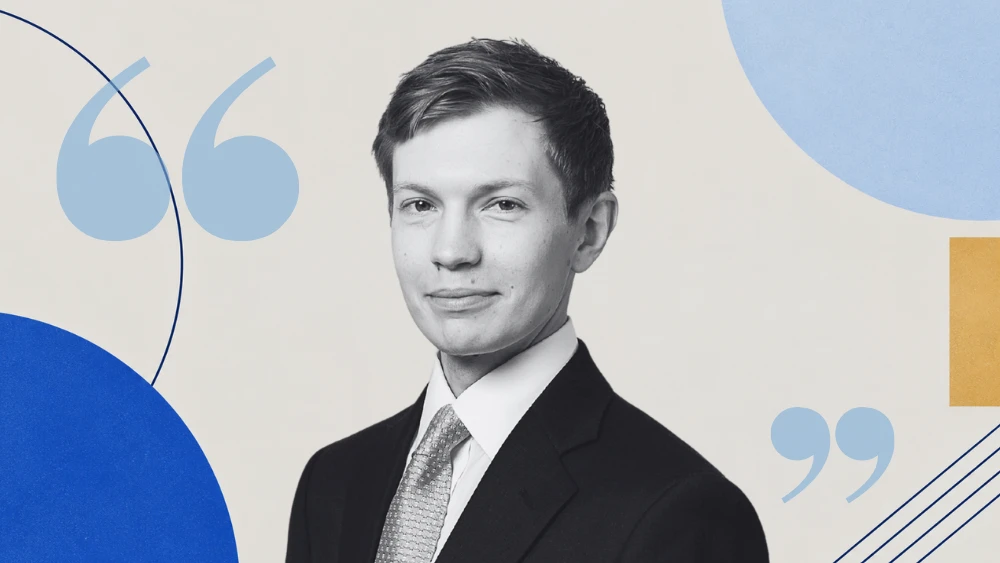
A different model for elite litigation: Natasha Harrison on running Pallas
The Pallas founder discusses building a transatlantic litigation firm that competes with Big Law without becoming it.



Contents
Four years after her high-profile breakaway from elite US litigation boutique Boies Schiller, Natasha Harrison has built Pallas Partners into a top-tier London-New York specialist disputes firm that regularly goes toe-to-toe with Magic Circle and leading US firms at the top of the market.
She believes that focus, not scale, is the winning formula, and has no interest in expanding beyond the firm’s two offices or growing past 100 lawyers.
In this interview, she reflects on where Pallas stands today, what she is seeing in the disputes landscape, how her career at US firms in London has shaped the firm’s structure, and why working at Pallas is not for everyone.
Stay ahead of the City law market with our free email briefing - essential industry news and analysis, in your inbox three times a week.
Harrison left Boies Schiller Flexner in 2022, taking 27 staff with her to launch litigation boutique Pallas Partners, in a disputes market dominated by full-service firms.
“My original plan was to open the London and New York offices on the same day,” she says. In the end, she decided to stagger the launches, with New York opening six months later.
Four years on, the firm has around 65 staff across its two offices focusing on high-value commercial litigation, finance and restructuring disputes, and shareholder and securities claims.
Competing at the top
Pallas operates as a disputes-only boutique and regularly acts against Magic Circle firms and elite US firms, as well as co-counselling with them.
“We litigate with and against the big firms on a very regular basis, including Magic Circle firms, leading US firms as well as Quinn Emanuel. We’re really playing at the very top end of the market” she says.
That positioning is still relatively uncommon in the UK market. While the US has long had a deep bench of specialist litigation boutiques, London has fewer firms operating consistently at the top end of disputes without sitting within a broader full-service platform.
“The US is saturated with litigation boutiques, but there aren’t very many here in the UK. It’s been an opportunity for us to fill a gap in the market,” she says.
Where disputes are emerging
The firm’s caseload mirrors wider trends in the disputes market. Harrison has seen increased activity in finance disputes, particularly those arising from liability management exercises, where companies restructure or amend their debt outside formal insolvency processes, often triggering conflicts between majority and minority creditors.
“There’s a huge uptick there,” she says. “There are lots of potentially untested areas of law, areas that are ripe for development.”
There are lots of potentially untested areas of law, areas that are ripe for development.
Pallas is also acting for groups of Credit Suisse bondholders in ongoing Swiss proceedings arising from the controversial write-down of their bonds during the bank’s government-backed 2023 rescue and takeover by UBS.
A marquee shareholder claim
One of the firm’s most significant matters is a £2 billion claim against Anglo-Swiss global mining and commodity trading giant Glencore, brought on behalf of institutional investors who say the company failed to disclose material information relating to corruption and bribery misconduct and associated risks.
Pallas is acting for the claimants alongside Quinn Emanuel, Stewarts and BCLP, with Clifford Chance representing Glencore.
Harrison calls it a marquee claim for English law. A preliminary dispute over whether Glencore can rely on legal privilege to withhold documents from shareholder claimants has now progressed to the Supreme Court.
While shareholder actions are still far more common in the US, driven by an opt-out class action system, Harrison believes the UK is edging in the same direction. Even within an opt-in framework, institutional investors are increasingly prepared to act collectively.
“It’s been slower to evolve, but it is now gathering momentum,” she says.
Staying small by design
Despite expanding across two major financial centres, Pallas has set clear limits on how large it wants to become. Harrison has been explicit that once a firm grows beyond a certain size, it stops functioning as a boutique.
“Once you are above 100 lawyers, you are not a boutique,” she says.
Once you are above 100 lawyers, you are not a boutique.
The firm’s long-term aim is a roughly even balance between London and New York, with around 40 lawyers in each office.
At that size, she says “you can handle very large matters without tripping into that grey area of not being a boutique and not being a Big Law firm”.
There are also no plans to open offices beyond London and New York. While Pallas litigates globally, it does so through local counsel rather than its own international footprint.
The UK has relatively few standalone litigation boutiques, but even in the US, where the model is more developed, most are structured as domestic practices rather than transatlantic firms.
“We offer something very unique for a boutique and that’s New York-London access,” she says.
Law Firm | Trainee First Year | Trainee Second Year | Newly Qualified (NQ) |
|---|---|---|---|
| Addleshaw Goddard | £52,000 | £56,000 | £100,000 |
| Akin | £60,000 | £65,000 | £174,418 |
| A&O Shearman | £56,000 | £61,000 | £150,000 |
| Ashurst Perkins Coie | £57,000 | £62,000 | £140,000 |
| Baker McKenzie | £56,000 | £61,000 | £150,000 |
| Bird & Bird | £48,500 | £53,500 | £102,000 |
| Bristows | £48,000 | £52,000 | £95,000 |
| Bryan Cave Leighton Paisner | £53,000 | £58,000 | £125,000 |
| Burges Salmon | £49,500 | £51,500 | £76,000 |
| Charles Russell Speechlys | £52,000 | £55,000 | £93,000 |
| Cleary Gottlieb | £62,500 | £67,500 | £164,500 |
| Clifford Chance | £56,000 | £61,000 | £150,000 |
| Clyde & Co | £48,500 | £51,000 | £90,000 |
| CMS | £50,000 | £55,000 | £120,000 |
| Cooley | £55,000 | £60,000 | £157,000 |
| Davis Polk | £65,000 | £70,000 | £180,000 |
| Debevoise | £55,000 | £60,000 | £173,000 |
| Dechert | £55,000 | £61,000 | £165,000 |
| Dentons | £52,000 | £56,000 | £104,000 |
| DLA Piper | £55,000 | £60,000 | £140,000 |
| Eversheds Sutherland | £50,000 | £55,000 | £120,000 |
| Farrer & Co | £48,500 | £51,000 | £89,000 |
| Fieldfisher | £48,500 | £52,000 | £100,000 |
| Freshfields | £56,000 | £61,000 | £150,000 |
| Fried Frank | £55,000 | £60,000 | £175,000 |
| Gibson Dunn | £65,000 | £70,000 | £180,000 |
| Goodwin Procter | £55,000 | £60,000 | £175,000 |
| Gowling WLG | £48,500 | £53,500 | £108,000 |
| Herbert Smith Freehills Kramer | £56,000 | £61,000 | £145,000 |
| HFW | £52,000 | £56,000 | £103,500 |
| Hill Dickinson | £44,000 | £45,000 | £80,000 |
| Hogan Lovells | £56,000 | £61,000 | £145,000 |
| Irwin Mitchell | £43,500 | £45,500 | £78,000 |
| Jones Day | £60,000 | £68,000 | £170,000 |
| K&L Gates | £50,000 | £55,000 | £115,000 |
| Kennedys | £43,000 | £46,000 | £85,000 |
| King & Spalding | £62,000 | £67,000 | £175,000 |
| Kirkland & Ellis | £60,000 | £65,000 | £174,418 |
| Latham & Watkins | £60,000 | £65,000 | £174,418 |
| Linklaters | £56,000 | £61,000 | £150,000 |
| Macfarlanes | £60,000 | £65,000 | £150,000 |
| Mayer Brown | £55,000 | £60,000 | £150,000 |
| McDermott Will & Schulte | £65,000 | £70,000 | £174,418 |
| Milbank | £65,000 | £70,000 | £174,418 |
| Mills & Reeve | £46,800 | £47,000 | £84,000 |
| Mishcon de Reya | £52,500 | £57,500 | £110,000 |
| Morgan Lewis | £57,500 | £62,500 | £173,000 |
| Norton Rose Fulbright | £56,000 | £61,000 | £140,000 |
| Orrick | £60,000 | £65,000 | £170,000 |
| Osborne Clarke | £55,500 | £57,500 | £97,000 |
| Paul Hastings | £60,000 | £68,000 | £173,000 |
| Paul Weiss | £60,000 | £65,000 | £180,000 |
| Penningtons Manches Cooper | £48,000 | £50,000 | £83,000 |
| Pinsent Masons | £54,000 | £59,000 | £109,000 |
| Quinn Emanuel | n/a | n/a | £189,000 |
| Reed Smith | £55,000 | £60,000 | £135,000 |
| Ropes & Gray | £62,000 | £67,000 | £170,000 |
| RPC | £48,000 | £52,000 | £95,000 |
| Shoosmiths | £45,000 | £47,000 | £105,000 |
| Sidley Austin | £60,000 | £65,000 | £175,000 |
| Simmons & Simmons | £56,000 | £61,000 | £130,000 |
| Simpson Thacher | n/a | n/a | £178,000 |
| Skadden | £58,000 | £63,000 | £177,000 |
| Slaughter and May | £56,000 | £61,000 | £150,000 |
| Squire Patton Boggs | £50,000 | £55,000 | £110,000 |
| Stephenson Harwood | £50,000 | £55,000 | £105,000 |
| Sullivan & Cromwell | £65,000 | £70,000 | £177,000 |
| TLT | £44,000 | £47,500 | £85,000 |
| Travers Smith | £55,000 | £60,000 | £130,000 |
| Trowers & Hamlins | £50,000 | £54,000 | £90,000 |
| Vinson & Elkins | £60,000 | £65,000 | £173,077 |
| Watson Farley & Williams | £51,500 | £56,000 | £107,000 |
| Weightmans | £36,000 | £38,000 | £70,000 |
| Weil | £60,000 | £65,000 | £170,000 |
| White & Case | £62,000 | £67,000 | £175,000 |
| Willkie Farr & Gallagher | £60,000 | £65,000 | £180,000 |
| Winston Taylor | £56,000 | £61,000 | £125,000 |
| Withers | £47,000 | £52,000 | £95,000 |
| Womble Bond Dickinson | £43,000 | £45,000 | £83,000 |
Rank | Law Firm | Revenue | Profit per Equity Partner (PEP) |
|---|---|---|---|
| 1 | DLA Piper* | £3,130,000,000 | £2,500,000 |
| 2 | A&O Shearman | £2,900,000,000 | £2,000,000 |
| 3 | Clifford Chance | £2,400,000,000 | £2,100,000 |
| 4 | Hogan Lovells | £2,320,000,000 | £2,400,000 |
| 5 | Linklaters | £2,320,000,000 | £2,200,000 |
| 6 | Freshfields | £2,250,000,000 | Not disclosed |
| 7 | CMS** | £1,800,000,000 | Not disclosed |
| 8 | Norton Rose Fulbright* | £1,800,000,000 | Not disclosed |
| 9 | HSF Kramer | £1,360,000,000 | £1,400,000 |
| 10 | Ashurst | £1,030,000,000 | £1,390,000 |
| 11 | Clyde & Co | £854,000,000 | Not disclosed |
| 12 | Eversheds Sutherland | £769,000,000 | £1,400,000 |
| 13 | Pinsent Masons | £680,000,000 | £790,000 |
| 14 | Slaughter and May*** | £650,000,000 | Not disclosed |
| 15 | BCLP* | £640,000,000 | £790,000 |
| 16 | Simmons & Simmons | £615,000,000 | £1,120,000 |
| 17 | Bird & Bird** | £580,000,000 | £720,000 |
| 18 | Addleshaw Goddard | £550,000,000 | £1,000,000 |
| 19 | Taylor Wessing | £526,000,000 | £1,100,000 |
| 20 | Osborne Clarke** | £476,000,000 | £800,000 |
| 21 | DWF | £466,000,000 | Not disclosed |
| 22 | Womble Bond Dickinson | £450,000,000 | Not disclosed |
| 23 | Kennedys | £428,000,000 | Not disclosed |
| 24 | Fieldfisher | £385,000,000 | £1,000,000 |
| 25 | Macfarlanes | £371,000,000 | £3,100,000 |
What do City lawyers actually do each day?
For a closer look at the day-to-day of some of the most common types of lawyers working in corporate law firms, explore our lawyer job profiles:
The US imprint
Despite being based in London, Harrison has spent the majority of her career at US firms, first at Weil and Bingham McCutchen (now Morgan Lewis) and later at Boies Schiller, and says those experiences shaped her litigation style and approach to building Pallas.
“I have effectively grown up in the US system and I’m probably one of the first generations of lawyers to do so,” she says. “Those experiences taught me how to lawyer like a US lawyer, how to litigate like a US lawyer, which is actually very different to the UK style.”
I have effectively grown up in the US system and I’m probably one of the first generations of lawyers to do so.
“US firms offer opportunity, a lack of rigidity and an exposure to work and clients that you wouldn’t otherwise get at the same level in a UK firm,” she says.
While she has nothing against UK firms, she says: “I have a strong preference to the US culture, the style of litigating at US firms, it’s a better fit for me.”
Whether that means something like the “uncooperative” negotiation style that Kirkland was recently called out for, she’s quick to clarify.
“I don’t subscribe to being aggressive for the sake of it. It’s about being strategic and creative in how you approach litigation in terms of finding solutions for clients.”
The talent model
Internally, Pallas runs lean, partner-led teams. “We do not run pyramid teams,” Harrison says. “Partners are very involved day to day.”
The model places a premium on cultural fit and an emphasis on early responsibility.
“We’re not for everyone. You have to subscribe to the culture and value system of the firm. We offer associates a quality of work, exposure and responsibility that they just can’t achieve in Big Law. They work outside their class here.”
We offer associates a quality of work, exposure and responsibility that they just can’t achieve in Big Law.
While Pallas has made headlines for surpassing the Cravath scale for associate bonuses, offering bonuses of up to $232,000 for both New York and London associates, Harrison says the firm is wary of attracting lawyers motivated primarily by pay.
“We don’t want to hire associates who are coming here for compensation,” Harrison says. “You can generally spot it quite quickly.”
Running the show
While she was once considered the next in line to succeed veteran litigator David Boies at Boies Schiller, she instead quit to start Pallas, a move that brought its own set of challenges.
“There’s a constant tug between the lawyering and the leading, which seems to mean I work very many hours,” she says.
In terms of the differences in her role as a managing partner at Boies Schiller versus starting her own firm, she points to the heightened sense of responsibility.
There’s no huge machine backing you and that just makes you even more driven at the end of the day.
“There’s no huge machine backing you and that just makes you even more driven at the end of the day.”
For the most part, she says, the experience has tracked the original vision.
“There have been certain unexpected twists and turns, but broadly, I had a very strong vision, and that’s what we’re achieving - and it’s very much a we.”
| Firm | London office since | Known for in London |
|---|---|---|
| Akin | 1997 | Restructuring, funds |
| Baker McKenzie | 1961 | Finance, capital markets, TMT |
| Davis Polk | 1972 | Leveraged finance, corporate/M&A |
| Gibson Dunn | 1979 | Private equity, arbitration, energy, resources and infrastructure |
| Goodwin | 2008 | Private equity, funds, life sciences |
| Kirkland & Ellis | 1994 | Private equity, funds, restructuring |
| Latham & Watkins | 1990 | Finance, private equity, capital markets |
| McDermott Will & Schulte | 1998 | Finance, funds, healthcare |
| Milbank | 1979 | Finance, capital markets, energy, resources and infrastructure |
| Paul Hastings | 1997 | Leveraged finance, structured finance, infrastructure |
| Paul Weiss | 2001 | Private equity, leveraged finance |
| Quinn Emanuel | 2008 | Litigation |
| Sidley Austin | 1974 | Leveraged finance, capital markets, corporate/M&A |
| Simpson Thacher | 1978 | Leveraged finance, private equity, funds |
| Skadden | 1988 | Finance, corporate/M&A, arbitration |
| Sullivan & Cromwell | 1972 | Corporate/M&A, restructuring, capital markets |
| Weil | 1996 | Restructuring, private equity, leverage finance |
| White & Case | 1971 | Capital markets, arbitration, energy, resources and infrastructure |
| Law firm | Type | First-year salary |
|---|---|---|
| White & Case | US firm | £32,000 |
| Stephenson Harwood | International | £30,000 |
| A&O Shearman | Magic Circle | £28,000 |
| Charles Russell Speechlys | International | £28,000 |
| Freshfields | Magic Circle | £28,000 |
| Herbert Smith Freehills | Silver Circle | £28,000 |
| Hogan Lovells | International | £28,000 |
| Linklaters | Magic Circle | £28,000 |
| Mishcon de Reya | International | £28,000 |
| Norton Rose Fulbright | International | £28,000 |
Law Firm | Trainee First Year | Trainee Second Year | Newly Qualified (NQ) |
|---|---|---|---|
| A&O Shearman | £56,000 | £61,000 | £150,000 |
| Clifford Chance | £56,000 | £61,000 | £150,000 |
| Freshfields Bruckhaus Deringer | £56,000 | £61,000 | £150,000 |
| Linklaters | £56,000 | £61,000 | £150,000 |
| Slaughter and May | £56,000 | £61,000 | £150,000 |
Law Firm | Trainee First Year | Trainee Second Year | Newly Qualified (NQ) |
|---|---|---|---|
| A&O Shearman | £56,000 | £61,000 | £150,000 |
| Clifford Chance | £56,000 | £61,000 | £150,000 |
| Freshfields Bruckhaus Deringer | £56,000 | £61,000 | £150,000 |
| Linklaters | £56,000 | £61,000 | £150,000 |
| Slaughter and May | £56,000 | £61,000 | £150,000 |
Law Firm | Trainee First Year | Trainee Second Year | Newly Qualified (NQ) |
|---|---|---|---|
| Ashurst | £57,000 | £62,000 | £140,000 |
| Bryan Cave Leighton Paisner | £53,000 | £58,000 | £125,000 |
| Herbert Smith Freehills | £56,000 | £61,000 | £145,000 |
| Macfarlanes | £60,000 | £65,000 | £150,000 |
| Travers Smith | £55,000 | £60,000 | £130,000 |
| Firm | Merger year | Known for in London |
|---|---|---|
| BCLP | 2018 | Real estate, corporate/M&A, litigation |
| DLA Piper | 2005 | Corporate/M&A, real estate, energy, resources and infrastructure |
| Eversheds Sutherland | 2017 | Corporate/M&A, finance |
| Hogan Lovells | 2011 | Litigation, regulation, finance |
| Mayer Brown | 2002 | Finance, capital markets, real estate |
| Norton Rose Fulbright | 2013 | Energy, resources and infrastructure, insurance, finance |
| Reed Smith | 2007 | Shipping, finance, TMT |
| Squire Patton Boggs | 2011 | Corporate/M&A, pensions, TMT |
Law Firm | Trainee First Year | Trainee Second Year | Newly Qualified (NQ) |
|---|---|---|---|
| Ashurst | £57,000 | £62,000 | £140,000 |
| Bryan Cave Leighton Paisner | £53,000 | £58,000 | £125,000 |
| Herbert Smith Freehills Kramer | £56,000 | £61,000 | £145,000 |
| Macfarlanes | £60,000 | £65,000 | £150,000 |
| Travers Smith | £55,000 | £60,000 | £130,000 |
Know what's moving the market
Get the free email that keeps UK lawyers ahead on the stories that matter.
We send a short summary of the biggest legal industry and business stories you need to know about three times a week. Free to join. Unsubscribe at any time.